
50% of DKI Provincial Government Civil Servants to Work from Anywhere After Eid, Still Required to Do Online Attendance
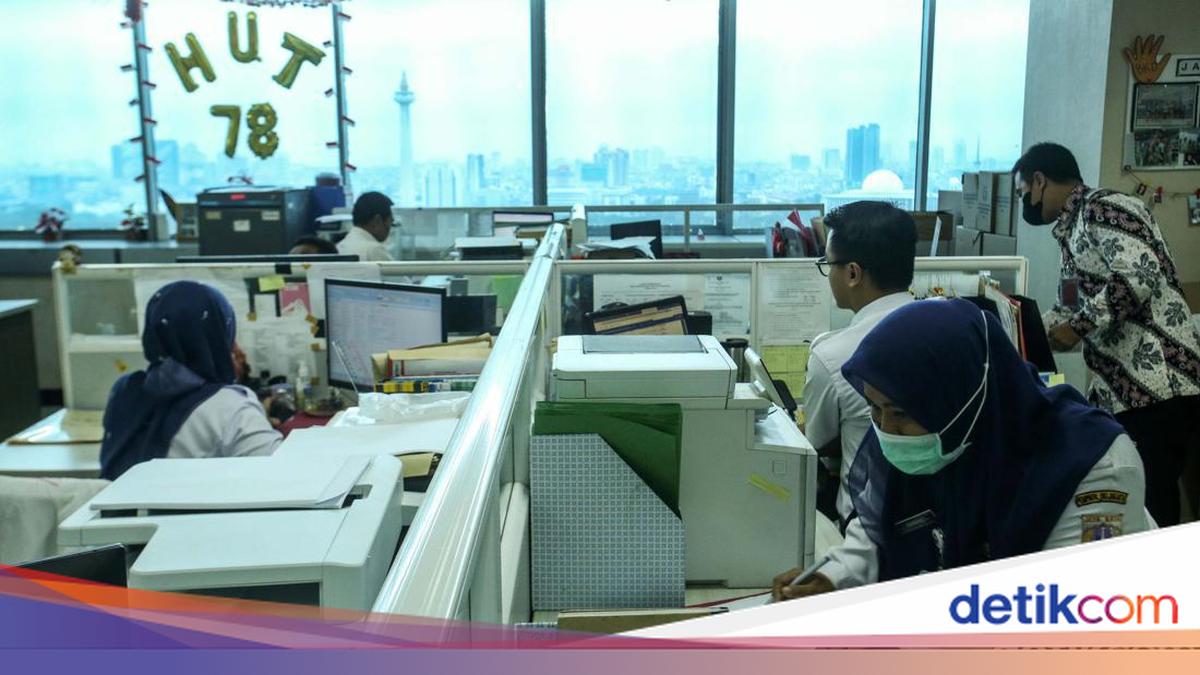
The Provincial Government has implemented a work from anywhere (WFA) policy for a maximum of 50% of employees after the Eid holiday. This policy allows civil servants to work from the office or other locations without disrupting the priority of public services.
This policy is a follow-up to Circular Letter No. 2 of 2026 from the Minister of State Apparatus Utilization and Bureaucratic Reform (PANRB) regarding Adjustments to the Implementation of Official Duties for Civil Servant Employees in Government Agencies During the National Holiday and Collective Leave for Nyepi Holy Day (Saka New Year 1948) and Eid al-Fitr 1447 Hijriah.
The adjustments apply to two days before Nyepi, namely 16 and 17 March 2026, as well as three days after the collective Eid leave, namely 25 to 27 March 2026. However, full implementation of WFA cannot be carried out.
Referring to this, heads of regional apparatus or the regional secretariat bureau are given the authority to regulate employee work systems through work from office (WFO) and WFA schemes. Nevertheless, the government limits a maximum of only 50% of civil servants in one work unit who can work outside the office.
Permission is also granted selectively, taking into account organisational needs and employee conditions.
In the Jakarta Governor’s Circular, Pramono Anung stipulates that civil servants working from outside the office are still required to maintain work discipline, including online attendance twice a day.
“Civil servants carrying out duties from outside the office are still required to perform online attendance through the official government application twice a day, namely in the morning from 06.00-08.00 WIB and in the afternoon from 16.00-18.00 WIB,” as quoted from the circular on Monday (23/3/2026).
In addition, working hour regulations remain in place. For the period 16-17 March, the accumulated working hours are set at 7.5 hours per day. Meanwhile, on 25-27 March, working hours are 8.5 hours per day.
For civil servants receiving Employee Income Supplement (TPP) based on workload, achievement of working hours remains the basis for performance calculation. Direct superiors are required to verify employee attendance through the available attendance system.
The government emphasises that this work flexibility must not disrupt the quality of public services. All regional apparatus are asked to ensure services to the public continue to run optimally, while maintaining effective and efficient achievement of performance targets.
The WFA policy does not apply to work units that provide direct services to the public that cannot be done digitally, including public services operating 24 hours a day.
With this policy, the government hopes that civil servant mobility during the long holiday period can be better managed, without reducing the quality of services to the public.