
50-Litre Fuel Restriction: Apindo Calls for Technical Clarity for the Business Sector
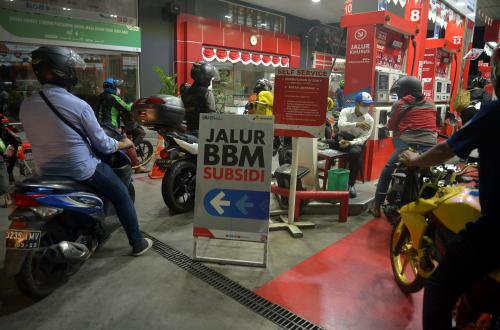
Indonesia’s Association of Entrepreneurs (Apindo) believes there needs to be clarity on the technical implementation of restrictions on subsidised fuel (BBM) purchases. In particular, regarding the definition of vehicles included in the exemption category, the exemption mechanism, and technical arrangements at fuel stations (SPBU).
Apindo General Chairman Shinta W. Kamdani, in her statement in Jakarta on Thursday (2/4/2026), said this is important to ensure that public service activities, as well as distribution and logistics, continue smoothly without hindering economic activities.
“Clarity on definitions and technical implementation is key to avoiding obstacles in the field and not disrupting the smooth flow of distribution and economic activities,” Shinta stated.
She said this is crucial because not all business activities use logistics transport that is administratively categorised as public vehicles.
Shinta stated that many business actors, including micro, small, and medium enterprises (UMKM), use their own fleets for distribution and daily operations that depend on subsidised BBM.
This situation indicates that the subsidised BBM restriction policy has the potential to directly impact distribution costs and supply chain smoothness, particularly for small and medium-scale business actors.
Previously, Coordinating Minister for the Economy Airlangga Hartarto stated that the government will impose restrictions or regulations on subsidised BBM purchases using barcodes with a reasonable limit of 50 litres per vehicle.
“To ensure BBM distribution, the government will regulate purchases using MyPertamina barcodes with a reasonable limit of 50 litres per vehicle,” Airlangga said in a press conference on the government’s policy in response to the global geopolitical situation, monitored online from Jakarta on Tuesday (31/3).