
5 Ways to Eradicate Sailfin Catfish in Rivers, an Invasive Pest Threatening Ecosystems
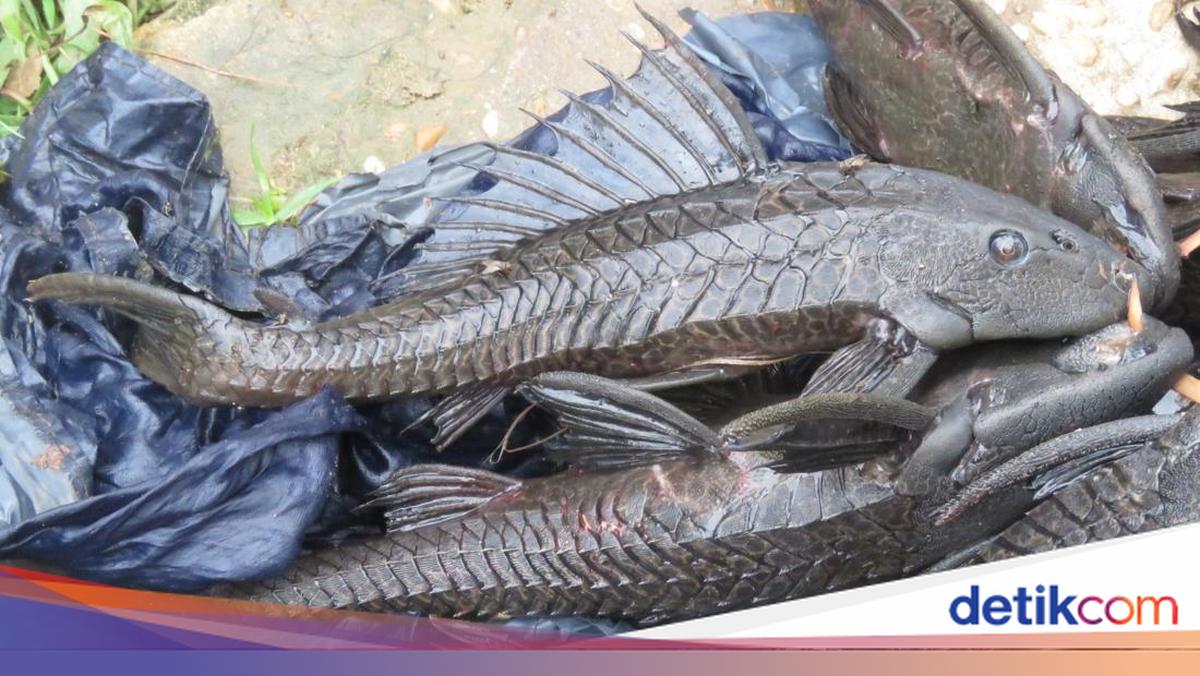
Sailfin catfish are often considered a natural solution for cleaning aquariums or ponds. However, who would have thought that this fish would turn into a serious threat to its ecosystem, especially when released into open waters. Its increasing and uncontrolled presence in Indonesian rivers now requires eradication.
The phenomenon of the explosive population of sailfin catfish cannot be taken lightly. This fish, known scientifically as Pterygoplichthys spp., has the potential to damage river ecosystems. As one of the invasive pests, the sailfin catfish’s ability to reproduce and adapt is extremely rapid. This can threaten native fish populations and affect their ecosystems.
If so, control of this invasive pest is needed before it truly damages the river ecosystem. So, how to do it? To carry it out, let’s pay close attention to the 5 ways to eradicate sailfin catfish below.
Why Must Sailfin Catfish in Rivers Be Eradicated?
Before discussing how to eradicate it, it is important to first understand why sailfin catfish is categorised as an invasive pest. By knowing its impacts and characteristics, readers will better understand the reasons for controlling sailfin catfish in Indonesia’s natural waters such as rivers.
Sailfin catfish is known to originate from the Amazon River in South America. In the Journal of Law and Public Administration article titled Enforcement of Laws on Keeping and Selling Invasive Ornamental Fish Species as a Step to Prevent Damage to Freshwater Aquatic Environments in Indonesia by Irwan Triadi and Michael Giovanni Joseph, it is explained that sailfin catfish has been introduced as an ‘aquarium cleaning fish’ since 1970. In Indonesia too, the term ‘sapu-sapu’ also refers to that function.
However, behind that function, sailfin catfish actually causes major problems when released into public waters. Its high adaptability allows this fish to reproduce quickly and dominate new habitats. As a result, the presence of local fish is threatened. One example occurred in the Ciliwung River, where the sailfin catfish population is suspected to have displaced local species such as benteur and tawes-tawesan.
More broadly, sailfin catfish falls into the invasive species category. Based on Ministry of Environment and Forestry Regulation No. P.94/MENLHK/SETJEN/KUM.1/12/2016, invasive species are those capable of massively colonising a habitat, causing ecological, economic, and social losses. Generally, these species come from outside the region (foreign introduction) and have very high adaptability. When entering a new environment without natural predators, invasive species like sailfin catfish can disrupt the pre-existing ecosystem balance.
The following are the problems caused by this invasive species or pest.
Threat of damaging local ecosystems due to high adaptability, mass reproduction, and competitive nature.
Habitat damage due to changes in ammonia levels in the water, making it dirtier and sunlight harder to penetrate.
Threat of disease spread possibly carried by invasive pests, which generally have extraordinary immunity.
Decline in local fisheries productivity in areas occupied by this invasive pest.
Costs for control and restoration of local ecosystems.
Long-term ecological changes that ultimately disrupt ecosystem balance.
Ways to Eradicate Sailfin Catfish
After understanding the dangers posed, the next step is to know effective ways to address its spread. Based on the book Wetland: Conservation and Restoration of Urban Wetlands by Kukuh Sungkawa, as well as the book Sustainable Agricultural and Fisheries Development: Towards National Food Self-Sufficiency by Triwibowo Yuwono and colleagues, there are 5 ways to eradicate or more precisely control the population of invasive pests like sailfin catfish.
In detail, here are 5 ways to eradicate sailfin catfish as an invasive pest threatening river ecosystems.
- Mass Capture on a Large Scale
Mass capture is the most common and direct step in controlling the sailfin catfish population. This method is usually carried out using capture tools such as jarring, traps, or traditional methods by communities around the river. The more intensive the capture, the greater the chance of suppressing its population numbers.
In addition, mass capture can also involve broad community participation. Activities to empower the production of processed sailfin catfish products could be a more effective solution. One of them is feed products that have been researched in a journal article titled Innovation of Alternative Feed Based on Sailfin Catfish (Pterygoplichthys sp.) in Gresik Regency, Central Java by Alfa Akustia Widati and colleagues.
Mass capture and processing of sailfin catfish products can become an effective solution while providing economic value. Thus, control efforts not only impact the environment but also provide social benefits to surrounding communities.
- Selective Use of Herbicides and Insecticides
The use of chemicals such as herbicides or insecticides in controlling invasive pests can also be done. However, it must be carried out selectively and carefully. Generally, this method is used in certain conditions, especially when the population is very difficult to control manually.
This method can be faster at ‘eradicating’, but it can also cause other problems if done haphazardly. Improper use of chemicals could pollute the waters and endanger local fish and other living creatures. Therefore, this approach is generally the last option that requires strict supervision from authorities.
- Releasing Natural Predators
One way