
5 Steps to Keep Pluit Reservoir Free of Water Hyacinth, from Threshold Limits to Compost
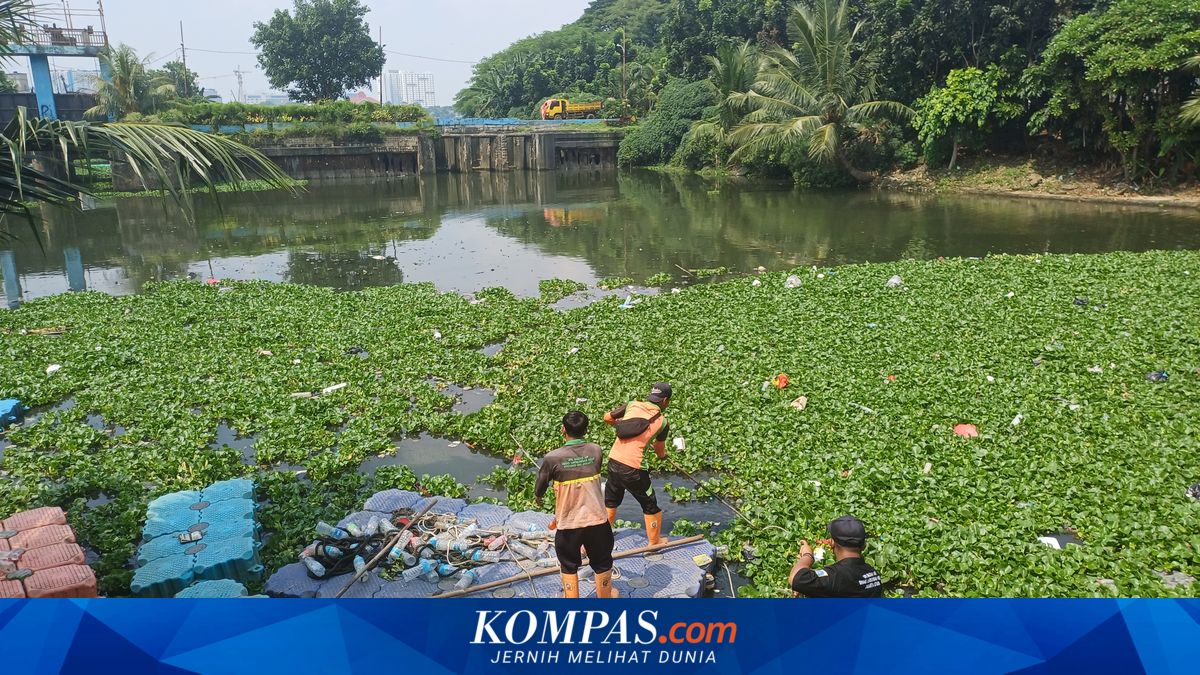
Jakarta - A lecturer from the School of Environmental Science at the University of Indonesia, Mahawan Karuniasa, has presented several policy recommendations to prevent the re-emergence of water hyacinth in Pluit Reservoir, Penjaringan, North Jakarta.
He emphasised that handling water hyacinth cannot rely solely on removal efforts but must be accompanied by strengthening management systems and pollution control.
Mahawan explained that the first necessary step is to establish a threshold limit for water hyacinth coverage as a basis for early intervention, so that handling is not reactive.
Next, he stressed the importance of strengthening periodic monitoring systems.
“Second, mandate weekly monitoring using drones or satellites and water quality tests at reservoir inlet points, particularly for parameters N, P, BOD, COD, DO, TSS, and chlorophyll-a,” he said.
“Control nutrient sources from upstream and local drainage: domestic waste, organic rubbish, sedimentation, and polluted flows must be addressed, not just harvesting the plants,” he stated.
In addition, he encouraged the utilisation of biomass from the dredged water hyacinth so that it does not become an environmental or budgetary burden.
Mahawan also emphasised the importance of improving wastewater treatment systems as part of efforts to reduce pollutant loads on water bodies.
He mentioned that programmes for developing centralised wastewater treatment systems, such as the Jakarta Sewerage Development Project (JSDP), could serve as one solution, although their coverage remains limited.