
5 Obstacles Preventing Iran and the US from Reaching an Agreement
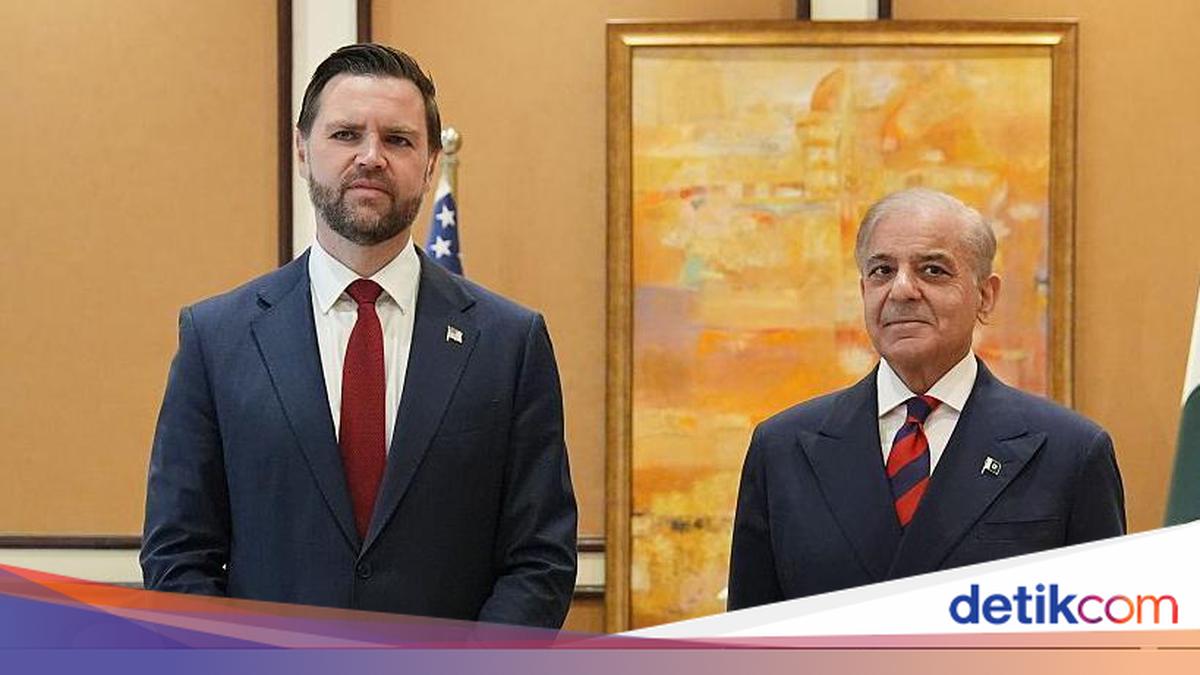
Peace negotiations between the United States and Iran have failed to yield an agreement to end the war. This was revealed by US Vice President JD Vance.
Vance stated that the failure was due to Iran’s unwillingness to accept the conditions offered by the US.
“We have had a number of substantive discussions with Iran; that’s the good news. The bad news is that we haven’t reached an agreement. And I think this is bad news for Iran, far worse than for the US,” Vance said during a press conference on Sunday (12/4/2026).
Vance admitted that the US approached the negotiations with a flexible attitude and “good faith”, but it was unfortunate that both sides did not reach an agreement.
“We are leaving this place with a very simple proposal, an understanding that this is our final and best offer. We’ll see if the Iranian side accepts it,” Vance said.
He also mentioned that US President Donald Trump was directly involved in the talks. Vance said he had spoken with the president about a dozen times during the 21-hour negotiation process.
Furthermore, Vance stated that preventing Iran from having nuclear weapons, either now or in the future, is “the main goal” of Donald Trump.
He also expressed appreciation to Pakistan’s Prime Minister Shehbaz Sharif and military official Asim Munir. He said that “whatever shortcomings” there were in the negotiations, “it was not because of the Pakistani side, which has worked exceptionally well.”
US Vice President JD Vance led the US delegation in the negotiations in Islamabad, while reports mentioned that Iran’s Foreign Minister Abbas Araghchi would join the Iranian delegation.
On the other hand, Iran’s Foreign Ministry spokesman Esmaeil Baqaei described the talks as “intense” discussions.
However, he emphasised that the success of the negotiations depends on “the seriousness and good faith of the opposing side.”
Baqaei also called on Washington to refrain from “excessive demands and illegal requests”.
Additionally, he stressed that the US should accept Iran’s “legitimate rights and interests”.
Among the topics he mentioned as being discussed were the Strait of Hormuz, Iran’s nuclear programme, and “the complete end of the war in Iran”.
Prior to this, the US and Iranian delegations had arrived in Islamabad ahead of peace talks between the two countries on Saturday (11/4).
JD Vance arrived welcomed by several Pakistani officials, including Foreign Minister Mohammad Ishaq Dar.
JD Vance was set to attend the negotiations with special envoy Steve Witkoff and Jared Kushner, son-in-law and adviser to President Donald Trump.
He was accompanied by Iran’s Foreign Minister Abbas Araghchi; Secretary of the Defence Council Ali Akbar Ahmadian; Central Bank Governor Abdolnaser Hemmati; and several Iranian parliament members.
Trump said the US had received a 10-point proposal from Iran, which he called “a workable basis for negotiation”.
Iran’s Foreign Minister Abbas Araghchi also mentioned a 15-point proposal.
What are the issues that could be obstacles in the negotiations between the two countries?
Lebanon
A two-day holiday has been announced in Pakistan’s capital ahead of the negotiations between Iran and the US.
Israel’s attacks on Iran’s ally in Lebanon, the Hezbollah group, could derail the negotiations even before they begin.
“The continuation of these actions will make the negotiations meaningless,” wrote Iranian President Masoud Pezeshkian on X.
“Our fingers remain on the trigger. Iran will never abandon our brothers and sisters in Lebanon,” he added.
Donald Trump said Israel’s actions in Lebanon would now be “somewhat lower in scale”, and the US State Department stated that direct talks between Israel and Lebanon would take place in Washington next week.
Whether those steps will satisfy Iran remains to be seen.
Strait of Hormuz
Only a few ships have crossed the Strait of Hormuz since the ceasefire between the US and Iran began.
Another topic that could derail the negotiations from the start is the crucial shipping route for tanker ships, the Strait of Hormuz.
Donald Trump said Iran “did a very bad job” in allowing ships to pass through the strait, even though it had previously said it would do so.
“This is not the deal we have!” he said in a post on Truth Social, accusing Iran of being “dishonourable”.
Very few ships have passed through. So far, hundreds of ships and around 20,000 sailors remain trapped in Gulf waters.
On Thursday (9/11), Iran announced the establishment of a new transit route, north of the two main shipping traffic separation lanes.
Iran said the new route was necessary “to avoid the presence of various types of anti-ship mines in the main traffic zone”.
Amid reports that some ships that managed to pass through in recent weeks had paid a fee of US$2 million (Rp34.2 billion), Trump warned that Iran “had better not charge fees to tankers”.
Nuclear
The nuclear topic can be said to be the biggest, and certainly the longest, source of dispute between the US and Iran.
Trump said he launched Operation Epic Fury to ensure Iran “will never have nuclear weapons”.
Iran says it has never sought to build a bomb, a claim viewed with great scepticism by most Western countries. As a signatory to the Nuclear Non-Proliferation Treaty, Iran emphasises that it has the right to enrich uranium for civilian purposes.
The 15-point plan proposed by Trump reportedly demands that Iran “end all uranium enrichment in Iranian territory”.
However, when asked about the nuclear issue earlier this week, Defence Minister Pete Hegseth only said that Iran “will never”.