
5 Facts on the US-Iran Ceasefire: Israel's 'Flare-Up' - Tehran's Demands
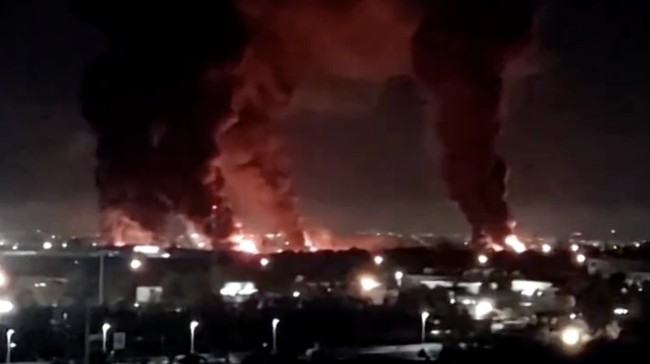
Global tensions that nearly pushed the world to the brink of destruction have temporarily eased. The United States (US) and Iran have officially agreed to a conditional ceasefire for two weeks. This crucial agreement includes reopening the Strait of Hormuz to international shipping traffic, which had previously been blockaded.
This major step comes just one month after the US and Israel launched coordinated airstrikes on the heart of Iran’s defences. The decision also emerged just hours after US President Donald Trump issued terrifying threats via social media that “the entire civilisation will die tonight” if Tehran did not immediately open access to the Strait of Hormuz.
Pakistan’s Prime Minister Shehbaz Sharif, who acted as the main mediator in these heated negotiations, announced on Wednesday (08/04/2026) that the ceasefire would take effect immediately. This agreement provides a fresh breath amid the increasingly uncontrollable military escalation in the Middle East region.
Here are 5 latest factual points regarding the US-Iran ceasefire agreement:
Trump’s Stance: From Annihilation Threats to Tariff Diplomacy
President Donald Trump expressed his willingness to halt military operations for the sake of global energy route stability. Through his post on the Truth Social platform, Trump revealed the reasons behind his sudden softening after previously threatening to wipe Iran off the world map.
“I have agreed to suspend bombing and attacks on Iran for a two-week period if Tehran agrees to reopen the Strait of Hormuz, the vital shipping route for oil and other exports from the Gulf. We are doing this because we have met and exceeded all military objectives,” Trump stated.
Although agreeing to the ceasefire, Trump maintained a hardline stance towards countries aiding Iran’s military. He affirmed that he would use America’s economic power to pressure Tehran’s allies through aggressive and unrelenting tariff policies.
“Countries supplying military weapons to Iran will immediately be subject to 50% tariffs on every and all goods sold to the United States, effective immediately. There will be no exceptions or exemptions,” Trump wrote in a separate post on the same platform.
US Defence Secretary Pete Hegseth added that the US military would not lower its guard despite the temporary halt in attacks. Quoting Hegseth’s statement, US forces would remain in position, ready, alert, and prepared to resume attacks in an instant if Iran violates its commitments.
Iran’s Stance: Claiming Battlefield Victory and Reconstruction Conditions
The Iranian side welcomed this ceasefire as an acknowledgement of their strong position on the ground. Iran agreed to allow commercial ships to pass through the Strait of Hormuz for two weeks, but under strict supervision and direct coordination under Iranian military control.
In an official statement, Tehran’s Supreme National Security Council emphasised that this diplomatic step is a continuation of their success in facing the US and Israeli onslaught previously. Quoting the institution’s statement, Iran’s battlefield victory will also be consolidated at the upcoming political negotiation table.
Iran also stressed that the ceasefire must be followed by the restoration of their devastated economy due to sanctions and airstrikes. Tehran demands compensation for infrastructure damage over the past month as a primary condition for achieving long-term peace.
Additionally, Iran stated that they are fully committed to not pursuing nuclear weapons ownership in any form. This commitment is expected to pave the way for lifting economic sanctions that have strangled the country for years.
Iran’s 10-Point Peace Proposal to the US
As part of the conditions for this conditional ceasefire, Iran, through its state broadcaster, has released a 10-point peace plan. This proposal forms the basis of Tehran’s bargaining position in the upcoming negotiations planned to take place in Islamabad, Pakistan.
Quoting a BBC News report, here are the details of the 10-point plan submitted by the Iranian side:
Total cessation of war in Iraq, Lebanon, and Yemen.
Total and permanent cessation of war against Iran without time limits.
Ending all conflicts in the region as a whole.
Reopening the Strait of Hormuz to international shipping.
Establishing protocols and conditions to ensure freedom and security of navigation in the Strait of Hormuz.
Full payment of compensation for reconstruction costs to Iran.
Full commitment to lifting sanctions on Iran.
Release of Iran’s funds and frozen assets by the United States.
Iran fully commits to not pursuing any nuclear weapons ownership.
Immediate ceasefire on all fronts immediately after agreement on the above conditions.
Israel’s Word: Support Trump But Continue Attacks in Lebanon
Israel’s response to this agreement is somewhat ambivalent. Moments after Trump’s announcement, air raid sirens blared in Israel due to an attempt to intercept missiles launched from the direction of Iran. Loud explosions were reported in Jerusalem on Tuesday night before the official announcement.
Israeli Prime Minister Benjamin Netanyahu finally issued an official statement supporting his main ally’s move, but with a major caveat. Quoting Netanyahu, Israel supports President Trump’s decision to suspend attacks on Iran for two weeks on the condition that Iran immediately opens the strait and halts all attacks on the US, Israel, and countries in the region.
“However, the ceasefire