
48 Toddlers in Kesetnana Village, East Nusa Tenggara, Suffer from Stunting; Mothers Learn to Combine Moringa, Mackerel and Other Local Foods
The Indonesian Paediatric Association (IDAI) defines stunting as short stature in toddlers resulting from chronic nutritional deficiency. In 2022, Indonesia ranked fourth globally as a major contributor to stunting cases, following India, Nigeria, and Pakistan.
Stunting occurs when a child’s height falls below the expected growth curve, characterised by body length or height below standard. Multiple factors increase stunting risk, with the most common being prolonged nutritional deficiency. This challenges the assumption held by some parents that short stature results from genetic factors. In reality, genetics contributes only a small proportion to a child’s health condition. However, a child with short stature does not necessarily suffer from stunting, making it important for parents to understand the distinguishing characteristics.
Stunting typically develops during early childhood, particularly in the first two years of life, primarily due to chronic malnutrition or prolonged nutritional deficiency. Additional contributing factors include inadequate nutritional intake during pregnancy. According to the WHO, approximately 20% of stunting cases begin when infants are still in the womb.
The primary causes include insufficient nutritional intake, which can cause pregnant women to develop iron-deficiency anaemia, subsequently impeding foetal growth. Secondly, unbalanced dietary patterns such as insufficient consumption of vegetables, fruits, and protein sources can result in children lacking nutrients necessary for optimal growth, according to a 2020 Journal of Maternal and Child Health article. The journal identifies maternal and paternal height and fish consumption as factors contributing to stunting.
This situation occurs in Kesetnana Village, Mollo Selatan District, Timor Tengah Selatan Regency, East Nusa Tenggara, located in southern Timor Island. Kesetnana Village health worker Aryanti Saetban notes that residents have traditionally focused exclusively on rice and vegetable consumption. “Yet here we have abundant local food resources, various fish types and other plant-based protein sources,” Aryanti explains.
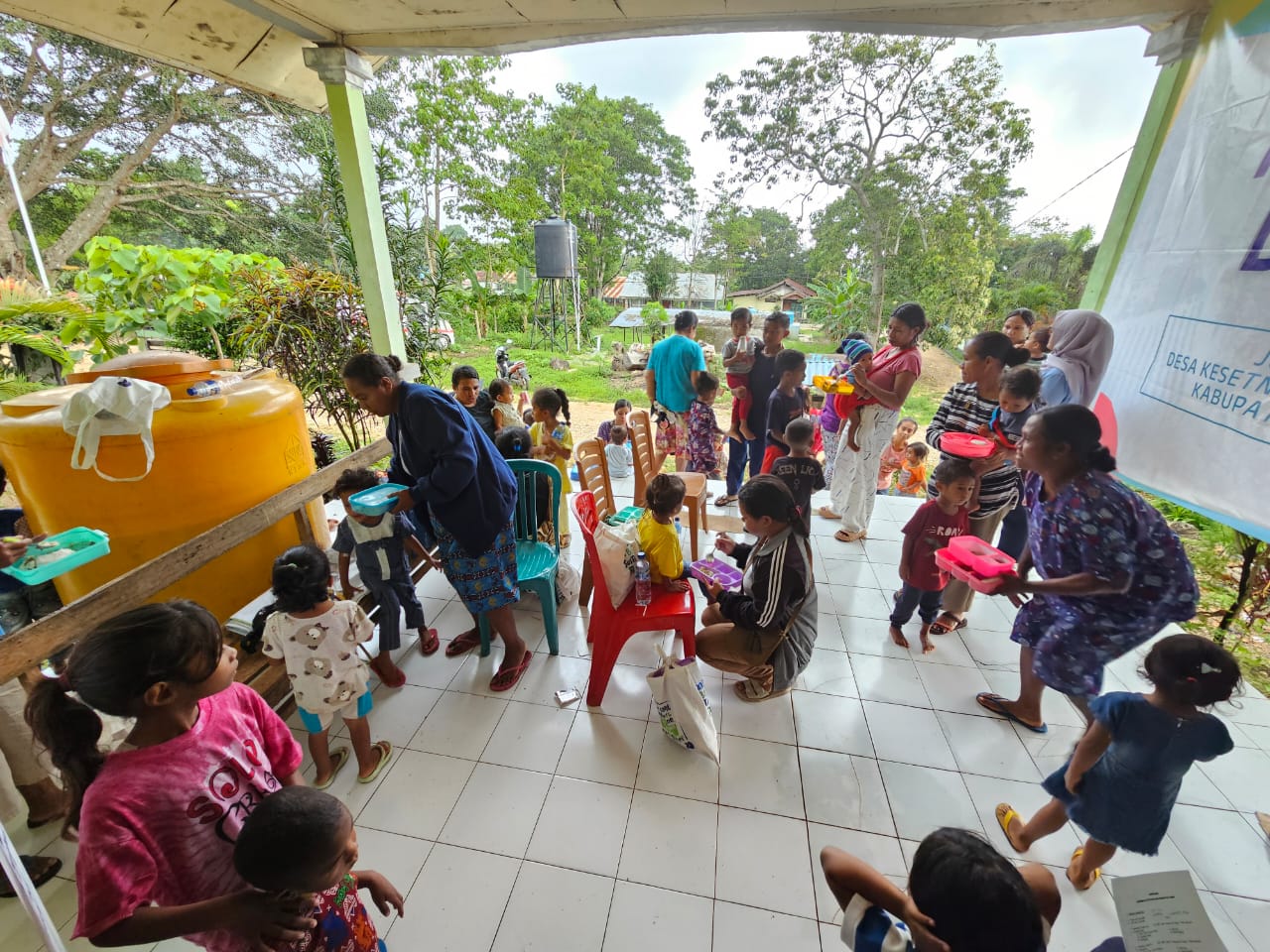
The InJourney Combat Stunting programme addresses this situation, initiating prevention and management efforts in an area classified as having high stunting cases. Running from November 2025 to February 2026, the programme is implemented by PT Angkasa Pura partnering with the Center for Entrepreneurship, Change, and Third Sector (CECT) Sustainability Trisakti as implementation partner, managing planning, socialisation, execution and evaluation.
The programme targets 48 children identified with stunting. Implementation involves the East Nusa Tenggara Provincial Health Office, Timor Tengah Selatan Regency Health Office, Kesetnana Village Government, Siso Community Health Centre, and village health workers who provide direct support and monitoring.
“They received education, examples, and practice in consuming local resources including mackerel, tuna, and skipjack. They now regularly vary their meals with other protein sources including chicken eggs, meat, tempe and tofu, combined with mustard greens, spinach, water spinach, moringa leaves, papaya, bananas, avocados, pumpkin, and green beans,” explains Siso Community Health Centre nutritionist Winarti.
Nutritionist Elisabeth states that mothers, through health workers, receive education on child menu composition according to nutritional requirements. “To protect toddlers from stunting, we also provide understanding about early detection of communicable diseases that they may have previously been unaware of. This is important because treating childhood illness affects nutrient absorption,” Elisabeth explains.
CECT Sustainability Trisakti Director Maria Utha explains that the approach goes beyond providing food assistance focused on local foods, prioritising strengthening family understanding. “Activities include distributing supplementary meals and distributing fortified rice through collaboration with Perum Bulog (the State Logistics Agency).”
Additionally, health workers and parents of toddlers participate in training and mentoring on child feeding patterns, growth monitoring, and simple complementary feeding menu preparation applicable at home.
After three months of implementation, positive developments have emerged. Average child weight increased by approximately 0.5 kg, with 37.2% of toddlers achieving ideal weight gains during the monitoring period. In terms of height, children showed average increases of approximately 2.05 centimetres, with 39.5% achieving ideal height growth.
“Overall, initial programme results demonstrate reasonably positive impact, particularly in improving child weight conditions. However, to address the lag in height growth, which is the main stunting indicator, longer-term and sustained intervention is required.”
As comparison, in the previous year 2024, stunting prevalence in Riau based on the Health Ministry survey was still at 20.1 percent.
One widely promoted solution for addressing stunting involves utilising moringa leaves (moringa oleifera), which contain high nutritional value including protein and vitamin A.
Tuban Regency successfully reduced stunting rates by 7.1 percentage points, from 24.9% in 2022 to 17.8% in 2023.
Financing for development programmes in food and nutrition sectors must have significant value.