
37 Love-Scam Defendants Jailed for One Year, Mother Who Gave Birth in Custody Receives 10 Months
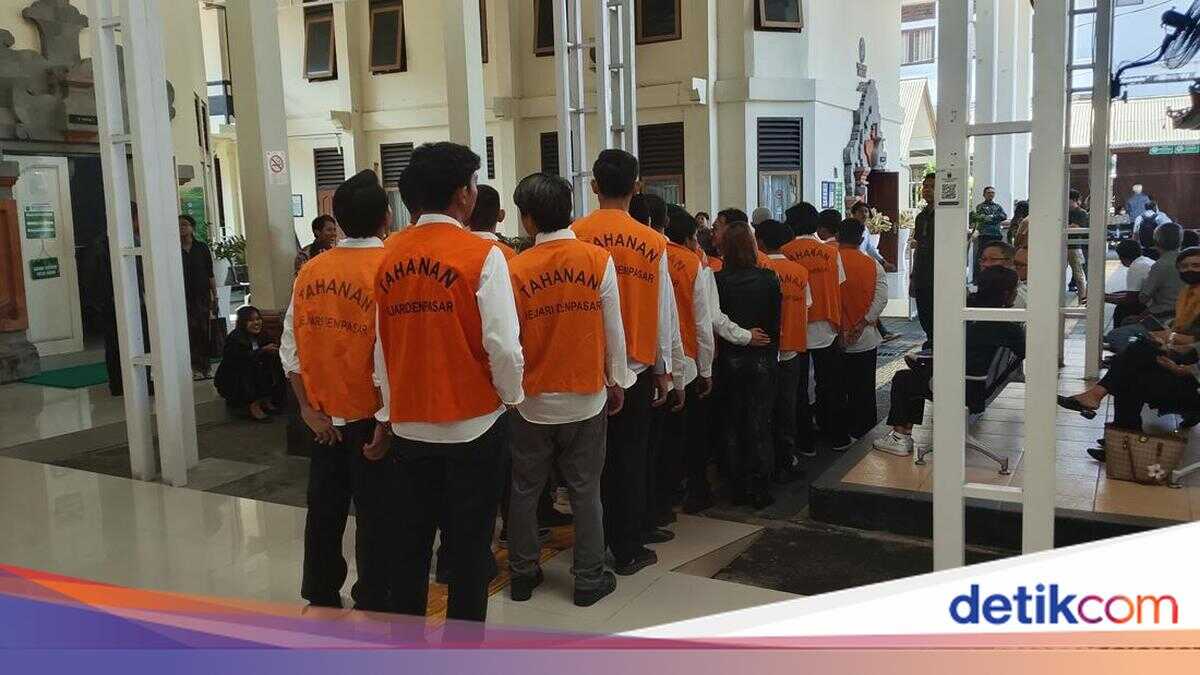
The Denpasar District Court panel on Thursday, 5 March 2026, handed down sentences to 38 defendants in a case of online fraud carried out via love scam connected to an international network. The panel, chaired by Iman Luqmanul Hakim, sentenced 37 defendants to one year imprisonment, with a Rp 20 million fine, subsiding into 20 days of detention if not paid. The court stated: ‘The defendants were found to have collectively manipulated electronic information using fake identities to deceive victims via electronic media.’ Meanwhile, one female defendant, Eva Hayrany Simbolon, was sentenced to 10 months in prison. The panel considered Eva’s condition of giving birth while in custody in the case. The defendants were charged under Article 35 in conjunction with Article 51(1) of the Electronic Information and Transactions Act (UU ITE) in conjunction with Article 20(1), (2), and (3).
The panel assessed that the elements of the offence as alleged by the prosecutor had been fulfilled because the defendants, collectively, used electronic means and fake identities to carry out fraud against victims.
This case is one of the cybercrime cases with the greatest number of defendants tried at Denpasar District Court, with the fraud network connected to overseas. The case began with the disclosure of online fraud by police, who uncovered suspicious activity at several houses in Denpasar in mid-2025. After raids at several locations, police detained 38 individuals suspected of being online fraud operators targeting foreign victims. In court, it emerged that the defendants worked as operators tasked with seeking potential victims through the Telegram application.
The modus operandi involved sending messages at random to potential victims on the pretext of ‘wrong message send’. When victims responded, the defendants then built communication by impersonating foreign women using fake photos and identities. The defendants created Telegram accounts with the fake identities named Elsa Jansson and Sophia Elena.
Once communication was established, the defendants extracted personal information from victims such as name, address, and other data. This information was then collected and passed on to other networks for further fraud.
In court, it also emerged that the defendants operated in an organised manner. They worked as operators tasked with locating and compiling victim data, while the main operators of the fraud network were based in Cambodia.
Trial facts also revealed that the defendants reportedly worked every day for 12 hours, from midnight to daytime, with a minimum target of eight victims per day.
Regarding remuneration, the leaders received salaries of US$300 per month. The broadcasters earned US$200 per month, plus a US$1 bonus for each victim data successfully collected.