
3 Kg LPG Price Unchanged Since 2007, Indonesia Provides Rp87 T Subsidy Per Year
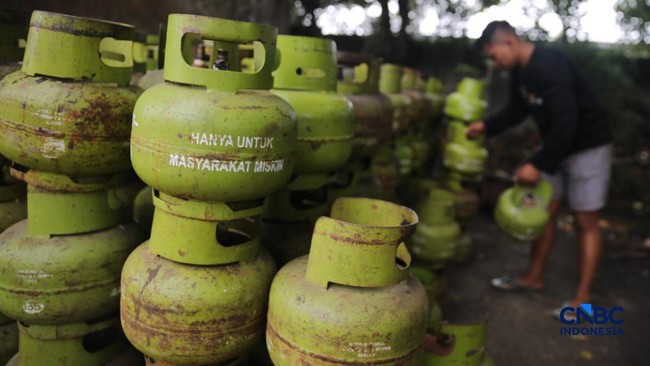
Minister of Energy and Mineral Resources Bahlil Lahadalia has revealed that the price of subsidised 3 kg LPG has never undergone any changes, particularly since the kerosene-to-LPG conversion programme was launched in 2007. The conversion programme was initiated during the first term of President Susilo Bambang Yudhoyono’s administration. To date, the subsidised LPG price has been maintained, even as the state’s budgetary burden continues to rise. “That was during Pak SBY (President) and Pak JK (Vice President) in the first term. Do you know? The subsidised LPG price from the very first time until now has never been changed,” Bahlil said at the Sinergi Alumni IPB Untuk Bangsa event some time ago, quoted on Tuesday (5/4/2026). He then explained that Indonesia currently has to spend around Rp137 trillion in foreign exchange annually to meet national LPG needs. Of that amount, approximately Rp80 trillion to Rp87 trillion is the subsidy borne by the government. “Now we spend Rp137 trillion in foreign exchange on LPG per year. From the Rp137 trillion, what is subsidised by the state is Rp80 to Rp87 trillion per year, folks. Don’t applaud; this is sad for me,” he said. In terms of needs, Indonesia’s LPG consumption reaches around 8.6 million tons per year. However, domestic production remains limited. With an installed capacity of 1.9 million tons, the maximum production realisation is only about 1.6 to 1.7 million tons per year. As a result, Indonesia must import around 7 million tons of LPG annually. “Our LPG needs are 8.6 million tons per year. Our production has an installed capacity of 1.9 million, but what can be produced is only 1.6-1.7 million maximum. So we import 7 million tons per year,” he said. Bahlil explained that the high LPG imports are not due to a lack of gas, but rather differences in gas composition types. LPG comes from propane (C3) and butane (C4) components, while most of Indonesia’s natural gas is dominated by methane (C1) and ethane (C2). “From there, I racked my brains again. But the challenge is huge. First, we want to change through DME; since I was Minister of Investment, we already wanted to build this DME. But there were many who opposed it,” Bahlil said.