
3,300 Prospective Hajj Pilgrims from Bekasi Regency Begin Meningitis and Polio Vaccinations
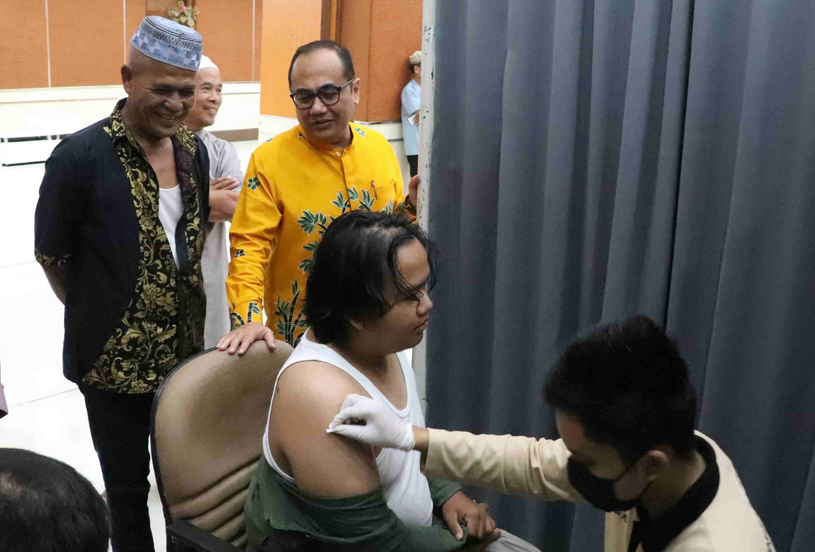
Around 3,300 prospective Hajj pilgrims (CJH) from Bekasi Regency are undergoing vaccinations against meningitis and polio, organised in stages by the local government as one of the preparatory steps before departure to the Holy Land.
“Vaccination for prospective Hajj pilgrims began on Thursday (26/3) and is still ongoing, with an estimated completion by mid-next week,” said the Head of the Bekasi Regency Health Office (Dinkes), Arief Kurnia, in Cikarang, quoted from the regency government’s website on Monday (30/3).
Arief stated that the activity, centred at the Wibawa Mukti Building in the Bekasi Regency Office Complex, takes place every day from morning except Saturdays and Sundays, serving as an important step to protect the health of pilgrims during their worship in the Holy Land.
He explained that the meningitis and polio vaccines are administered to prevent potential global infectious diseases while in Saudi Arabia, considering that Hajj worship requires prime physical condition over a prolonged, exhausting, and activity-packed period.
“This vaccine is crucial so that pilgrims can avoid the risks of meningitis and polio. We want everyone to be in good health while performing worship there, which will last for days,” he said.
Arief reminded of the importance of physical readiness for the pilgrims, as activities such as long walks and the stoning of the devil require strong stamina and immunity. The entire Hajj worship will involve significant physical challenges.
“If the physique is not strong, especially during the stoning of the devil which is quite a distance from the accommodation, it could become an obstacle. So from now on, they must start physical training like morning walks,” he said.
Arief also reminded that efforts to maintain health should be accompanied by prayers so that the entire Hajj worship can proceed smoothly, despite global dynamics that all parties must remain vigilant about but which should not disrupt departure preparations.
“We all pray that the departure goes smoothly and the pilgrims can complete the entire Hajj series and return to the homeland as accepted pilgrims,” he said.
Conducted in stages
The Head of Disease Prevention and Control at the Bekasi Regency Health Office, Irfan Maulana, added that this vaccination targets at least 3,300 registered CJH ready for this year’s Hajj season, with structured and orderly service scheduling.
He explained that the vaccination runs from 26 March to 2 April 2026, with daily participants ranging from 500 to 700 people, scheduled in stages to avoid crowds at the venue while ensuring comfort for all participants.
“Vaccination against meningitis and polio is a follow-up stage after health examinations that began in November 2025, including determination of fitness for prospective pilgrims,” he clarified.
He continued that further health examinations will be conducted after vaccination completion, including pregnancy checks for women of childbearing age, to ensure all health requirements are properly met ahead of departure.
“Early vigilance against diseases with potential to become outbreaks is our priority,” he said.
The Bekasi Regency Health Office has prepared 12 health workers assigned to all flight groups (kloter) and additional supporting personnel from the local government who will collaborate to provide health services, including for elderly pilgrims, to ensure optimal care during worship in the Holy Land.
Irfan urged CJH to maintain their physical condition ahead of departure with sufficient rest and to manage social activities such as farewell gatherings so as not to disrupt health and physical readiness before heading to the Holy Land.
“Get enough rest, avoid fatigue, and ensure you are fit upon departure. If ill upon arrival in Saudi Arabia, pilgrims may be sent back. Do not forget to bring personal medications for needs during approximately 40 days,” he said.