
250 Nuclear Power Plants "Killed Off", Many Countries Now Regretting It?
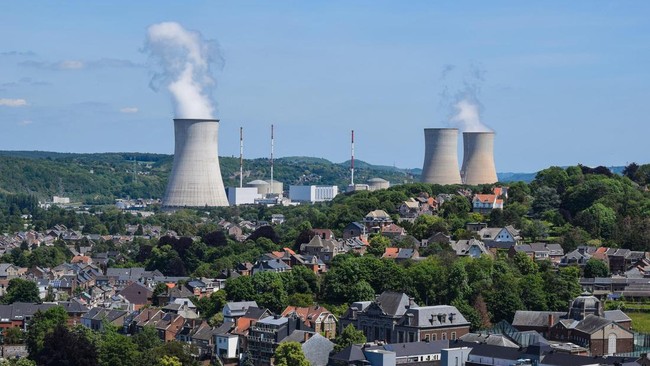
The global demand for electricity continues to rise, prompting many countries to revisit nuclear energy. Amid pushes for electrification, industrial development, and the rapid advancement of artificial intelligence (AI), nuclear power is once again viewed as a stable, low-carbon energy source. However, behind this renewed interest lies the fact that many countries have instead shut down large numbers of nuclear power plants (NPPs). Globally, around 250 NPPs have been decommissioned since 1957, with a total retired capacity of 136,823 megawatts (MW). According to Visual Capitalist, citing Global Energy Monitor, Japan, Germany, and the United States are the countries with the most nuclear capacity closed. Meanwhile, China stands out as an exception, having not shut down a single nuclear project. Japan Has Closed the Most Nuclear Capacity Japan is recorded as the country with the largest nuclear capacity decommissioned, totalling 35,284 MW from 44 units. This significant figure is inseparable from the impact of the 2011 Fukushima disaster. Following the incident, Japan suspended most of its nuclear plants. Since then, only some reactors have been restarted, while others remain offline. Japan’s case illustrates how a major disaster can drastically alter a nation’s energy policy. Before Fukushima, nuclear power was a key pillar of the country’s electricity supply. Germany Has Shut Down All Its Nuclear Reactors After Japan, Germany ranks second with a total decommissioned nuclear capacity of 27,862 MW from 36 units. Germany once relied on nuclear to meet around 29.5% of its electricity needs at its peak. However, after Fukushima, the government decided to phase out nuclear energy. This process concluded when the last reactor was officially shut down in 2023. Germany’s move is one of the clearest examples of how safety considerations, politics, and public opinion can drive a complete exit from nuclear energy, even though it previously held a large share in the power system. The United States Has Decommissioned the Most Reactors The United States ranks third with a decommissioned NPP capacity of 23,311 MW. Nevertheless, the US is the country with the highest number of facilities retired, namely 47 units. This means the US has closed more reactors than Japan or Germany, but the average capacity per unit is not as large as in those two countries. This shows that the scale of nuclear decommissioning can be viewed not only by the number of facilities but also by the lost electricity capacity. Interestingly, amid this wave of closures, the US is also beginning to revisit nuclear energy. Some older facilities are even being considered for reactivation to support growing electricity needs, including for data centres. The UK, France, Russia, and Taiwan in the Top List Below the top three, the UK has closed 36 units with a capacity of 9,163 MW. Then France closed 15 units with 6,087 MW capacity, while Russia closed 16 units totalling 5,879 MW. Taiwan also ranks among countries with significant nuclear capacity closures, namely 5,144 MW from 6 units. After that, there is Sweden with 4,268 MW and Ukraine with 3,800 MW. This list shows that NPP shutdowns are not occurring in just one or two countries but are widespread among many that once developed nuclear energy as an important part of their energy mix. Ukraine Shadowed by Geopolitics, China Continues Nuclear Expansion In nuclear energy issues, each country’s policy direction is heavily influenced by its own conditions. Ukraine, for example, faces not only energy challenges but also immense geopolitical and security pressures. The country has closed four NPP units with a total capacity of 3,800 MW. The spotlight on Ukraine is also inseparable from the long history of the 1986 Chernobyl nuclear accident. In recent years, nuclear issues in the country have again drawn global attention amid the war with Russia. Ukraine’s nuclear infrastructure has come under renewed scrutiny, particularly after the Zaporizhzhia power plant, one of Europe’s largest NPPs, fell under Russian control in 2022. Therefore, nuclear issues in Ukraine now extend beyond electricity supply to concerns about stability in Europe and international security. In contrast to Ukraine, China is taking the opposite approach. Amid the long list of countries closing NPPs, China is an exception as it has not shut down a single nuclear power project. This stance reflects China’s aggressive energy policy in developing the nuclear sector. China even targets a nuclear energy capacity of 150 gigawatts or 150,000 MW by 2035. This step indicates that, despite concerns over radioactive waste, accident risks, and the sensitivity of nuclear issues, some countries still see nuclear energy as a crucial solution to meet large electricity demands while curbing carbon emissions. Nuclear Energy Being Revisited Again Although many NPPs have been closed over the past few decades, nuclear energy is now starting to be revisited. The growth of AI, electrification, and increasing industrial electricity needs have led many countries to assess that this stable, low-carbon energy source still has a major role in the future. In some cases, previously decommissioned facilities are being discussed for reactivation. This shows that perspectives on nuclear energy are changing. Whereas previously many countries focused on closures due to safety and political factors, now more are considering its potential.