
25 Special Economic Zones Have Absorbed Rp336 Trillion in Investment and 249,000 Workers by 2025
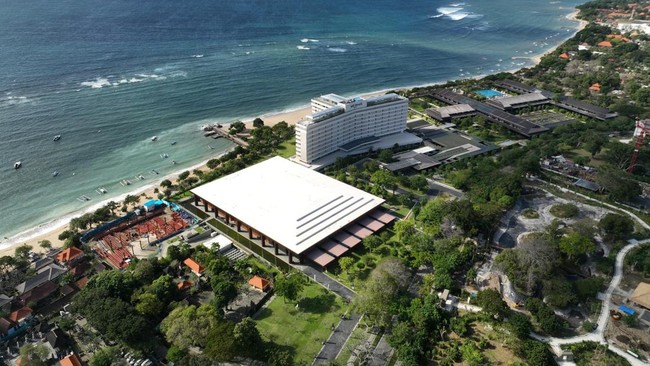
Jakarta, CNBC Indonesia — The government has positioned Special Economic Zones (KEK) as a primary engine of economic growth, serving as a catalyst for accelerating investment absorption and employment.
Since their introduction in 2012 through 2025, KEK have absorbed cumulative investment of Rp336 trillion, with employment generation of 249,000 people across 407 businesses operating in 25 KEK.
“In the National Mid-Term Development Plan 2025-2029, special economic zones are projected as one of the primary engines of national economic growth,” said Acting Secretary-General of the National KEK Council Rizal Edwin Manansang at a media gathering in Jakarta on Thursday, 12 March 2026.
Edwin explained that for 2025 alone, total investment realisation across the 25 KEK reached Rp82.6 trillion, equivalent to 98% of the 2025 investment target of Rp84.1 trillion. Employment absorption reached 88,540 people.
“This achievement demonstrates that KEK continues to develop as an important instrument in driving increased investment and creating employment opportunities in the country,” said Rizal.
Using research findings from LPEM FEB UI and Prospera, the government is confident that KEK has significant economic impacts on domestic economic activity. Regarding investment, KEK is capable of driving 77% higher investment compared to non-KEK regions.
“As an illustration, if a region without KEK can attract Rp10 trillion in investment, then a region with KEK can attract approximately Rp17-18 trillion. So compared with non-KEK areas, this is 77% higher,” said Edwin.
In terms of employment creation, KEK absorbs 4% more workers compared to non-KEK regions, and directly absorbs 52% more workers than investment projects in areas without KEK.
“The analysis from these studies shows that foreign direct investment (FDI) in industrial KEK can reach approximately 179% higher compared to non-KEK regions,” said Edwin.
Beyond investment and employment impacts, the government also noted that KEK can generate spillover effects in stimulating economic activity in surrounding areas, ranging from attracting participation from small and medium enterprises (SMEs) to becoming part of local supply chains.
“It can be concluded that KEK contributes positively to regional economic growth through several main channels, namely increased investment, enhanced employment creation, strengthened business ecosystems including SMEs, and generating multiplier effects for regional or local economies,” Edwin stated firmly.
For additional information, the following are the 25 KEK operating in Indonesia:
Tanjung Lesung KEK
Morotai KEK
Sorong KEK
Bitung KEK
Lido KEK
Tanjung Sauh KEK
Sei Mangkei KEK
Mandalika KEK
Lhokseumawe KEK
Arun KEK
Gresik KEK
Setangga KEK
Palu KEK
Maloy Batuta Trans Kalimantan KEK
Galang Batang KEK
Batam Aero Technic KEK
Sanur KEK
Banten International Education, Technology and Health KEK
Likupang KEK
Tanjung Kelayang KEK
Singhasari KEK
Nongsa KEK
Kura-Kura Bali KEK
Batam International Tourism and Health KEK
Industropolis Batang KEK