
24 Days of Iran War: 40 Energy Facilities in the Middle East Severely Damaged
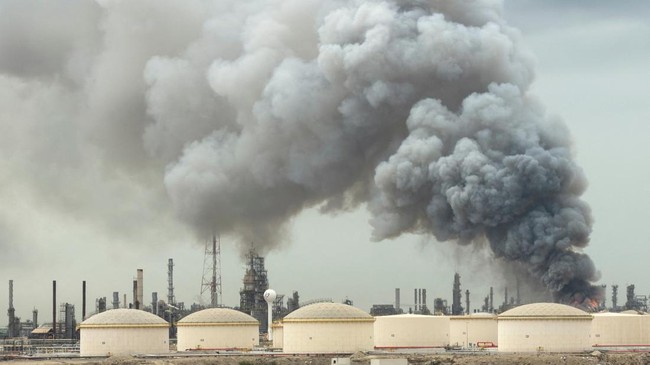
After 24 days of the Iran war, numerous energy facilities in the Middle East have been affected by the conflict between Iran and the United States (US) and Israel, with an average of these being oil and gas (oil and gas) fields that have suffered damage.
Executive Director of the International Energy Agency (IEA), Fatih Birol, reported that at least 40 energy facilities in nine Middle Eastern countries have experienced severe damage since the Iran vs US-Israel war began, raising concerns about prolonged supply disruptions.
At the National Press Club in Australia, Birol stated that the damage to oil and gas fields, refineries, and pipelines across the Middle East will take a long time to repair.
“The Iran war has severely disrupted the flow of energy trade through the highly important and strategic Strait of Hormuz, creating what we believe to be the largest supply disruption in the history of the global oil market. Global liquefied natural gas (LNG) supplies have also decreased by around 20% since the conflict began on 28 February,” said Birol, quoted from CNBC International, Monday (23/3/2026).
Birol added that the impact of the war is equivalent to two major oil crises in the 1970s and the 2022 gas crisis.
“If I may say so, it’s not just oil and gas. Several vital global economic routes, such as petrochemicals, fertilisers, sulphur, and helium. Their trade is all disrupted, which will have serious implications for the global economy,” he continued.
Moreover, the threat from US President Donald Trump to destroy Iran’s power generation centres if the Strait of Hormuz is not reopened soon has heightened concerns among many parties.
“This narrow waterway is the main maritime corridor connecting the Persian Gulf and the Gulf of Oman. Around 20% of global oil and gas production usually passes through this route,” he explained.
Separately, Iran’s Parliament Spokesperson Mohammad Baqer Qalibaf stated that critical infrastructure and energy facilities in the Gulf region could be permanently destroyed if Iran’s power plants are attacked.
“If the power facilities are attacked, then other energy facilities in the Gulf region could be permanently destroyed; this is very dangerous,” said Baqer.
Given that shipping has come to a complete halt in the Strait of Hormuz since the conflict began, Birol stated that reopening this waterway is the most important solution to prevent a global energy crisis.
He noted that Asia is the region most immediately affected by the energy crisis due to the Iran war. Therefore, his organisation has released 400 million barrels of oil to the market on 11 March.
“If necessary, of course we will do it,” he said.