
22 Years Stalled, PDIP Urges Immediate Enactment of the Domestic Workers Protection Bill
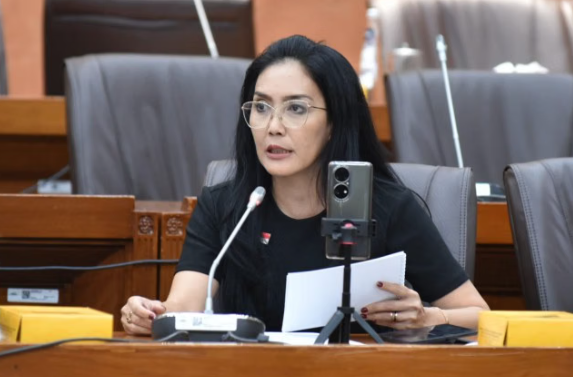
Rieke Diah Pitaloka, a member of the House of Representatives’ Commission XIII and the general chair of the Confederation of Indonesian Workers (Konfederasi Rakyat Pekerja Indonesia), criticised the slow progress of the Draft Law on the Protection of Domestic Workers (RUU PPRT), which has waited for enactment for more than two decades. In a public hearing of the Legislation Body (Baleg) of the DPR in the Parliament complex in Senayan, Jakarta, on Thursday (5 March), she emphasised that the state has an obligation to ensure every citizen receives fair and decent treatment in working relationships. “The Domestic Workers Protection Bill must address a number of fundamental issues, including a clear definition of a domestic worker in line with ILO Convention 189, clarifying that a PPRT worker is a worker, not a servant or nanny,” she said. “Protection of workers is not merely social policy, but a constitutional mandate that must be realised through adequate regulation.” She explained that the number of Indonesian migrant workers abroad is around 5.2 million. Of these, around 2.5 to 3 million work as domestic workers, with about 100,000 new placements each year. According to her, migrant workers make a significant economic contribution to Indonesia. Based on data from Bank Indonesia, remittance from migrant workers in 2024 reached about USD 15.7 billion, or Rp 253 trillion. “In other words, migrant workers, including millions of domestic workers, underpin the national economy and drive family economies in migrant-hosting regions,” she said. “Ironically, the sector that makes such a large economic contribution remains under the weakest legal protection. Indonesia has yet to ratify ILO Convention 189 on decent work for domestic workers, and domestic workers in the country have not been fully recognised within the national labour law system,” she continued. She argued that the vulnerability of domestic workers stems not only from regulatory gaps but also from a lingering misconception about domestic work. Rieke noted that domestic workers are often not recognised as workers. There remains a social stigma as ‘helpers’ or even as ‘maids’. Care work has not yet been recognised as a job of economic value. Furthermore, she highlighted a range of cases of violence against domestic workers. She cited Amnesty International data for 2025 indicating at least 122 cases of sexual violence and domestic violence against domestic workers in Indonesia. “This year, during Ramadan, the latest case we advocate about involved almost the entire family abusing a PRT so severely,” she said. Rieke called for full support from all factions in Baleg to promptly ratify ILO Convention 189 and enact the PPRT. She reminded that the state must not simply reap economic benefits without providing proper protection. “Support for the government to ratify ILO Convention No. 189 as the international standard for decent work protection for domestic workers,” she said. “I appeal for support from Baleg DPR RI, leaders and members from all factions, to accelerate the enactment of the Domestic Workers Protection Bill to recognise workers’ status, guarantee rights, and provide an effective legal protection mechanism,” she added. She emphasised that 22 years is far too long a time for such waiting. “Domestic migrant workers contribute around Rp 253 trillion in remittances to the country each year, money that also becomes part of the salaries and allowances we receive in the DPR. The state must not enjoy their economic contributions without providing proper legal protection; the Domestic Workers Protection Bill has waited 22 years,” she said. Enactment of the PPRT is important to be carried out promptly, because domestic workers are among the largest sectors in Indonesia’s migrant workforce. Chair of the PPNA Ariati Dina Puspitasari questioned the fate of the PPRT bill, which has hung for more than two decades. Chair of the National Human Rights Commission Atnike Nova Sigiro urged the public to monitor the PPRT until it becomes law. Some regulations and data are not valid, causing social assistance (bansos) to fail to reach domestic workers (PRT). Regional government roles are crucial to inform residents about such bansos, including for PRT. Enactment of the PPRT is important to be enacted quickly, because PRT is one of the largest sectors in Indonesia’s migrant labour.