
211 Slum RW in Jakarta, Pramono: Most in West and North
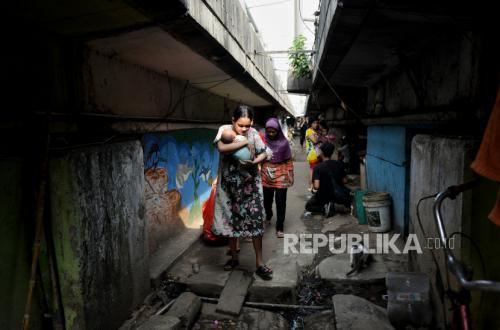
The Central Statistics Agency (BPS) records that there are still 211 out of 2,749 neighbourhood units (RW) in Jakarta that fall into the slum category. This figure comes from BPS’s data collection in 2025, with finalisation carried out in 2026.
Jakarta Governor Pramono Anung stated that this number indicates a decrease in the number of slum RW in the capital. Previously, the number of slum RW reached 445. Meanwhile, the latest data shows the number of slum RW at 211.
“I do not want to claim that it is all the result of what we have done, but if we look at the development of increasing population and the increasingly complex field issues, a decrease of nearly 52 percent, in my opinion, is something extraordinary, and I am grateful for that,” he said at Jakarta City Hall on Wednesday (6/5/2026).
Nevertheless, Pramono said that the existence of 211 slum RW is certainly homework for the Jakarta Provincial Government (Pemprov). Therefore, the Jakarta Provincial Government will strive to carry out interventions to address slum RW, especially in densely populated areas.
He stated that from the available data, the most slum RW are found in West Jakarta and North Jakarta. Therefore, these two areas will receive attention from the Jakarta Provincial Government.
“With some that become priorities for RW, especially in densely populated areas, the most are in West Jakarta and North Jakarta. That will receive attention. In the West, the most,” he said.
Pramono admitted that he has toured almost all sub-districts in West Jakarta. He assessed that there are still many slum areas in the region. “We will go down for that,” he said.
Meanwhile, BPS Head Amalia Adininggar Widyasanti said that there is a specific method to determine if an RW falls into the slum category. According to her, the determination starts from the neighbourhood level (RT), which is then aggregated into slum RW.
She mentioned that there are 11 criteria for determining slum RW. These 11 criteria are population density, building density, construction of residential buildings, condition of ventilation and lighting in residential buildings, places for defecation, and waste disposal methods.
In addition, there are criteria for waste collection frequency, condition of water channels, condition of neighbourhood roads, public street lighting, and building layout.
“So the essence is the slum condition of an RT which is then aggregated into slum RW, not only seen from the shape of the building and building density and the condition of building habitability, but also viewed from the condition of environmental facilities and sanitation,” said Amalia.