
2027 State Budget Draft Seen as Positive Sentiment for JCI, Rerating Remains a Challenge
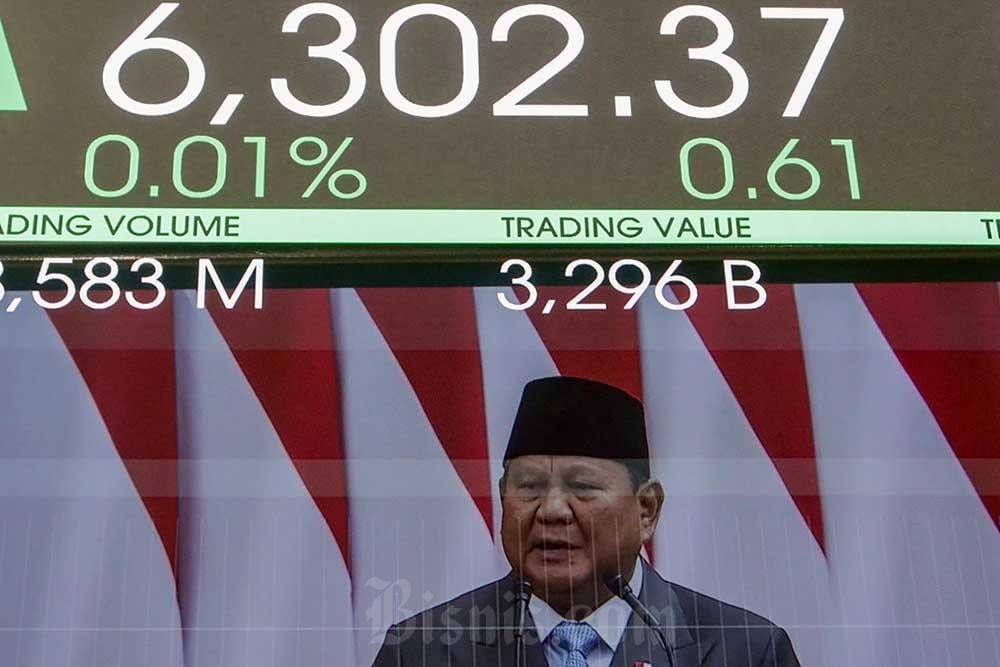
The 2027 State Budget Draft (RAPBN) is considered to have brought a fairly positive initial sentiment for the Indonesian capital market. However, this positive impact has not automatically driven a sustainable rerating of the Jakarta Composite Index (IHSG).
Head of Research at RHB Sekuritas, Andrey Wijaya, assessed that the government’s policy direction in the 2027 RAPBN is overall quite rational. Consolidation of state-owned enterprises (BUMN), more efficient procurement, stricter supervision of commodity exports, and increased investment are seen as capable of improving state efficiency and the economy’s productive capacity.
From the fiscal side, the government is targeting state spending in the 2027 RAPBN to reach Rp4,079.2 trillion with state revenue of Rp3,426 trillion. The state budget deficit is targeted to decline to 2.40% of gross domestic product (GDP), compared with the 2026 outlook of 2.85%.
Andrey assessed that the deficit target is still achievable even though fiscal space is relatively limited. Based on the revenue and spending targets, the deficit is estimated at around Rp653 trillion.
However, the state revenue growth target of 6.8% is considered quite challenging, especially because economic growth in the first half of 2026 only reached 5.45%.
Managing Research at Samuel Sekuritas Indonesia, Harry Su, assessed that President Prabowo Subianto’s speech in the financial note and the 2027 RAPBN generally took place without major surprises. However, a number of government policies are considered to provide positive sentiment for the rupiah and the capital market.
“In general, the impact of President Prabowo’s speech on the rupiah and the market is quite positive,” he said on Friday (14/8/2026).
One of the points highlighted was the performance of Danantara Sumberdaya Indonesia (DSI). The government stated that DSI has collected additional export proceeds of around US$5 billion in the first 2.5 months of its operation.
The government also brought a number of large projects and financing schemes in the 2027 RAPBN, including the Danantara Development Management Fund (DDMF), solar energy development of up to 100 GW, electric vehicles, the Indonesia Financial Center, and the Giant Sea Wall project worth around US$100 billion planned to take place over 15–20 years.
Andrey assessed that these projects are realistic in the long term, but require large private capital, regulatory certainty, and discipline in execution.
From the capital market side, Andrey sees the initial impact of the 2027 RAPBN on the IHSG as tending to be positive. The lower deficit target, affirmation of the investment grade rating, and an increasingly clear project pipeline can increase market confidence.
Fiscal discipline also has the potential to hold back the rise in government bond yields, support the rupiah, and support the valuation of interest-rate-sensitive stocks.
However, this positive sentiment has not automatically resulted in a sustainable rerating of the IHSG. The risk of greater state intervention, potential governance problems, project execution risk, and contingent liabilities that may arise from BUMN financing and government guarantees remain concerns.
“A more sustainable rerating requires a credible financing structure and significant private sector participation,” he explained.
Harry also assessed that investor optimism will depend heavily on the government’s ability to ensure major programmes run with strong governance. He highlighted the oversight risk of national programmes launched quickly and massively.
“Like MBG, what needs to be worried about is the governance challenge or corruption driven by the launch of national programmes that are too fast and massive,” said Harry.