
2026 Dry Season Predicted to Be Longer, BMKG Urges Public Vigilance
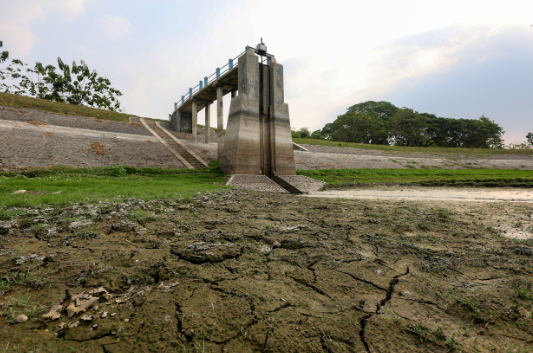
The Meteorology, Climatology, and Geophysics Agency (BMKG) has issued an early warning regarding Indonesia’s climate conditions this year. The 2026 dry season is predicted to be drier and longer than the normal average, in line with the potential emergence of the El Niño phenomenon in the second semester.
By the end of March 2026, only 7% of Indonesia’s Seasonal Zones (ZOM) have entered the dry season. However, this figure is expected to rise sharply during the April to June 2026 period.
BMKG Head, Teuku Faisal Fathani, detailed several regions already beginning to experience drought, including parts of Aceh, North Sumatra, Riau, Central Sulawesi, South Sulawesi, Southeast Sulawesi, as well as portions of West Nusa Tenggara, East Nusa Tenggara, Maluku, and West Papua.
“BMKG will continue to monitor developments in global and regional climate dynamics and provide periodic updates on the information. The public is urged to keep following official information disseminated by BMKG through various available communication channels,” Faisal stated in Jakarta on Sunday (5/4).
Meanwhile, the Deputy for Climatology at BMKG, Ardhasena Sopaheluwakan, explained that BMKG also predicts the potential development of the El Niño phenomenon in the second semester of this year. As of the end of March 2026, the El Niño-Southern Oscillation (ENSO) and Indian Ocean Dipole (IOD) conditions are still in the Neutral phase.
However, climate modelling indicates that ENSO could develop into the El Niño phase in the second semester of 2026.
“At present, BMKG’s prediction for the intensity of El Niño is in the weak to moderate category with a 50-80% probability, and notes a small possibility (less than 20%) that this phenomenon could develop into a strong category,” Ardhasena said.
BMKG reminds of the importance of caution in interpreting current prediction data due to the spring predictability barrier phenomenon, or a drastic decline in the accuracy of weather and climate model predictions for ENSO as the Northern Hemisphere passes through the spring period (March, April, May).
The accuracy of El Niño predictions produced during the March-April period is generally reliable only for forecasts up to three months ahead, thus requiring expertise in understanding the multi-factor interactions that cause the emergence of El Niño conditions and their teleconnection impacts on Indonesia. For this reason, BMKG needs to continuously monitor data updates and assess their developments.
In line with this, the confidence level regarding the intensity of El Niño will be higher in the May 2026 prediction results. Statistically, predictions in May have better reliability for covering climate conditions up to six months ahead.
“Although the exact intensity is still developing, BMKG emphasises that the 2026 dry season is predicted to be drier and last longer than the normal average, also as a contribution from the natural climate variability in Indonesia,” he explained.
Facing these conditions, BMKG urges the public to remain vigilant by taking precise steps that can be carried out by all parties. Complete information on the 2026 Dry Season Prediction and anticipatory steps for policymakers, various sectors, and the public can be accessed through BMKG channels.
The government is continuously strengthening the national food reserve as an anticipatory measure to address the potential impacts of the El Niño phenomenon, which could disrupt food production and distribution.
The Minister of Agriculture, Andi Amran Sulaiman, is accelerating mitigation steps to address the potential El Niño through the implementation of five main strategies in the field.