
2026 Drought Potential High, Pantau Gambut Urges Governance Improvements
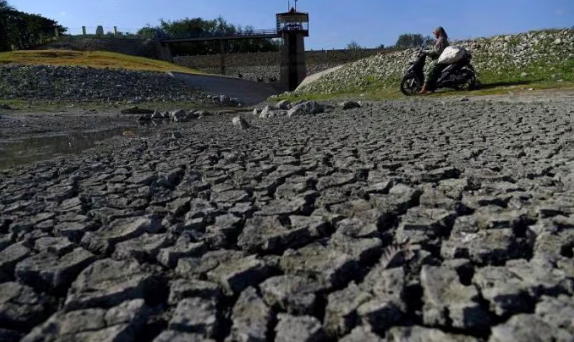
This year is estimated to have a higher drought potential compared to previous years, in line with increasing dry season risks and the influence of the El Nino phenomenon. This condition is exacerbated by the high number of hotspots in peat areas, which could trigger forest and land fires.
Based on Pantau Gambut’s analysis, from January to March 2026, 23,546 hotspots were detected in Peat Hydrological Units (KHG) across various regions in Indonesia. Riau Province recorded the highest number with 8,930 hotspots, followed by West Kalimantan with 8,842.
In addition to weather factors, Pantau Gambut assesses that drought vulnerability is also triggered by human activities, particularly the destruction of peat ecosystems through large-scale plantation practices. To date, canalisation practices by companies continue and accelerate peat degradation.
Pantau Gambut records a network of canals spanning 281,253.51 kilometres scattered across Sumatra, Kalimantan, and Papua. This length is equivalent to more than 120 round trips from Banyuwangi to Merak via the Trans-Java Toll Road, which is considered to contribute to permanent peat damage.
Pantau Gambut Campaigner, Putra Saptian, emphasised that the government must not continue to attribute the causes of drought solely to weather factors.
“The government must not keep making excuses about the weather. This year must be a momentum for the central and regional governments to immediately prepare technical guidelines and strengthen supervision of KHG-based restoration so that restoration obligations cover impacts within and outside concession administrative boundaries, thereby avoiding the risk of shifting the restoration burden to the state and regional budgets,” said Putra on Wednesday (8/4).
He also highlighted that peat damage due to industrial activities has worsened drought impacts during the dry season. “We see that massive canalisation practices have altered the natural function of peat as a water reservoir. When the dry season arrives, peat areas dry out more quickly and are highly vulnerable to burning,” he stated.
Furthermore, Pantau Gambut urges the government to promptly revise Government Regulations to clarify inter-ministerial authority divisions and initiate the drafting of a Peat Ecosystem Protection Bill based on KHG in the National Legislation Programme (Prolegnas).
With the increasing drought potential in 2026, mitigation steps based on peat ecosystem protection are considered key to suppressing forest and land fire risks as well as long-term ecological and economic impacts.
Agriculture Minister Andi Amran Sulaiman stated that the government is preparing a budget of up to Rp4 trillion for the pump irrigation programme as a strategic step to address the potential impacts of El Nino.
However, the region is currently in a transitional or pancaroba period, estimated to last until early June 2026.
BMKG is conducting weather modification in Riau and Natuna to prevent forest and land fires. Rainfall has increased by up to 36% as an early mitigation step for the dry season.
The threat of forest and land fires (karhutla) is once again looming over Indonesia in 2026, in line with the emergence of an extreme climate phenomenon called Godzilla El Nino.
The government is increasing vigilance against the potential for forest and land fires (karhutla) in 2026.