
2.3 Million Indonesian Children Unimmunised, Parents Worried About Side Effects
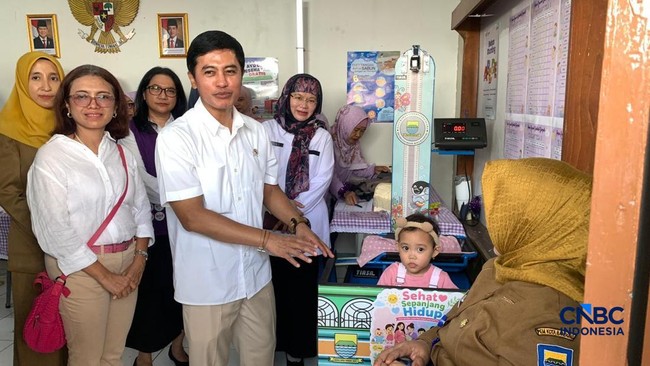
Indonesia’s immunisation programme continues to face significant challenges in the form of public scepticism towards vaccines, particularly concerns about side effects. Many parents fear their children will experience fever, seizures, or other health issues after vaccination, although most vaccine side effects are mild and temporary. These worries are further amplified by the proliferation of hoaxes and misinformation on social media, ranging from claims about vaccine contents to accusations that vaccines cause certain diseases. Nia, a mother in Bandung, admitted to initially hesitating to bring her three-year-old son, Kenzi, back to the community health post. Even her child’s grandmother suggested stopping the vaccinations. However, news of rising measles cases changed her mind. “Initially, I was scared because he had a fever after the vaccination before. His grandmother even said we shouldn’t vaccinate anymore. But when I heard about measles, I started thinking about vaccinating again,” said Nia after bringing Kenzi for his third DPT immunisation at Posyandu Tela 9 in Bandung City on Tuesday (12/5/2026). In contrast, Mia expressed no doubts about immunising her one-year-old child. She stated that her child has received vaccinations since birth and is now getting the second dose at Moch Ramdan Community Health Centre in Bandung. “I have an immunisation record book, so I know the schedule. To keep the child healthy and protected from diseases,” she said. The Ministry of Health (Kemenkes) revealed that around 2.3 million children in Indonesia are still in the zero-dose category, meaning they have never received any immunisation. This situation is cited as one of the causes of the resurgence of extraordinary measles events (KLB) in several regions. Deputy Minister of Health Dante Saksono Harbuwono stated that immunisation coverage declined during the COVID-19 pandemic because health services were focused on handling the pandemic. “As a result, it happened a few years later. One of them was the measles KLB that occurred recently,” said Dante during a thematic field visit titled “Chasing Zero-Dose Children in Bandung City, West Java” on Tuesday. Dante explained that children who do not receive immunisation are unprotected from various infectious diseases such as measles, polio, and DPT. He also highlighted the prevalence of vaccine hoaxes that make some parents afraid to immunise their children. One prominent hoax was the claim that vaccines cause autism. “It turns out that empirical studies we’ve conducted show that millions of people worldwide have never experienced autism side effects,” said Dante. Additionally, religious issues remain a challenge. Dante explained that the measles vaccine, which was once questioned, has undergone a purification process and is declared safe and halal. “It has been tested by the MUI; the vaccine no longer contains any elements derived from porcine trypsin,” he said. Meanwhile, Bandung City Mayor Muhammad Farhan stated that the local government is now working to strengthen the role of community health posts to achieve targets for reducing zero-dose cases in the community. “The zero-dose child phenomenon is fundamentally not just about data and statistics. There is the welfare of children that we need to guarantee for our collective future certainty,” said Farhan. Farhan also acknowledged ongoing rejections of immunisation due to the influence of anti-vaccine movements and differing religious views in society. Therefore, he believes the involvement of religious and community leaders is crucial in immunisation education. “The Bandung City Government is continuously strengthening the role of community health posts and area-based approaches to reduce zero-dose numbers,” he emphasised. Ministry of Health data records that the number of zero-dose children in West Java dropped from around 102,000 in 2024 to 67,000 in 2025. Meanwhile, in Bandung City, the number is now around 6,700 children, down from about 8,000 the previous year. Dante emphasised that immunisation not only protects one child but also builds community immunity so that infectious diseases do not resurge. “If even one person is not immunised, we cannot eliminate or eradicate certain diseases in that area,” he said.