
1983 Video of Prabowo Performing Sungkeman to Suharto Goes Viral, Uploaded by Indonesia's National Archives
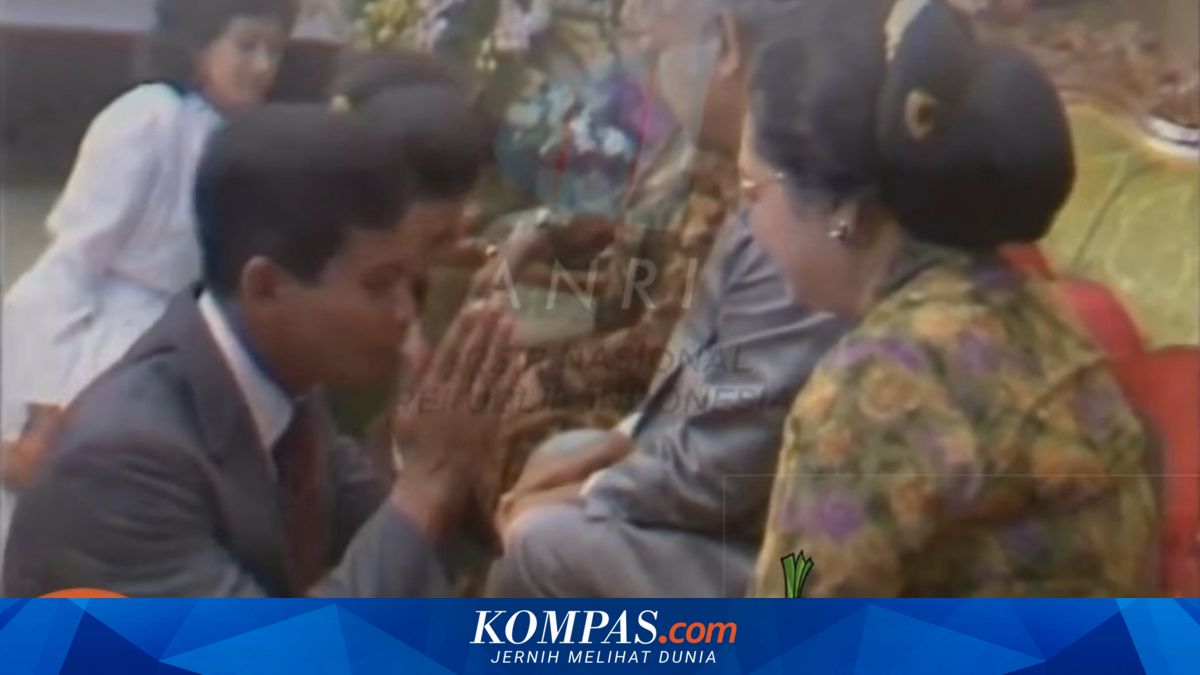
JAKARTA, KOMPAS.com - The moment when Indonesian President Prabowo Subianto performed sungkeman at the residence of Indonesia’s second President Suharto during Eid al-Fitr 1403 Hijriah, or 12 July 1983, has resurfaced on social media.
The halal bihalal moment at the family residence of the former President Suharto 43 years ago was uploaded to the official Instagram account of the National Archives of Indonesia, @arsipnasionalri, on Saturday (21/3/2026).
In the video, Prabowo, along with Titiek Soeharto and other children of Suharto, performs the sungkeman tradition to Indonesia’s second President Suharto and his wife, Tien Soeharto.
One by one, they perform the sungkeman tradition in front of Suharto and Tien.
While sitting on the floor, Prabowo bows his head and kisses Suharto’s hand.
Afterwards, Suharto kisses Prabowo’s right and left cheeks and forehead.
“#ArsipHariIni features the atmosphere of the halal bihalal of President Suharto’s family on Eid al-Fitr, 1 Syawal 1403 H. On that occasion, Mr Prabowo Subianto (now President of Indonesia) performed sungkeman to President Suharto and Mrs Tien Soeharto along with the family at the President’s residence, Jakarta, 12 July 1983,” it states.
The National Archives of Indonesia notes that the sungkeman and halal bihalal traditions are practices carried out by Indonesian society when celebrating Eid al-Fitr.
This tradition is considered an important moment for mutual forgiveness, strengthening family ties, and reinforcing values of respect for elders.
“One such moment is seen in the atmosphere of the silaturahmi of President Suharto’s family on 1 Syawal 1403 H or 12 July 1983,” writes the National Archives of Indonesia.
“Moments like this are not only part of religious celebrations but also depict the social and cultural life of Indonesian society at the time,” it adds.