
17.7 Million Homebound Travellers Predicted to Enter Central Java; Regional Government Monitors 69 Traffic Congestion Hotspots
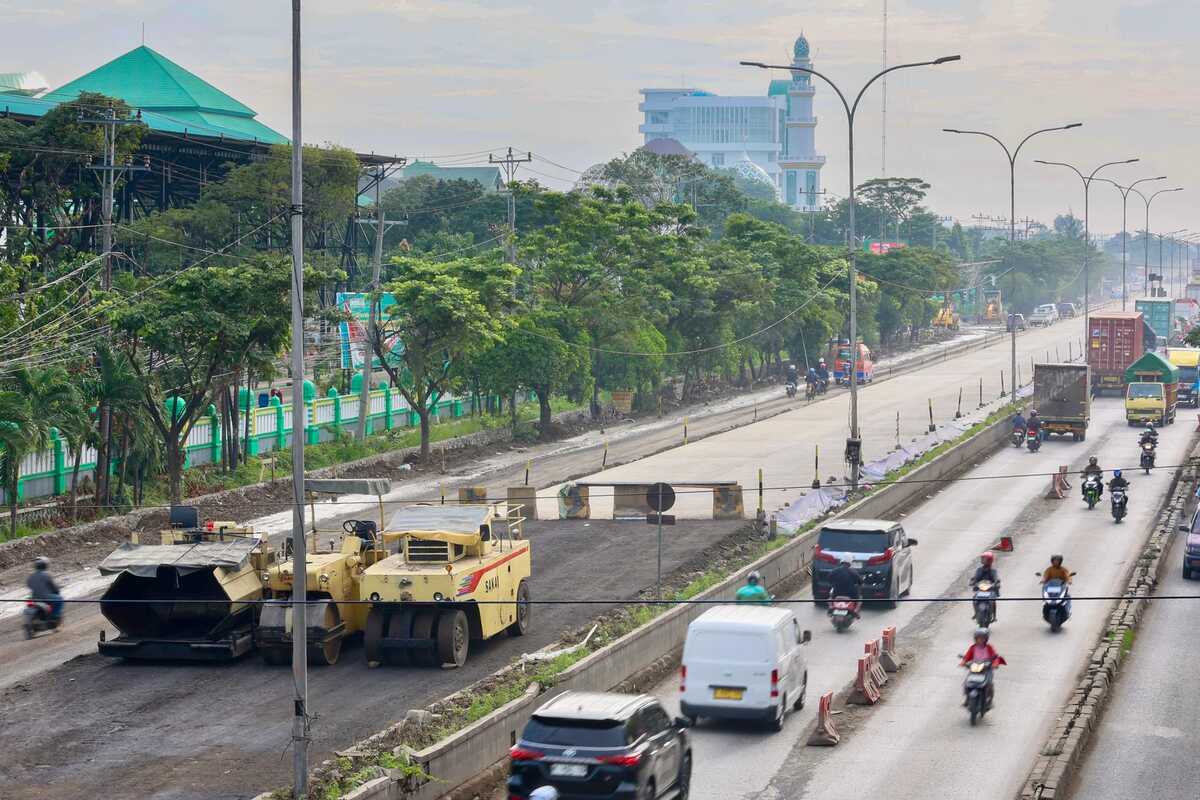
Congestion and hydrometeorological hazards are looming over the Lebaran 2026 exodus in Central Java. At least 46 congestion hotspots and 23 disaster-prone locations have been mapped along national highways, coinciding with projections of 17.7 million people entering the province during the mudik and return journey periods.
This data was released by the Central Java–DIY National Roads Implementation Office (BBPJN Jateng-DIY) as guidance for travellers heading home. Nationally, Central Java remains the primary destination with total estimated movement reaching 38.71 million people.
The head of BBPJN Jateng-DIY, Moch Iqbal Tamher, explained that congestion hotspots are distributed across coastal routes, central routes, and southern routes. These locations are dominated by makeshift market areas, level railway crossings, congested intersections, and toll gate access points.
“We have mapped all hotspots. We have prepared personnel and equipment to minimise potential obstacles to the mudik flow,” Iqbal stated in an official statement in Semarang Regency on Friday (27 February).
The coastal route is predicted to remain the most critical corridor. In addition to accommodating private vehicles, this route is the national logistics lifeline. Congestion is predicted to peak at H-3 to H+3 Lebaran 2026.
Beyond traffic challenges, homebound travellers are urged to monitor natural hazards. The BBPJN has identified 14 flood-prone locations and 9 landslide-prone locations that could cut off road access if extreme weather occurs. Landslide hotspots are concentrated in southern routes and hilly areas with unstable soil characteristics.
Central Java Governor Ahmad Luthfi emphasised that the province’s road infrastructure readiness currently reaches 94 per cent of nearly 2,200 kilometres of roads. The primary focus for 2026 is routine maintenance to ensure routes remain optimal when handling millions of vehicles.
“We are a major junction of national transit. Cross-sectoral coordination is key to ensuring smooth mudik flow whilst safeguarding travellers from potential disasters,” Ahmad Luthfi said.
The government urges mudik travellers to continuously monitor weather forecasts from Indonesia’s Meteorology, Climatology and Geophysics Agency and ensure vehicle conditions are prime before entering Central Java’s varied terrain.