
15 Fruits and Plants Mentioned in the Quran: Bananas - Onions
Jakarta, CNBC Indonesia - The Quran, as the holy book of Islam, contains not only spiritual teachings and laws of life, but also references to the universe, including flora.
The mention of plants such as dates, grapes, olives, and wheat is not coincidental. These commodities represent the foundation of the agrarian economy of the Middle East, especially the regions of Hijaz, Syria, and Egypt.
- Dates (النخل - Nakhl)
The most dominant flora mentioned in the Quran, appearing about 20 times. Dates are not just a fruit, but a symbol of blessing, resilience, and food stability for desert communities.
In QS. Maryam: 25, when Allah commanded Maryam to shake the date palm tree while giving birth to Prophet Isa AS, it illustrates that sustenance and strength are present even in the most critical moments of life. Scientifically, dates are rich in natural sugars, fiber, potassium, and iron, making them an instant source of energy and ideal for physical recovery.
- Grapes (العنب - Al-’Inab)
Mentioned about 11 times and almost always in conjunction with dates. Grapes symbolize agrarian prosperity and fertile fields.
In QS. Al-Kahfi: 32, a vineyard becomes a metaphor for the arrogance of ungrateful humans, which is eventually destroyed. On the other hand, QS. An-Naba: 32 mentions grapes as one of the delights of paradise.
- Fig / Ara (التين)
Mentioned only once, but given extraordinary honor through Allah’s oath at the beginning of Surah At-Tin. Its placement alongside olives indicates its special status. Figs are rich in fiber, calcium, and antioxidants, and have been cultivated since thousands of years BC.
- Olives (الزيتون)
Olives are mentioned seven times in the Quran. Allah even swears by the fig and the olive at the beginning of Surah At-Tin (QS. At-Tin: 1), which indicates their special status. In QS. An-Nur: 35, olive oil is described as almost burning on its own even without being touched by fire. This is a metaphor for the light of Allah, which is very bright and pure.
Olive trees grow abundantly in the region around the Mediterranean Sea and can live for a very long time, even hundreds of years. Therefore, olives are often considered a symbol of blessing and resilience.
- Wheat / Grain (حَبّ - Habb)
The word habb (grains) is mentioned several times in the Quran. It usually refers to wheat or staple crops that are the main food for humans. In QS. Yusuf: 43-47, there is a story about the dream of the king of Egypt, which was interpreted by Prophet Yusuf AS. The point is that there will be 7 years of abundant harvest followed by 7 years of drought. Yusuf suggested that the harvest be stored in preparation for difficult times. This is like the concept of “saving food” to stay safe during a crisis.
Then in QS. Al-Baqarah: 261, grains are used as a metaphor for charity. One seed can grow into seven stalks, and each stalk contains one hundred seeds. This means that one good deed can be rewarded many times over by Allah.
- Pomegranate (الرمان - Ar-Rumman)
Mentioned three times, two of which are as a sign of Allah’s power together with dates and olives (QS. Al-An’am: 99, 141), and once as a fruit of paradise (QS. Ar-Rahman: 68). Pomegranates are one of the oldest fruits in human civilization. Scientifically, the punicalagin content in it is a very strong antioxidant, even surpassing green tea and red wine.
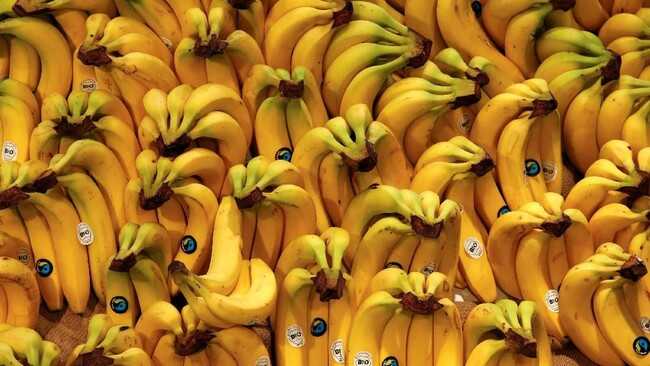
- Banana
Mentioned once in Al-Waqi’ah · Verse 29
َّطَلْحٍ مَّنْضُوْدٍۙ
wa thal-ḫim mandlûd
“banana tree whose fruit is layered”
In addition to fruits, there are trees and spices mentioned in the Quran, ranging from onions to cucumbers. The verse is in Al-Baqarah verse: 61
Al-Baqarah · Verse 61
وَاِذْ قُلْتُمْ يٰمُوْسٰى لَنْ نَّصْبِرَ عَلٰى طَعَامٍ وَّاحِدٍ فَادْعُ لَنَا رَبَّكَ يُخْرِجْ لَنَا مِمَّا تُنْۢبِتُ الْاَرْضُ مِنْۢ بَقْلِهَا وَقِثَّاۤىِٕهَا وَفُوْمِهَا وَعَدَسِهَا وَبَصَلِهَاۗ قَالَ اَتَسْتَبْدِلُوْنَ الَّذِيْ هُوَ اَدْنٰى بِالَّذِيْ هُوَ خَيْرٌۗ اِهْبِطُوْا مِصْرًا فَاِنَّ لَكُمْ مَّا سَاَلْتُمْۗ وَضُرِبَتْ عَلَيْهِمُ الذِّلَّةُ وَالْمَسْكَنَةُ وَبَاۤءُوْ بِغَضَبٍ مِّنَ اللّٰهِۗ ذٰلِكَ بِاَنَّهُمْ كَانُوْا يَكْفُرُوْنَ بِاٰيٰتِ اللّٰهِ وَيَقْتُلُوْنَ النَّبِيّٖنَ بِغَيْرِ الْحَقِّۗ ذٰلِكَ بِمَا عَصَوْا وَّكَانُوْا يَعْتَدُوْنَࣖ ٦١
(And [recall] when you said, “O Moses, we will not be content with one [type of] food, but ask your Lord to bring forth for us from what the earth grows of its plants, its cucumbers, its onions, its lentils, and its garlic.” [Moses] said, “Would you rather have what is lesser than what is better? Go to [the city] and you will obtain what you ask.” But they were burdened with disgrace, and they were in misery because they had been denying the signs of Allah and killing the prophets without right. That was because they disobeyed and were transgressing.
(mae/mae) Add as a preferred source on Google