
120 Permanent Homes for Tapanuli Selatan Disaster Victims Delivered Ahead of Schedule
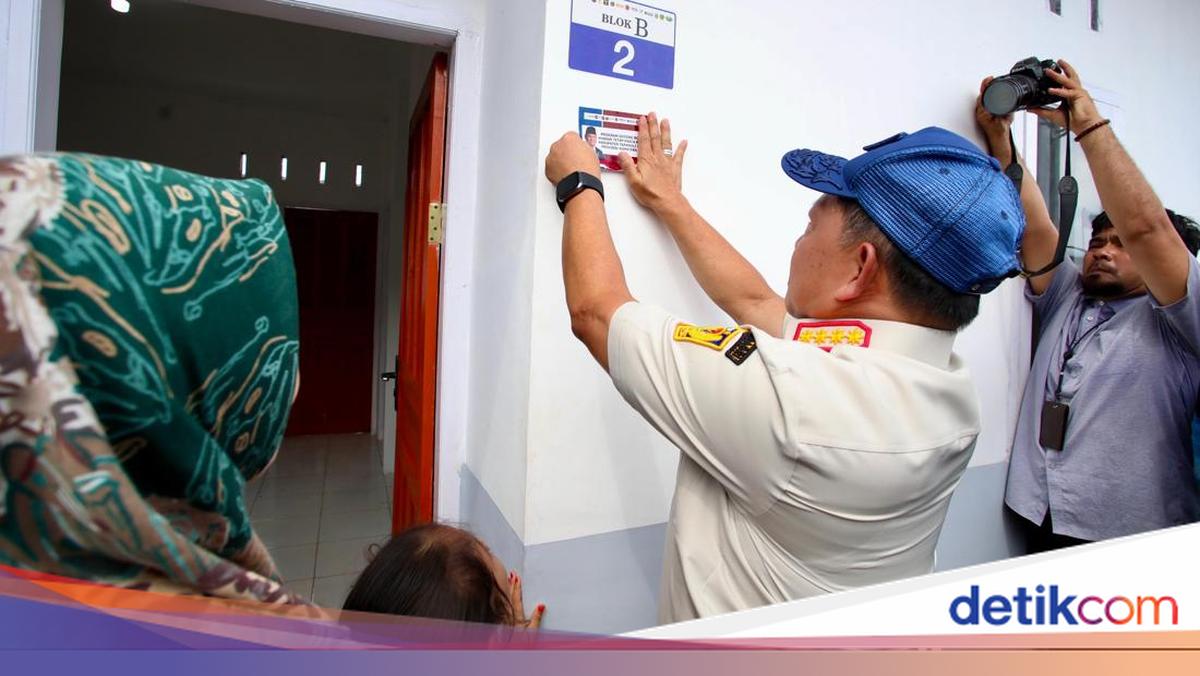
The government, through the Task Force for Accelerating Rehabilitation and Reconstruction (PRR) Post-Sumatra Disaster, continues to expedite post-disaster handling in Sumatra. This effort includes the Minister of Home Affairs (Mendagri), as Chair of the PRR Task Force, Muhammad Tito Karnavian, along with the Minister of Housing and Settlement Areas (PKP) Maruarar Sirait, handing over 120 permanent housing units (huntap) in the first phase to disaster-affected residents in Hapesong Baru Village, Batang Toru District, South Tapanuli Regency (Tapsel), North Sumatra, on Friday (27/3). The handover of the huntap occurred during the transition period from the emergency response phase to the rehabilitation and reconstruction phase, scheduled to begin on 1 April 2026. The huntap were provided to residents whose homes were severely damaged or lost due to the disaster. The construction of huntap at the site serves as an example of a communal scheme with support from non-governmental parties, namely the Tzu Chi Foundation. Overall, the Tzu Chi Foundation plans to build 2,603 huntap units in three affected provinces: Aceh, North Sumatra, and West Sumatra. “Well, this is the fastest mutual cooperation, the fastest I can say. The quickest,” Tito stated in a written remark on Saturday (28/3/2026). Tito explained that the construction of huntap is carried out through two schemes: in-situ and communal. In the in-situ scheme, residents can build their homes independently in safe and suitable locations with support of Rp60 million from the National Disaster Management Agency (BNPB), disbursed in two stages. In addition to building themselves, residents can also entrust the huntap construction process to BNPB. Meanwhile, in the communal scheme, huntap construction is carried out in one area on land provided by the local government. The construction process is handled by the Ministry of PKP or through mutual cooperation with ministries, other institutions, and non-governmental parties. On that occasion, Tito appreciated the performance of the Regent of Tapsel, Gus Irawan Pasaribu, who was deemed quick in compiling and reporting data on disaster-damaged houses, from minor, moderate, to severe damage, along with the names and addresses of affected residents. According to Tito, the completeness of this data accelerates the distribution of assistance, including the provision of huntap. In addition, affected residents have also received various other aids such as Life Assurance (Jadup), Housing Waiting Funds (DTH) for residents with severely damaged homes but not living in temporary housing (huntara), Housing Filling Assistance (BIH), and Social Economic Stimulus Assistance (BSSE). “This is all because the data is the most complete from Mr Regent Mr Gus Irawan,” he said. He hopes that the speed of data reporting can be followed by other disaster-affected regions. According to him, the faster the data is received, the faster the Central Statistics Agency (BPS) can conduct field verification. “The quicker, then BNPB (National Disaster Management Agency) can move. Minister PKP [can] also move quickly,” he explained. Meanwhile, Minister of PKP Maruarar Sirait also praised the Regent of Tapsel in determining the huntap construction location. She assessed that the location supports the residents’ livelihood because it is close to markets, schools, and hospitals. “This location is very appropriate, chosen by Mr Gus Irawan Pasaribu. The ecosystem of the location is very good. This is in accordance with the President’s instructions. Mr Prabowo said that in making decisions, we must make it easier for the people,” she emphasised.