
100 Years Accompanying Indonesia: Why Frisian Flag Deserves to be the King of Nutrition
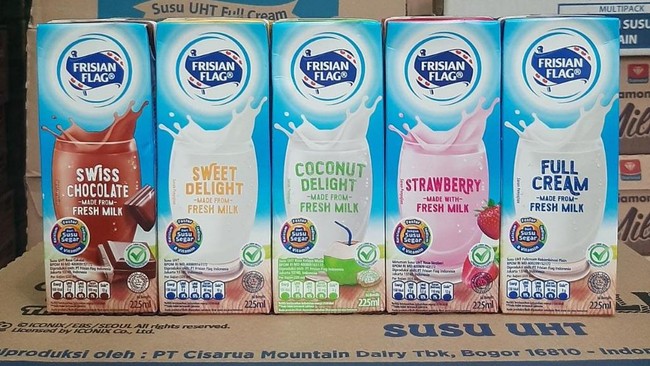
In many Indonesian homes, a glass of milk appears in every era. At the breakfast table, in school lunches, in the small kitchens of rented houses, and in the refrigerators of big-city apartments.
For more than a century, the name Frisian Flag has been present in those spaces. The company’s journey began in 1922 under the brand Friesche Vlag, later more familiarly known as Susu Bendera. From there, Frisian Flag grew into one of the most ingrained names on the national nutrition map.
The brand familiar to the public is backed by the global network of Royal FrieslandCampina, a dairy cooperative group that ranks among the world’s top five milk companies with a tradition of over 150 years.
That strength is brought to Indonesia through modern production facilities in Pasar Rebo, East Jakarta, and Cikarang, West Java. From these two points, the company supplies a variety of market needs, from ready-to-drink liquid milk, powdered milk, sweetened condensed milk, to cheese for various age groups.
However, a brand’s longevity cannot be explained by nostalgia alone. Consumers stick around if the products remain relevant.
The Role of Frisian Flag Milk in Indonesia’s Growth
In Indonesia, nutritional challenges have changed from decade to decade. In the past, the issue was food access. Now, the problems are more complex: busy families, shifting meal times, increasingly picky children, rising urbanisation, and daily intake quality often not aligning with bodily needs.
At that point, dairy companies are tested through their product formulations.
Frisian Flag places nutrition at the core of its business. Its portfolio is structured based on life stages: general family products, children’s growth milk, nutrition for pregnant and breastfeeding mothers, to complementary products like cheese.
This approach is important because the nutritional needs of toddlers, teenagers, pregnant women, and adults are indeed different. One formula cannot be used for all life stages.
Family nutrition is often discussed when problems have already arisen. Children being fussy eaters, teenagers getting tired quickly, pregnant women lacking iron, or height not progressing according to age.
Yet the root of the problem is usually simpler: inconsistent daily intake. Insufficient protein, missed calcium, and micronutrients like vitamins and minerals often absent from meals. In that context, milk still plays an important role because it is practical, easily accessible, and nutrient-dense if the formula is right.
The Ministry of Health, in its AKSI Bergizi Hidup Sehat Sejak Sekarang materials, places protein as a key component in building the body. Protein is needed for forming new cells, maintaining tissues, enzyme function, hormones, and immune strength.
In the Healthy Eating Pattern guidelines published on 27 June 2024, the Ministry of Health also emphasises the importance of consuming protein, fluids, fibre, as well as milk and its derivatives as sources of animal protein, calcium, potassium, vitamin B2, vitamin B12, and magnesium.
The question then shifts to the market: do the circulating products indeed meet those needs?
At this point, the portfolio of PT Frisian Flag Indonesia deserves a closer look.
The company, which has been present in Indonesia for more than a century, has product lines for general families, young children, to pregnant and breastfeeding mothers. Data on the nutritional composition of its products provides an overview of how nutritional needs are translated into daily consumer products.
In the general family category, Frisian Flag Full Cream 225 ml contains 130 kcal energy, 7 grams of protein, 7 grams of total fat, 10 grams of carbohydrates, and 10 grams of sugar derived from lactose, with 0 grams of sucrose.
This product also lists Vitamin A 25% AKG, Vitamin D3 25% AKG, Vitamin B1 20%, Vitamin B2 20%, Vitamin B3 20%, Vitamin B5 20%, Vitamin B6 20%, Vitamin B12 25%, Calcium 20%, Phosphorus 25%, and Iodine 25% per package.
The 7 grams of protein helps provide longer satiety compared to ordinary sweetened drinks. Calcium and phosphorus support bones and teeth. The B-complex vitamins aid energy metabolism. With urban lifestyles that are all about brevity, ready-to-drink products like this fill the gap in morning consumption that is often skipped.
The Ministry of Health also pays attention to vitamin D. Its main function relates to calcium absorption and bone formation. Many city workers leave in the morning and return at night, spending most of their time indoors.
Sunlight exposure is reduced. In that situation, vitamin D fortification in milk becomes relevant. Frisian Flag Full Cream lists 25% AKG Vitamin D3 per serving, while some other variants in the company’s documents mention up to 45% AKG.
For the pregnancy phase, nutritional needs change more sharply. Pregnant women require additional iron, folate, protein, calcium, as well as nutrients related to foetal development. Frisian Flag Primamum is designed for this segment.
Per 45-gram serving, the product contains 180 kcal energy, 9 grams of protein, 5 grams of total fat, 25 grams of carbohydrates, 2 grams of dietary fibre, and 21 grams of total sugar. On the micronutrient side, the label lists Iron 35% AKG, Calcium 20%, Phosphorus 40%, Vitamin C 30%, Vitamin B6 30%, Folic Acid 20-25%, Zinc 20%, and DHA 34 mg per serving.
The formulation aligns with field issues that are still commonly found, such as anaemia in pregnant women and inadequate micronutrient intake.
Iron is needed for haemoglobin formation. Folate is required for cell division and foetal development. Calcium is needed for bone formation. DHA is widely associated with brain development. This product is aimed at closing common nutritional gaps during pregnancy and breastfeeding.
For the young children group, nutritional needs are more sensitive because the growth period occurs rapidly.
Frisian Flag Primagro 1+ for children aged 1-3 years lists 170 kcal energy, 5 grams of protein, 6 grams of fat, 22 grams of carbohydrates, 1 gram of fibre, Vitamin C 100% AKG, Vitamin A 35%, Vitamin E 50%, Vitamin B12 60%, Calcium 30%, Phosphorus 25%, Iron 25%, Zinc 25%, Iodine 40%, and DHA 16 mg per serving.