
10 Chinese Products Suddenly Flood Indonesia: Pearls, Silk to Turbo Jets
Jakarta, CNBC Indonesia - Indonesia’s imports from China continue to show an increase, particularly for commodities ranging from pearls to silk.
According to data from the Ministry of Trade, the value of Indonesia’s imports from China from January to December 2025 reached US$87.54 billion.
This figure grew by 18.53% compared to the previous year. The increase is not evenly distributed. There are several groups of goods that have surged much faster than the average.
At the HS 2 level, the growth structure shows a specific pattern. The highest surge comes from commodities with relatively small values, followed by capital goods and industrial raw materials. This pattern provides an overview of the direction of domestic demand, which is currently shifting.
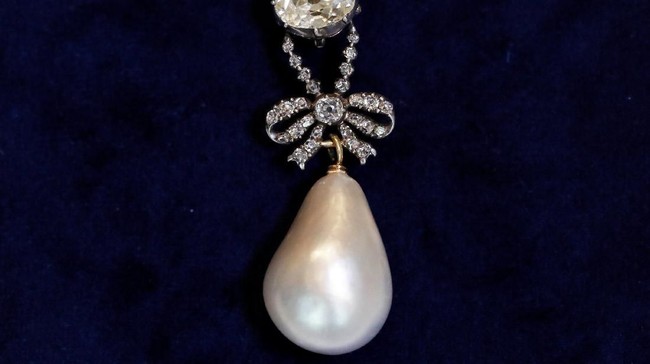
The group with the highest growth is commodities under HS 71, which includes pearls, precious stones, precious metals, and imitation jewellery.
The import value reached US$535.51 million with a growth of 712.57%. This surge indicates increased activity in the jewellery sector and trade in high-value goods, including for re-export needs and the creative industry.
The next position is occupied by motor vehicles in disassembled condition (HS 98). The value is US$264.74 million with growth of 402.42%. The import scheme in the form of disassembled components is usually related to tariff efficiency strategies and domestic assembly. This means there is a push from the automotive manufacturing sector to increase local production capacity.
Milling industry products (HS 11) recorded an increase of 242.43% to US$29.04 million. This category includes starch, malt, and wheat gluten. This rise is closely tied to the increasing needs of the domestic processed food industry.
Premium textile commodities such as silk (HS 50) grew by 130.36%, although the value is relatively small at US$4.61 million. The signal points to demand in niche markets, including the fashion industry and high value-added products.
The rail-based transportation sector also shows acceleration. Imports of locomotives and rolling stock (HS 86) reached US$351.64 million with growth of 127.10%. This figure aligns with the expansion of railway projects and fleet modernisation.
Beyond that, several commodities based on natural resources and light industry also recorded high growth. Cork (HS 45) rose by 93.38%, vegetable plaiting materials (HS 14) grew by 91.10%. Both point to needs in the furniture industry and products based on natural materials.
Chemical products (HS 38) recorded a large import value of US$2.9 billion, with growth of 81.17%. This confirms the domestic industry’s dependence on imported chemicals as production inputs. On the other hand, ships and floating structures (HS 89) grew by 67.41% to US$902.6 million, reflecting activity in the maritime and logistics sectors.
Nickel commodities (HS 75) also made the list with growth of 65.02%. Although Indonesia is a major producer, imports still occur for specific needs, including derivative products that are not yet fully produced domestically.
If examined more deeply at the HS 6 level, the surges become far more extreme. Turbo-jets with thrust above 25 kN recorded growth of over 12 million percent, although the value is only US$5 million. Non-motor passenger coaches (HS 860500) also surged by more than 11 million percent.
There are also ship components made of stainless steel, medium-weight drones, and ferrochrome, all of which recorded growth in the millions of percent.
This phenomenon at HS 6 is usually triggered by a very low comparison base in the previous year. Once there is one or two large transactions, the percentage jumps sharply. Therefore, interpretation should consider the absolute value and the context of its use.
From the overall data, the direction of import movements in 2025 is concentrated on three things: industrial raw materials, manufacturing components, and transportation equipment.