
10,000 Litres of Ecoenzyme Poured into the Jeletreng River to Curb Pollution
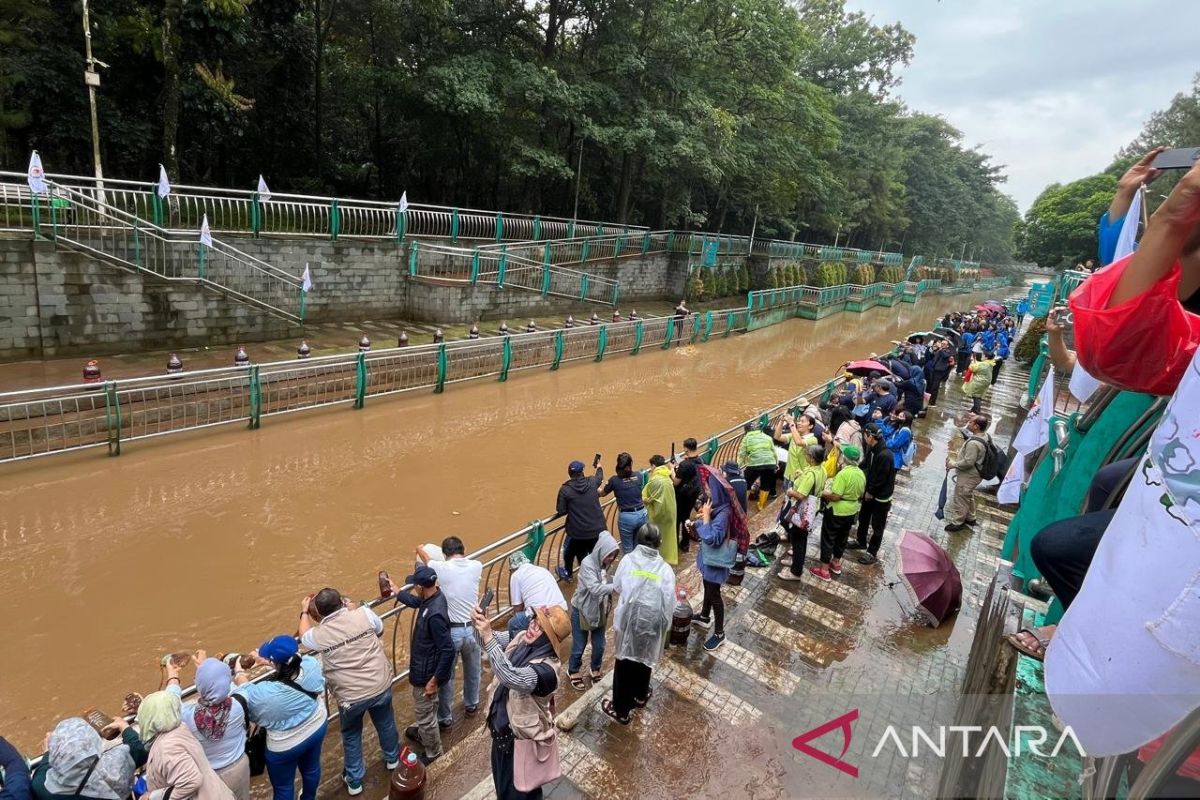
Jakarta (ANTARA) – Environment Minister Hanif Faisol Nurofiq, together with the Indonesian Buddhist Youth Generation (Gemabudhi) and the Directorate General of Bimas Buddha of the Ministry of Religious Affairs (Kemenag), poured 10,000 litres of ecoenzyme into the Jeletreng River in South Tangerang City on Sunday.
The dispersal of ecoenzyme was conducted to help restore the Jeletreng River’s ecosystem from pollution resulting from a fire at a storage warehouse containing pesticides some time ago.
‘Sambil kita luruhkan dulu semua pencemar ini sampai batas tertentu. Kita melakukan pengambilan data secara periodik. Jadi satu bulan lagi kita ambil lagi di sedimentasinya,’ said Hanif Faisol in South Tangerang.
Based on research and field checks, the Gakkum KLH team found contamination of pesticide liquid flowing into the Jeletreng River and reaching the Cisadane River over an area of about 22.5 kilometres, covering the regions of South Tangerang City, Tangerang City, and Tangerang Regency.
In addition, the Ministry of Environment has inspected the warehouse of PT Biotek Saranatama located in the BSD Techno Park Warehouse Area, Setu District, South Tangerang City.
The company is known to store pesticides of cypermethrin and profenofos, commonly used to control various crop pests.
About 20 tonnes of pesticide material burned in the incident. The firefighting runoff mixed with chemical residues flowing into the river caused contamination.
Hanif judged that the community’s initiative to spread ecoenzyme produced by Gemabudhi is a positive step to help the river ecosystem’s recovery.
‘We see the good intent and extraordinary enthusiasm. This should be appreciated because it can spur joint environmental recovery efforts,’ he said.
He added that the effectiveness of the ecoenzyme will still be measured scientifically through periodic monitoring of water and sediment quality. On the other hand, the government is pursuing legal action over the contamination incident.
Hanif explained that pesticide management falls under the authority of the Ministry of Agriculture, but when the material becomes hazardous waste (B3), its handling becomes the responsibility of the Ministry of Environment.