
10,000 Electric Bus Project Seen as a Boost for National Manufacturing Industry
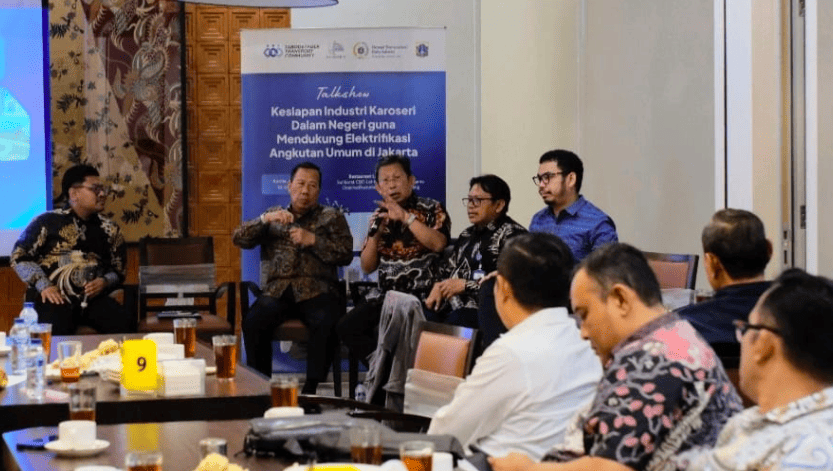
The Indonesian Coachbuilder Association (ASKARINDO) has officially declared the full readiness of the domestic manufacturing industry to support and supply the planned procurement of 10,000 electric bus fleets by PT Transportasi Jakarta (Transjakarta). At the same time, ASKARINDO is urging the DKI Jakarta Provincial Government and Transjakarta management to make the use of local coachbuilders an absolute priority, in order to safeguard industrial sovereignty and the national economy.
This statement of position was delivered during a talk show entitled ‘Readiness of the Domestic Coachbuilder Industry to Support Public Transport Electrification in Jakarta’, organised by the Jabodetabek Transport Community (JTC) in cooperation with ASKARINDO and the Jakarta City Transport Council (DTKJ) at BSD City, Tangerang, on Thursday (6/8).
ASKARINDO Supervisory Board member Sommy Lumadjeng emphasised that public transport electrification must become a stage for the domestic industry, not merely a market for fully imported products or Completely Built Up (CBU) units.
“The quality of our local coachbuilders is already very good and capable. The safety and security standards of our products have been tested and fully comply with international standards. We are ready to welcome the plan for 10,000 Transjakarta electric buses. Now is the time for local coachbuilders to be masters in their own country,” Sommy asserted.
ASKARINDO highlighted that the automotive and coachbuilder industry is the lifeblood of labour-intensive manufacturing. Prioritising local products means the government is directly safeguarding the availability of jobs for thousands of workers in assembly plants.
Furthermore, domestic bus production will trigger massive economic turnover in the component industry supply chain, from glass, seats, and electrical systems to air conditioning systems. Thus, the fleet procurement budget does not evaporate abroad, but is absorbed by the community and enlivens the national industrial ecosystem.
Sommy Lumadjeng further highlighted the biggest challenge currently facing local industry, namely the price imbalance caused by the proliferation of imported CBU products that often receive subsidies from their countries of origin.
“The government must step in and protect the national industry. So that we can compete on price with CBU vehicles from abroad, the government must provide real intervention, such as considering tax reductions or other fiscal incentives. The national industry must be protected so that the wheels of the economy can continue to turn,” he added.
Through this momentum, ASKARINDO hopes that the DKI Jakarta Provincial Government and Transjakarta can implement strict Domestic Component Level (TKDN) requirements in every procurement tender process. This strategic decision will not only realise a cleaner Jakarta sky, but also become a milestone in the revival of Indonesia’s proud automotive and coachbuilder industry.