
1,842 Hectares of Rice Paddies Submerged by Flooding in Grobogan, Farmers Face Crop Failure
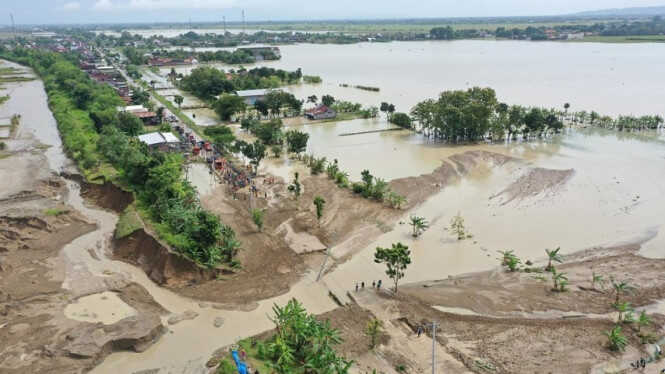
Flash flooding struck Gubug District, Grobogan Regency, after an embankment on the Tuntang River collapsed on Monday, 16 February 2026. In addition to severing transport links, the river overflow submerged thousands of hectares of agricultural land, threatening local farmers’ livelihoods due to the potential for widespread crop failure.
According to preliminary data from the Central Java Agriculture and Livestock Agency, the total affected area in Grobogan Regency reached 1,842 hectares. The majority of the land was planted with rice crops in their growth phase, making them highly vulnerable to dying if submerged for an extended period.
The Head of the Central Java Agriculture and Livestock Agency, Defransisco Dasilva Tavares, confirmed that his office was mobilising to verify conditions on the ground. The primary focus at present is distinguishing between land that is only temporarily waterlogged and land that has suffered complete crop failure.
“Plant pest control officers will conduct direct inspections. The flooded conditions do make early detection difficult, but identifying the level of damage is crucial for determining the next steps,” said Fransisco whilst accompanying Central Java Governor Ahmad Luthfi on an inspection of the flood-affected areas in Grobogan on Tuesday, 17 February 2026.
Insurance Claim Assistance
For farmers in the Gubug area and surrounding districts whose land is confirmed to have suffered crop failure, the Central Java provincial government is providing full assistance to file claims under the Rice Farming Insurance scheme (AUTP) through PT Asuransi Jasa Indonesia (Jasindo).
The claims process requires swift action, with initial reports needing to be submitted within a maximum of one week after the disaster. Farmers are urged to immediately document the condition of their submerged land through photographs as valid preliminary evidence.
These reports may initially be submitted via communication channels such as SMS or WhatsApp to field extension officers before comprehensive physical verification is carried out.
Although claim assistance has been prepared, Fransisco acknowledged that not all farmers in Grobogan are registered under the AUTP programme. This remains the principal obstacle to providing comprehensive financial protection for affected farmers.
The government is therefore continuing to encourage communities in disaster-prone areas such as Gubug to register their land promptly through local agricultural extension officers. Without formal registration, the risk of financial losses from natural disasters such as this flooding cannot be covered by insurance.