
Zulhas States Fishermen Remain the Poorest Group Since Indonesia's Independence
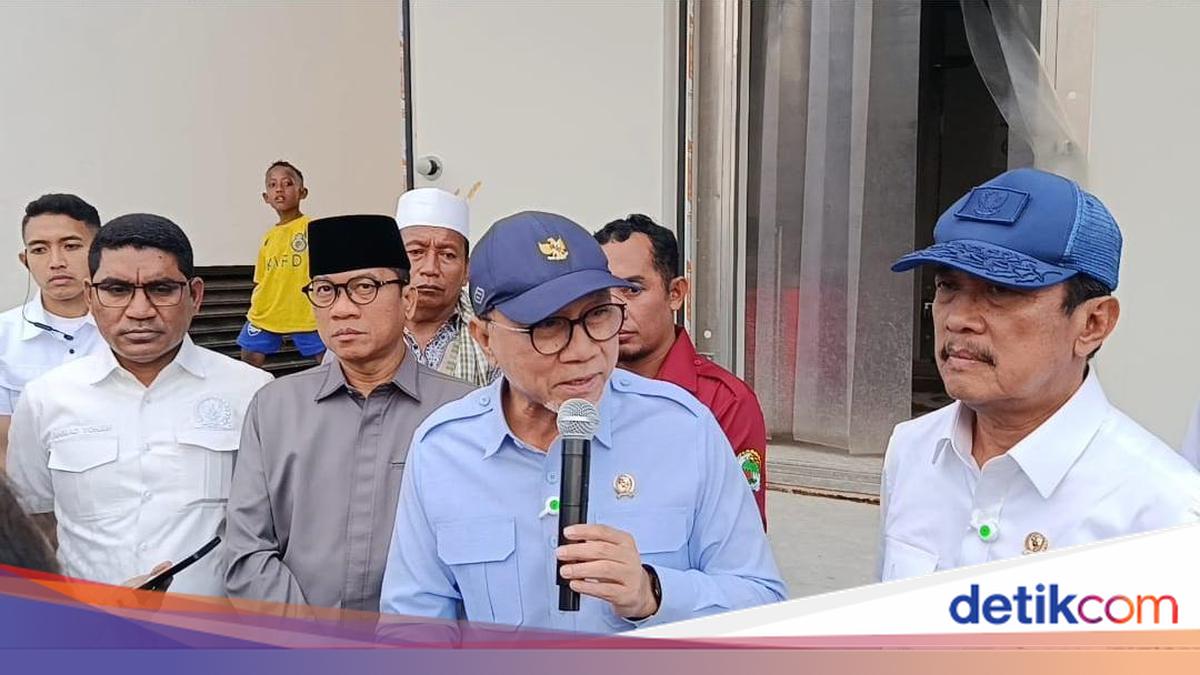
The Coordinating Minister for Food Affairs, Zulkifli Hasan (Zulhas), stated that fishermen remain the poorest community group since Indonesia’s independence. This is reflected in the fishermen’s exchange rate, which currently stands at 103, significantly lower than the rice farmers’ exchange rate of 127.
“Our fishermen have had the lowest exchange rate throughout Indonesia’s independence, meaning they are the poorest. The rate is 103, whereas rice farmers have reached 127. Previously, the rates were similar; in 2024, rice farmers were at 115, but now they have reached 127,” said Zulhas during an inspection of the Red and White Fisherman Village (KNMP) in Warloka Pesisir Village, Komodo District, Labuan Bajo, West Nusa Tenggara (NTT), on Thursday.
Zulhas was accompanied by the Minister of Marine Affairs and Fisheries, Sakti Wahyu Trenggono, the Minister of Villages and Disadvantaged Region Development, Yandri Susanto, and the Deputy Chairman of Commission IV of the Indonesian Parliament, Ahmad Yohan. The government aims to increase the fishermen’s exchange rate to 120 by 2027. According to Zulhas, the development of the KNMP is one of the efforts to improve fishermen’s welfare.
Low Bargaining Power
Zulhas noted that low bargaining power against middlemen is the primary reason fishermen struggle to escape poverty. He explained that fishermen are often forced to sell their catches at low prices because fish cannot be stored for long periods.
“Why are our fishermen poor? It is related to what is being built here (KNMP). Our fishermen are diligent, resilient, and hardworking. But when they catch fish and bring it to shore, they sell it. They meet buyers, middlemen, who offer very low prices. Fishermen do not want that; they want higher prices. But if they do not sell, the fish will rot. Consequently, they are forced to sell,” explained Zulhas.
He added that the KNMP was built to provide fishermen with higher bargaining power. The area is equipped with an auction hall, ice factory, cold storage, fish market, fisherman workshops, and supply kiosks. The cold storage at KNMP Warloka Pesisir can accommodate up to 10 tonnes of fish.
With these facilities, Zulhas stated that fishermen will no longer be forced to sell fish when prices are low because catches can be preserved longer. “If the fish are offered at low prices, the fishermen do not have to sell. They can be firm. If they want this price, because the government determines the market price is at this level, I won’t accept it. If the middlemen do not want to buy, then so be it. They can use the ice, it will last. If they want to freeze it, it goes into the cold storage, and the fish will stay fresh,” he continued.
Zullam also mentioned that the catches can be absorbed by the Red and White Fishermen’s Cooperative to be supplied to the Nutrition Fulfillment Service Unit (SPPG) as raw materials for the Free Nutritious Meal (MBG) programme. “The cooperative sells to the SPPG. This is what we call a closed-loop economy,” said Zulhas.
He expressed hope that the development of the KNMP would increase fishermen’s welfare and strengthen Indonesia’s fisheries sovereignty. “This is how we achieve self-sufficiency and honour for Indonesian fishermen. If our fishermen are served this well, their income will improve. They can afford better boats, educate their children, and become entrepreneurs. Eventually, they can fish further out, ensuring our rich seas are no longer stolen by Thailand, Vietnam, or China,” concluded Zulhas.
Source: jawawa.id (https://jawawa.id/newsitem/zulhas-states-fishermen-remain-the-poorest-group-since-indonesias-independence-1785432402)
Originally published by detikBali (https://www.detik.com/bali/bisnis/d-8597775/zulhas-sebut-nelayan-masih-jadi-kelompok-termiskin-sejak-ri-merdeka), translated from Indonesian