
Zulhas States Carbon Market Must Benefit Farmers and Fishermen
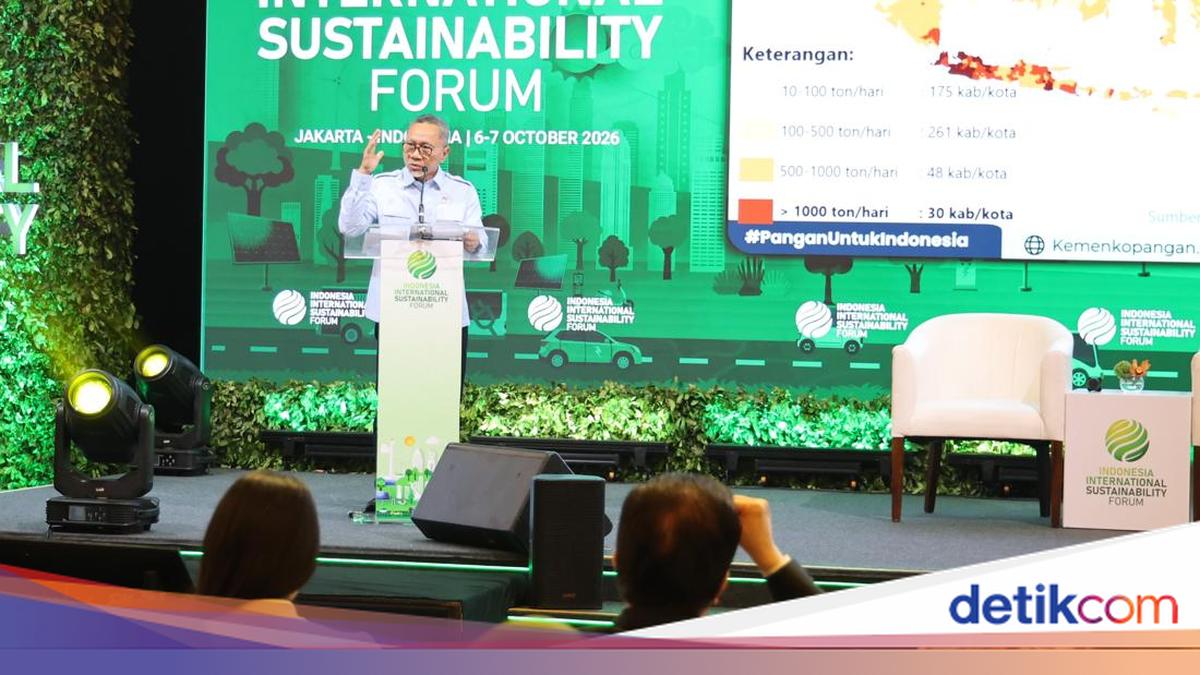
The Coordinating Minister for Food Affairs, Zulkryptli Hasan (Zulhas), stated that the carbon market must provide benefits to the wider community, including farmers, fishermen, and villagers.
He noted that the government currently recognises forests, peatlands, mangroves, oceans, and rice fields as climate assets essential for supporting the food system. These assets must be protected in collaboration with local communities.
Through the Carbon Economic Value (NEK) policy, the government is encouraging five sectors as sources of growth and financing opportunities: (1) forests and land, through nature protection and restoration that maintains community livelihoods; (2) energy, through renewable energy investment, reducing fossil fuel dependency, and job creation; (3) green industry, to ensure cleaner production processes and more competitive Indonesian products; (4) other strategic sectors, including agriculture, waste management, and blue carbon; and (5) farmers, fishermen, and villagers, who must share in the economic benefits of climate action.
“The measure of success for the carbon market is not just its transaction value, but also how much benefit reaches farmers, fishermen, and forest-dwelling villagers,” Zulhas said in a written statement on Wednesday (7/10/2026).
He made these remarks during the Indonesia International Sustainability Forum (IISF) 2026 in Jakarta on Tuesday (6/10).
Zulhas stated that the primary gateway for growth and financing opportunities lies in investment through the NEK ecosystem and the carbon market. NEK assigns economic value to emission reductions, allowing efforts to preserve and restore nature to generate income. Businesses can participate through domestic carbon trading, voluntary markets involving global buyers, and international cooperation based on the Paris Agreement.
“The government is also preparing carbon tax instruments and results-based payments, where partners pay after verified emission reductions; a results-based payment scheme for the forestry sector is already operational in East Kalimantan,” he revealed.
He ensured that the government continues to strengthen the certainty and credibility of this ecosystem through Presidential Regulation Number 110 of 2025 regarding the Implementation of Carbon Economic Value. The Carbon Unit Registry System (SRUK) is already operational and has issued carbon units for the first four forestry (FOLU) sector projects.
“Six derivative regulations have been issued in less than a year since the Presidential Regulation was released. The National Carbon Trading Roadmap is targeted for completion before the end of 2026,” said Zulhas.
He noted that the four initial forestry projects have a potential emission reduction of 30 million tonnes of CO2e, with an estimated economic transaction value of Rp5 trillion and potential Non-Tax State Revenue of approximately Rp500 billion. More broadly, 45 cross-sector mitigation projects are currently being processed.
“The energy sector will be the largest contributor, with a potential carbon credit of 358 million tonnes by 2030. Indonesia’s carbon market has the potential to generate a value of up to US$7.7 billion per year,” he concluded.
Source: jawawa.id (https://jawawa.id/newsitem/zulhas-states-carbon-market-must-benefit-farmers-and-fishermen-1791370950)
Originally published by detikcom (https://news.detik.com/berita/d-8696770/zulhas-sebut-pasar-karbon-harus-hadirkan-manfaat-ke-petani-nelayan), translated from Indonesian