
Zulhas Reveals Why PSEL Projects Are in Demand: Carbon Trading Potential
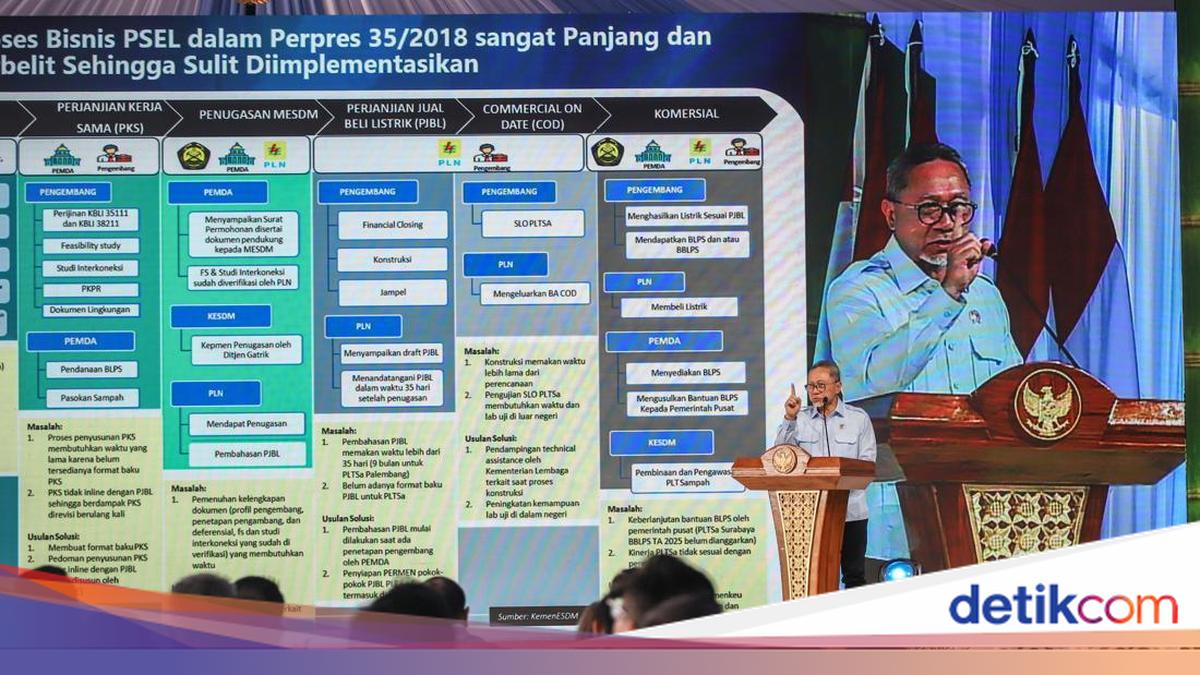
Coordinating Minister for Food and Chair of the Carbon Economic Value (NEK) Steering Committee Zulkifli Hasan (Zulhas) has revealed that one of the reasons waste-to-energy (PSEL) projects are increasingly sought after is the potential economic value from carbon trading.
According to Zulhas, processing waste into energy not only has the potential to help solve the waste problem but also opens up economic opportunities through the carbon trading mechanism.
“I have just learned why these people are competing. Apparently, joining this PSEL project makes their shares go up, Sir,” said Zulhas at the groundbreaking ceremony for the Bekasi City PSEL project in West Java on Wednesday (26/8/2028).
“They can trade carbon,” he added.
Zulhas explained that the government is indeed pushing the development of PSEL as one of the solutions to address Indonesia’s waste problem. On the other hand, the project also has the potential to generate economic benefits through the NEK.
As Chair of the NEK Steering Committee, Zulhas said he has also received a mandate from President Prabowo Subianto to oversee policies related to the economic value of carbon.
“Well, the chair of carbon trading, the carbon economic value, was appointed by the President, and so was I. I was also appointed,” said Zulhas.
Zulhas added that this mandate is part of his duties in addition to overseeing various government programmes in the food sector and other programmes.
PSEL is becoming increasingly attractive to multinational investors. The green investment is considered to have prospects for the private market, partly due to the certainty of the power purchase agreement (PPA) scheme with PT PLN (Persero).
The PPA scheme has a term of up to 30 years, providing certainty of long-term absorption of electricity generated from PSEL facilities.
Certainty of the power purchase contract is one of the important factors in increasing the attractiveness of PSEL projects for investors. In addition to revenue from electricity sales, waste processing projects also have other potential economic value through the carbon trading mechanism.
Thus, PSEL not only offers a solution to urban waste problems but also becomes part of the development of green investment and a low-carbon economy.
On that occasion, Zulhas also mentioned that his office is simplifying regulations for the development of PSEL projects to accelerate the handling of urban waste problems while providing a conducive business environment for investors.
Previously, the licensing process for PSEL development was complicated and involved too many parties, from local governments to ministries at the central level.
“Permits from the regent, permits from the mayor, permits from the governor, permits from the provincial and district DPRD, and after the permits are done, you have to face the Minister of Energy and Mineral Resources, permits from the Minister of Energy and Mineral Resources, permits from the Minister of Environment regarding environmental permits,” said Zulhas.
After the licensing process, the project still had to go through stages related to financing support and subsidies from the Minister of Finance.
“The investors would faint. If not a stroke, they would faint,” he added.
Therefore, the government is now working to tidy up and simplify the process through Presidential Regulation Number 109 of 2025. Zulhas emphasised that cross-ministerial and institutional coordination will be carried out so that various obstacles can be resolved immediately.
“Well, we are tidying this up. From here, only three remain. We will oversee the entire process until it can be implemented like this,” said Zulhas.
The event was also attended by BPI Danantara CIO Pandu Patria Sjahrir, Army Chief of Staff Maruli Simanjuntak, West Java Governor Dedi Mulyadi, and President Director of PT PLN (Persero) Darmawan Prasodjo.