
Zulhas Pushes Waste-to-Electricity Programme for 2027, Overcoming Regulatory Hurdles
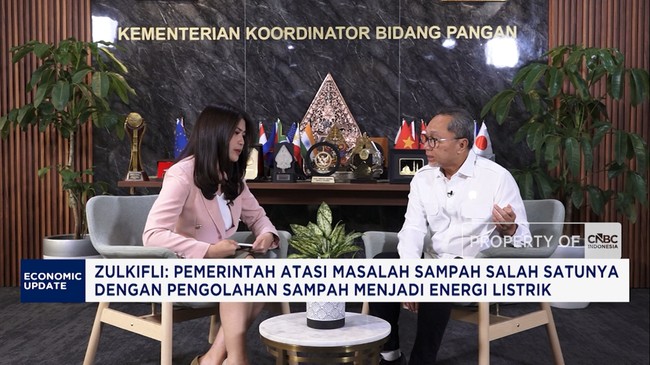
Coordinating Minister for Food Zulkifli Hasan has affirmed that the flagship programmes under President Prabowo’s administration represent the state’s commitment to the Indonesian people. The Food Self-Sufficiency Programme is a form of support for the public, carried out through farmer empowerment aimed at improving their welfare. This is also being implemented through the 2,000 Kampung Nelayan Merah Putih programme, which boosts fishermen’s productivity by constructing 40,000 biofloc systems—a fish farming method that utilises microorganisms for feed processing and waste management. Through the Free Nutritious Meal Programme, the Nutritional Fulfilment Service Units are required to source food supplies from local villages in cooperation with Village Cooperatives and Village-Owned Enterprises, thereby absorbing village food production. Specifically, the Kopdes Merah Putih programme targets the construction of 80,000 units, with an initial phase of 40,000 units to be completed by September 2025. Their function is assured not to resemble that of supermarkets; one of the key tasks of Kopdes is to distribute social assistance accurately, along with subsidised fertilisers, subsidised gas, and low-interest credit for rural communities. Zulhas also highlighted the importance of the Waste-to-Energy Processing programme to convert rubbish into a green electricity source while addressing waste issues that also impact the food sector. By cutting through regulatory barriers that have hindered progress for 11 years, the programme is targeted to be operational at 72 locations by 2027-2028.