
Zulhas pushes upstream-downstream solution to turn Bekasi waste into energy
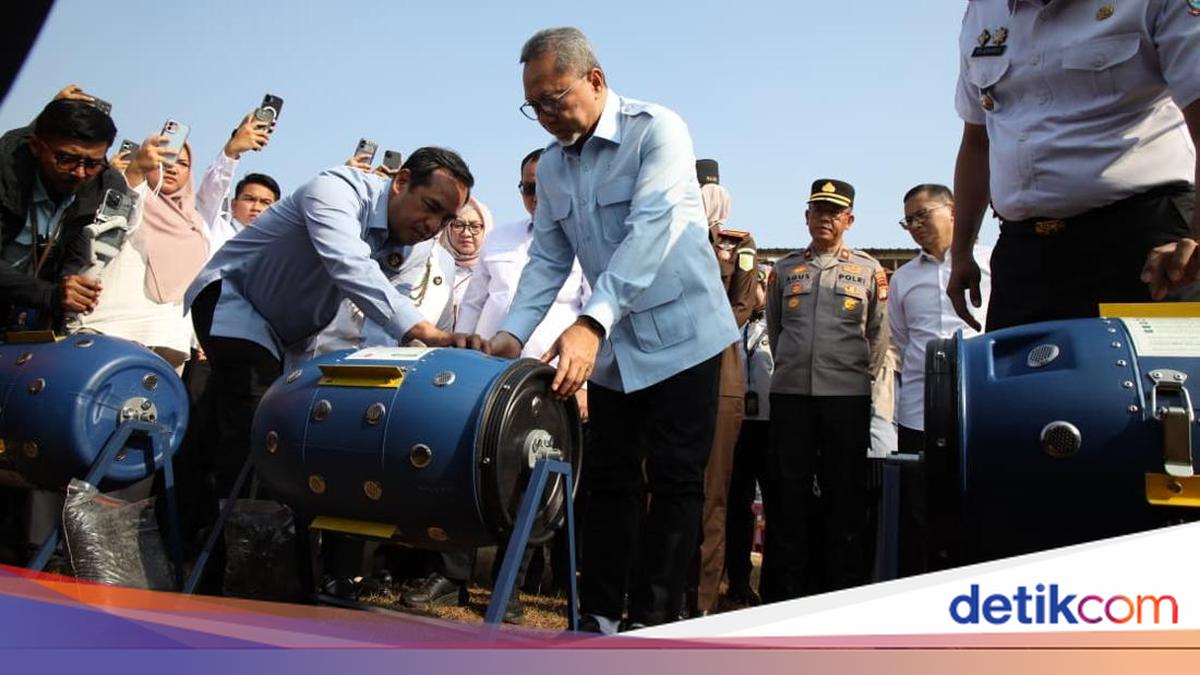
Coordinating Minister for Food Zulkifli Hasan has affirmed the government’s commitment to addressing the waste crisis in Bekasi through an integrated upstream-to-downstream strategy. The move responds to Bekasi’s waste emergency status, with the city producing approximately 1,800 tonnes of rubbish per day. The situation recently drew global attention due to methane gas contamination.
The government is promoting a comprehensive solution, ranging from household waste sorting initiatives and the construction of a Waste-to-Energy Plant (PSEL) to pyrolysis technology for dealing with legacy landfill waste.
“Bekasi recently became a global concern because of methane contamination from landfills around Bantargebang. We must resolve this issue immediately. We are coordinating so that everyone moves quickly; the public must no longer live in an environment polluted in its air, soil and water due to unmanaged waste,” Zulhas said in a statement on Thursday (27/8/2026).
He made the remarks while attending the Gebrak Pilah Sampah (Waste Sorting Drive) assembly and simultaneously breaking ground on the Bekasi PSEL construction on Wednesday (26/8/2026).
On the upstream side, the government is emphasising the importance of public awareness in sorting waste at home. Through the Waste Sorting Drive, attended by more than 2,000 participants, Zulhas urged Bekasi residents to make waste sorting a new cultural norm. A similar initiative was previously held in Greater Bandung around a month ago, drawing approximately 4,000 participants.
“Sorting waste at the source is a simple but very important step. Sorted waste will make the subsequent process easier. If sorting is done consistently, the volume of waste transported to landfill will be greatly reduced,” Zulhas said.
Complementing upstream efforts, the government is strengthening the downstream sector through the construction of the Bekasi PSEL. The Waste-to-Energy facility is targeted to process 1,500 tonnes of waste per day, equivalent to 70 per cent of Bekasi’s total waste generation.
“This waste processing will reduce landfill emissions by 80 per cent and create 1,000 jobs. So the Bekasi PSEL delivers four benefits: waste management, green energy production, emission reduction and local economic stimulation,” Zulhas stressed.
In addition to processing new waste through the PSEL, the government is also preparing a solution for legacy landfill waste using pyrolysis technology. If fully implemented nationally, pyrolysis technology has the potential to reduce waste generation by around 20 per cent.
Amid this technological modernisation, Zulhas assured that the PSEL will not displace waste pickers. He stressed that waste pickers can continue their activities and may even be involved in the sorting operations at the PSEL.
“Waste pickers need not worry. They can still collect waste because not all waste can be processed by the PSEL. Once the PSEL is operational, it will certainly require a large workforce. This could become a new opportunity for waste pickers,” he explained.
Indonesian Waste Pickers Association chairman Pris Polly welcomed the move. According to him, the assurance regarding waste picker involvement in waste management through the PSEL is positive news for those who had feared losing their livelihoods.
“Initially we were anxious because we feared waste pickers’ livelihoods would disappear with the arrival of the PSEL. But the Coordinating Minister has explained that waste pickers can still process existing waste and may even be involved in the PSEL sorting process. Now I can leave with a smile,” Pris concluded.
Source: jawawa.id (https://jawawa.id/newsitem/zulhas-pushes-upstream-downstream-solution-to-turn-bekasi-waste-into-energy-1787795527)
Originally published by detikcom (https://news.detik.com/berita/d-8635993/zulhas-dorong-solusi-hulu-hilir-ubah-sampah-bekasi-jadi-energi), translated from Indonesian