
Zulhas outlines 13 Food Affairs Ministry achievements in first two years of Prabowo-Gibran administration
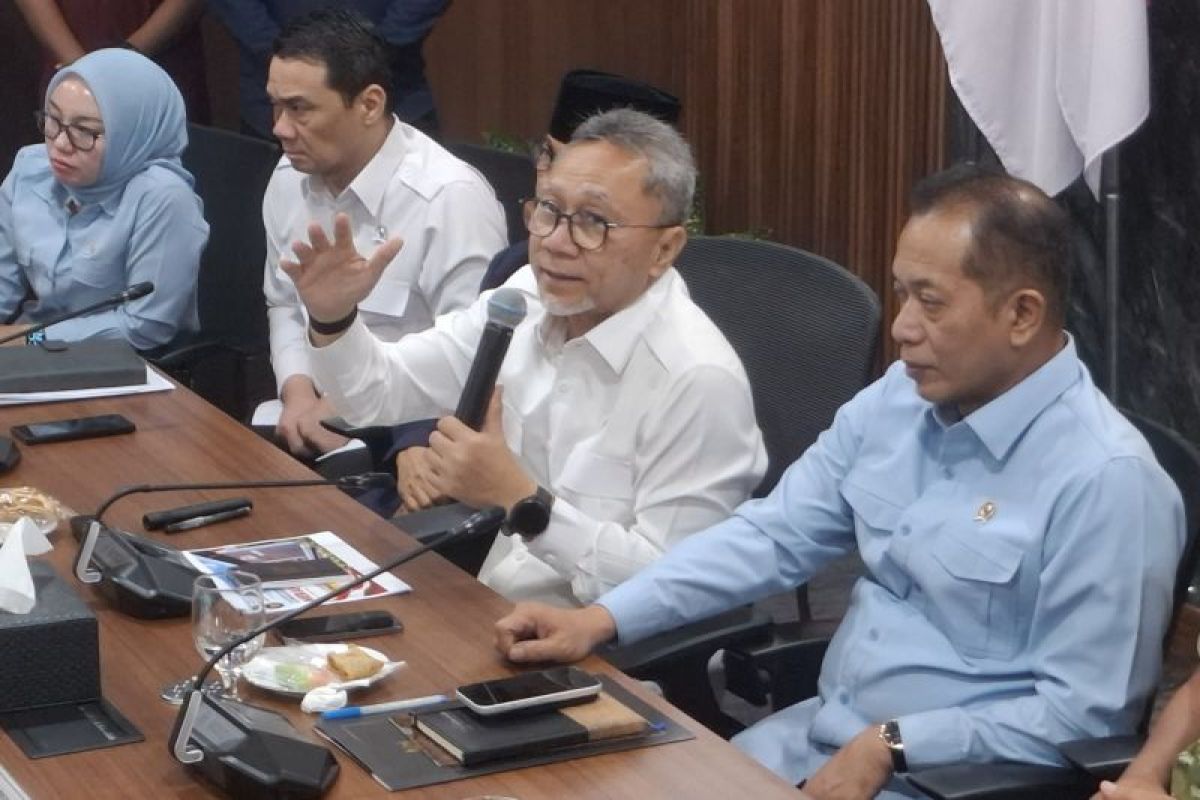
Jakarta (ANTARA) – Coordinating Minister for Food Affairs Zulkifli Hasan (Zulhas) has outlined 13 achievements and policies of the Coordinating Ministry for Food Affairs during the first two years of President Prabowo Subianto and Vice-President Gibran Rakabuming Raka’s administration.
He said the government had continued to strengthen national food security by safeguarding supplies and stabilising prices amid rising global food prices, while improving distribution management and raising farmers’ welfare.
“Over these two years, our efforts have not been limited to ensuring increased food production. Supplies and prices must be maintained, farmers’ production costs reduced and distribution improved so that the public can benefit,” Zulhas said in a statement in Jakarta on Thursday.
In its summary of achievements, the ministry said the price of chicken eggs had been kept at around Rp26,715 per kilogram (kg), while prices stood at approximately Rp12,185 per kg for Stabilised Food Supply and Prices (SPHP) rice, Rp14,009 for medium-grade rice and Rp15,683 for premium rice.
In terms of food availability, government rice reserves managed by state logistics company Perum Bulog stood at around 4.5 million tonnes as of 18 October 2026. The reserves had previously reached 5 million tonnes in April 2026.
The government is also overseeing a programme to build 100 new Bulog warehouses across the country to expand storage capacity and improve food-reserve management.
The agriculture sector recorded gross domestic product (GDP) growth of 5.74 per cent in 2025, which the government described as the highest rate in 25 years.
Farmers’ welfare has also been supported by setting the government purchase price for dry-harvested paddy at the farm-gate level at Rp6,500 per kg in 2025, to prevent paddy prices from falling during harvests.
The government also raised the farm-gate purchase price for maize from Rp5,000 to Rp5,500 per kg in 2025, subject to the established quality requirements.
In the fertiliser sector, Zulhas said the government had simplified the management of subsidised fertiliser distribution.
“Previously, fertiliser distribution involved multiple layers and 145 regulations. Management has been simplified through the issuance of a single presidential regulation, making the distribution chain more direct for farmers,” he said.
He added that the government had also involved Merah Putih Village/Sub-district Cooperatives (KDKMP) as one of the sales channels for subsidised fertiliser at the maximum retail price (HET), expanding farmers’ access to fertiliser at the regulated price.
To improve affordability, the government cut the maximum retail prices of subsidised fertilisers by 20 per cent from 22 October 2025.
“The price of urea fertiliser fell by 20 per cent, from Rp2,250 to Rp1,800 per kg, while NPK fertiliser fell from Rp2,300 to Rp1,840 per kg,” he said.
The government said it had achieved self-sufficiency in eight food commodities: rice, maize, chicken meat, chicken eggs, sugar for consumption, large chillies, bird’s-eye chillies and shallots.
Zulhas said this achievement was part of efforts to reduce reliance on food supplies from overseas and meet public needs through domestic production.
For salt, the government is developing a 2,000-hectare production hub in Rote Ndao regency, East Nusa Tenggara, as part of efforts to reduce dependence on salt imports, which amount to around 2.7 million tonnes a year.
The policy is intended to strengthen protection for rice fields against pressure from land conversion while safeguarding the sustainability of national food production.
In environmental management, the government has launched the Carbon Unit Registry System (SRUK) to consolidate records of carbon units previously held in separate systems.
“Indonesia is the first country in the world to apply the Climate Data Steering Committee (CDSC) international carbon-data model in an operational national carbon registry, strengthening transparency and the traceability of carbon units,” he said.
The government is also preparing to develop waste-to-energy (WtE) facilities at 24 sites as a response to the growing problem of landfills reaching capacity.
Zulhas said the programmes were being implemented through coordination across ministries and agencies, including local governments, to strengthen food security and sustainable resource management.
“Strengthening food reserves, building infrastructure, protecting rice fields, and improving waste management and carbon governance must proceed together. We are working on all of this with ministries, agencies and local governments so that the benefits are wider-reaching and sustainable,” he said.
Source: jawawa.id (https://jawawa.id/newsitem/zulhas-outlines-13-food-affairs-ministry-achievements-in-first-two-years-of-prabowo-gibran-administration-1792666420)
Originally published by Antara (Indonesian) (https://www.antaranews.com/berita/5804753/zulhas-paparkan-13-capaian-kemenko-pangan-dua-tahun-prabowo-gibran), translated from Indonesian