
Zulhas Designates Locations for 100 New Bulog Warehouses - Capable of Storing 900,000 Tonnes of Rice
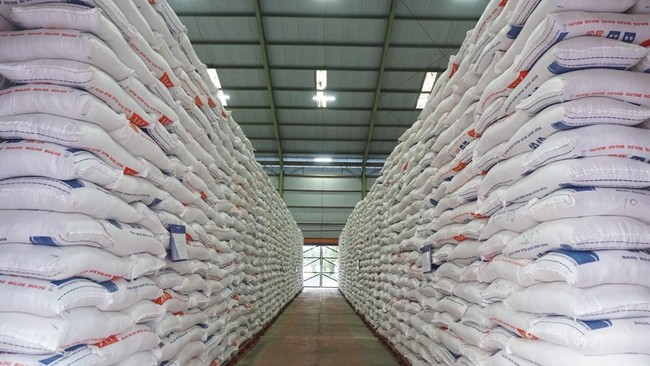
In an effort to accelerate the strengthening of national food reserves, the government is increasing rice storage capacity. Coordinating Minister for Food, Zulkifli Hasan (Zulhas), has confirmed the establishment of 100 new warehouse sites for Perum Bulog. This step is being taken in line with the surge in national rice stocks that requires greater storage infrastructure support. From this plan, the total additional capacity prepared reaches 900,000 tonnes. “These 100 warehouses have already been decided on. The total budget is Rp5 trillion, and these warehouses are in line with technological developments,” said Zulhas during a press conference at his office in Jakarta on Wednesday (22/4/2026). The distribution of the warehouse construction will cover almost all regions of Indonesia. Perum Bulog’s President Director, Ahmad Rizal Ramdhani, stated that the site locations have been determined based on regional needs and potential. “Alhamdulillah, these 100 sites will be built in 26 Bulog regional offices and 92 districts/cities. So there are some districts/cities that will have doubles and so on because of the needs and potential of each region,” said Rizal when met after the press conference. “New Bulog warehouses across the entire country, yes. The entire country and from those Bulog warehouses, 52 locations are on Bulog’s land. The 48 locations are on land granted by respective regional governments,” he explained. Rizal explained that each warehouse will have varying capacities, adjusted to the characteristics of the region. The smallest capacity is designed to hold 1,000 tonnes, while the largest reaches 3,500 tonnes. Not only warehouses, the government is also preparing supporting facilities in several food production centres. Regions with high rice and maize potential will be equipped with additional infrastructure such as dryers and rice milling units (RMU). “Then there are regions or areas that will receive construction besides warehouses. For example, areas with high rice potential or high maize potential. They will get additional dryers or RMU,” he said. In addition to physical expansion, these new warehouses will also adopt the latest technology developed by the National Research and Innovation Agency (BRIN). This technology is claimed to significantly extend the shelf life of rice. “That technology can preserve rice, it can be stored in the warehouse for almost two years without needing fumigation and so on,” Rizal concluded. Previously, Rizal revealed that the construction of these 100 warehouses will be focused on areas that do not yet have storage facilities, including 3T (frontier, outermost, and underdeveloped) regions. He cited examples of areas such as South Nias and Morotai as construction priorities. According to him, the presence of warehouses in 3T regions is very important, especially because geographical conditions often hinder logistics access.