
Zulhas Confirms KDKMP Readiness for Simultaneous Operations on 15 October
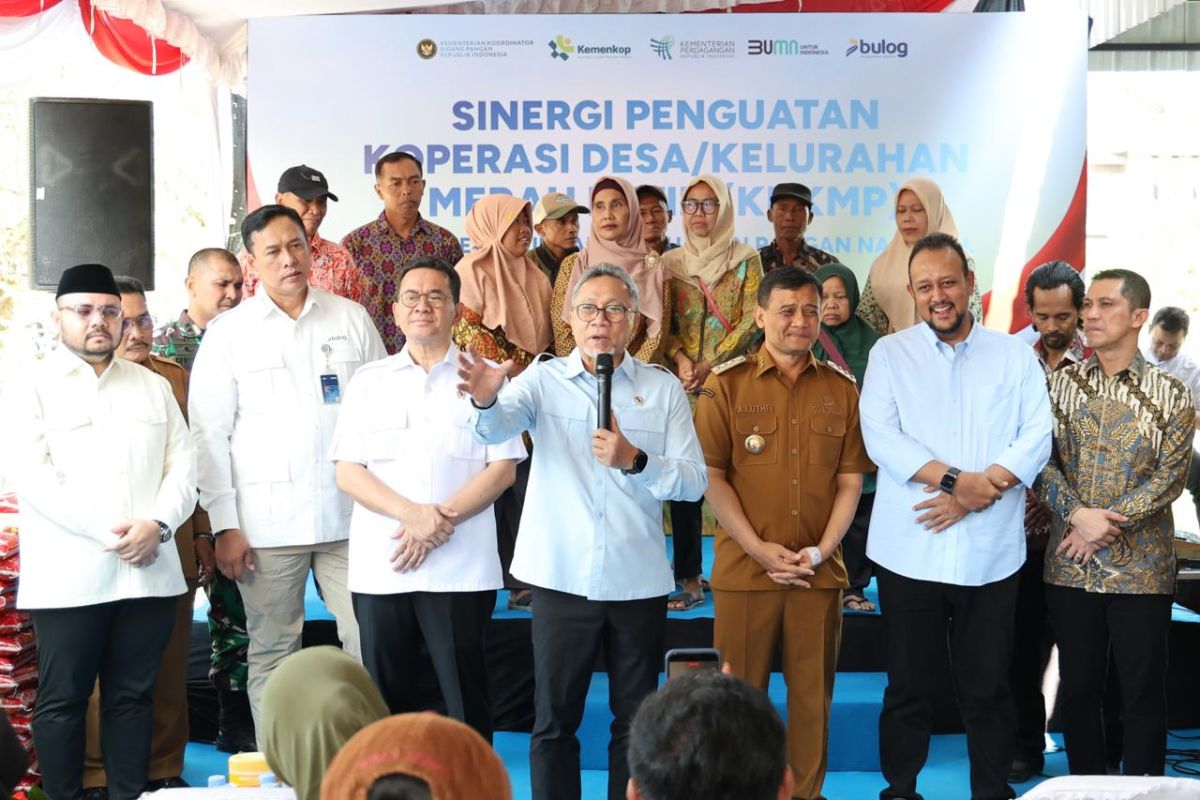
Jakarta (ANTARA) — Coordinating Minister for Food Zulkifli Hasan (Zulhas) has confirmed that the Merah Putih Village/Urban-Ward Cooperatives (KDKMP) are being prepared to serve the public ahead of their simultaneous operational launch on 15 October 2026.
“We are checking the readiness of these cooperatives one by one. They must be managed well, provide services to the public and ensure residents directly benefit from the distribution of subsidised goods,” Zulhas said in a statement in Jakarta on Tuesday.
The Coordinating Minister made the remarks while inspecting three KDKMP cooperatives in Baki District, Sukoharjo Regency, Central Java: Purbayan, Kadilangu and Menuran. He was accompanied by Trade Minister Budi Santoso and Perum Bulog President Director Ahmad Rizal Ramdhani.
Zulhas said a cooperative’s readiness should not be measured solely by whether its building has been completed and facilities are available, but also by managers’ ability to run the business and provide services needed by the community.
He explained that the KDKMP cooperatives are being prepared to support the distribution of staple goods and subsidised products, including rice under the Food Supply and Price Stabilisation (SPHP) programme, cooking oil, three-kilogramme LPG cylinders and subsidised fertiliser, in line with regulations.
During the visit, the government also held a Low-Cost Food Movement (GPM), offering rice at Rp12,500 per kilogramme to help residents obtain food at affordable prices.
In addition to distributing staple goods, Zulhas stressed the cooperatives’ role in helping market agricultural produce and connecting farmers with Perum Bulog to facilitate paddy procurement.
“Farmers must not sell paddy for less than the price set by the government. When a village has a harvest, the cooperative can buy the paddy at a good price—Rp6,500 per kilogramme—before it is taken up by Bulog,” he said.
Through this arrangement, cooperatives are expected to give farmers greater certainty of a market and reduce their dependence on middlemen.
On food distribution readiness, Perum Bulog reported that 1,985 KDKMP cooperatives were within its service coverage. Of these, 736 had received SPHP rice services, while services for the remaining 1,249 were still being arranged.
The Central Java provincial government said that, as of 12 October 2026, 64 per cent—or 5,427 of the province’s 8,523 KDKMP cooperatives—were operating, while the other 3,096 were still in preparation.
To broaden access to rural economic services, the government is also preparing to develop financial transaction services through BRILink, making banking services more accessible to residents and micro, small and medium-sized enterprises (MSMEs).
For logistics, the government is facilitating the provision of one lorry and one pick-up truck for each cooperative to support goods distribution.
Cooperatives are to be managed professionally, with managers responsible for business operations and village heads overseeing their work while ensuring members are involved.
Zulhas previously said KDKMP operations would be introduced gradually from October 2026. On 15 October, the government plans to have a number of officials monitor cooperative activities in person.
The government hopes that improved service readiness, logistical facilities and governance will shorten distribution chains, broaden access to staple goods, and help market agricultural produce and rural MSME products.