
Zulhas Addresses Various Issues on Kopdes Merah Putih in Mountain Areas and MBG Menu
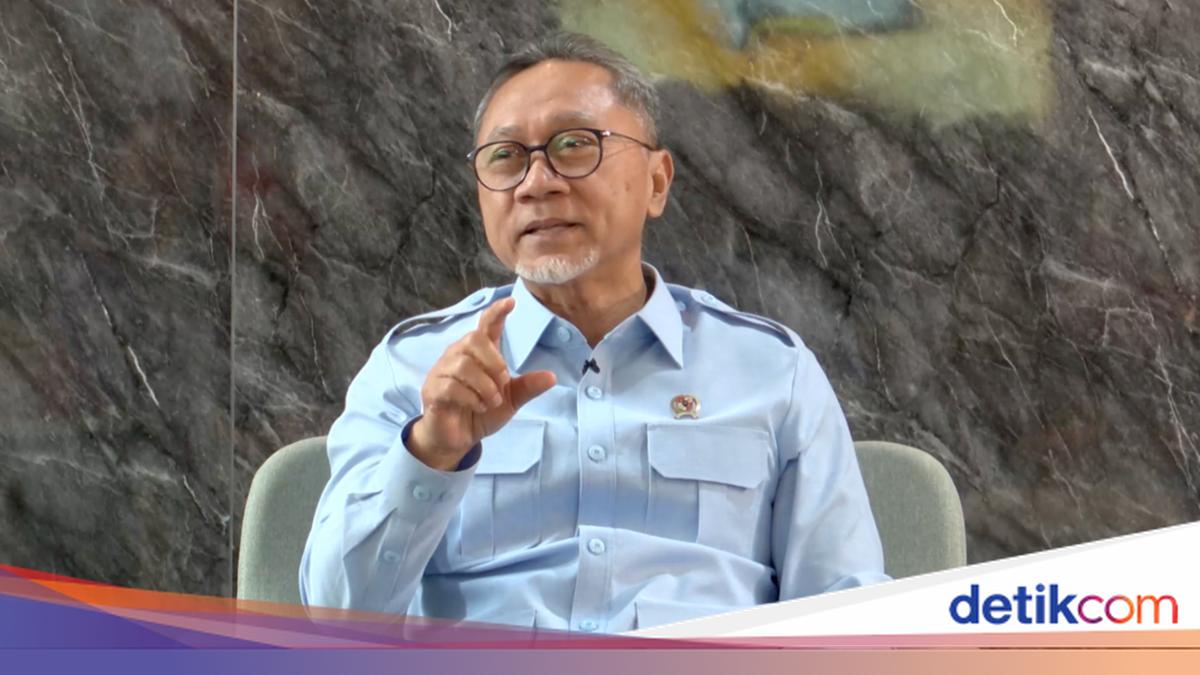
Recently, a number of issues related to government programmes have become topics of public discussion, ranging from the existence of Kopdes Merah Putih (KDMP) in mountainous areas to the implementation of the Free Nutritious Meals (MBG) programme. These issues have also drawn the attention of Coordinating Minister for Food Zulkifli Hasan (Zulhas). Responding to a viral video showing a KDMP building in a mountainous area, Zulhas acknowledged that the location is not ideal and will be reorganised so that it can be accessed by the public.
Zulhas said the Government is targeting the construction of more than 35,000 KDMP this year as part of a plan to build 82,000 KDMP across all villages. However, this construction requires a process, including the provision of land. “Finding 82,000 plots of land for the cooperatives is not easy. Therefore, this year we are only building more than 35,000. Of the 35,000 buildings, some are on top of mountains. It may have been difficult to find land. But what needs to be known is that the buildings on the mountain will be reorganised,” said Zulhas in the #ZulhasBikinJelas programme with detikcom.
Kopdes Merah Putih is not a supermarket. Besides the location issue, the condition of several KDMP with still limited merchandise has also become a public concern. Zulhas stressed that KDMP is not merely a place to sell goods or a supermarket in the village. He emphasised that KDMP is designed as one of the government’s infrastructures to distribute various programmes and assistance to the public. “This cooperative is not a supermarket. This cooperative’s task is as government infrastructure. The government has social assistance, subsidised goods, social aid, subsidised interest rates; all of that will later be managed through Kopdes Merah Putih,” he explained.
“For example, every month PKH recipients receive rice assistance for deciles 1, 2, 3 and 4. Later it will be sent to the village, and the village will determine who receives it. Now all assistance goes through Kopdes Merah Putih. There is also fertiliser subsidy. Fertiliser has many obstacles, there are middlemen and extensive networks. Later, fertiliser will go directly from the factory to the village cooperative, and from the cooperative directly to farmers,” he added.
In addition, Zulhas said KDMP is also prepared as an offtaker that can absorb community production, such as unhusked rice. The production can then be distributed through cooperation with relevant parties, including Bulog. “In this way, the village has a centre for economic growth movement. If not, how? Our villages would die,” he stressed.
Evaluation of MBG: Management Overhaul and Programme Expansion. Another issue that often goes viral is the implementation of the MBG programme. Zulhas explained that MBG is a large-scale programme because it targets around 82.9 million recipients. In its implementation, the government still finds a number of problems, including misuse and management that is considered not yet running well. The government has now made improvements over the past few months by involving several institutions to oversee the programme’s implementation. Problematic managers are also processed according to regulations.
“MBG serves 82.9 million people, a very big job. Previously it was handled by the wrong people, some were even dishonest, resulting in a lot of misuse. The government apologises that it has not succeeded yet, but give us one to two months to tidy things up,” he said.
Zulhas stressed that the government has overhauled the MBG management. The focus going forward is to ensure distribution is on target, especially in the 3T regions (frontier, outermost, disadvantaged) and for vulnerable groups such as pregnant women, toddlers, and breastfeeding mothers. “We asked the President for two months. One month has passed, and in that time we have resolved problems in the 3T regions, especially ensuring that those who are entitled but have not received it can get MBG. There are around 3,000 new points that need time to be completed. For pregnant women, toddlers, and breastfeeding mothers, we have also completed it. This group adds around 11 million beneficiaries,” Zulhas explained.
Zulhas said the government will also expand MBG implementation to faith-based schools, including Islamic boarding schools (pesantren). The programme will be carried out gradually by ensuring that the kitchens of the Nutrition Fulfilment Service Units (SPPG) meet the established standards. “We will also complete faith-based schools later, but they must comply with SPPG standards, the kitchens must meet the standards,” said Zulhas.
Besides expanding recipients, Zulhas highlighted food safety standards in MBG implementation. He stressed that SPPG kitchens that do not meet the requirements of the Hygiene Sanitation Eligibility Certificate (SLHS) will be closed. He emphasised that the government will not tolerate kitchens deemed unfit or potentially harmful to beneficiaries. Currently, there are nearly 7,000 kitchens that do not yet have SLHS. “If there is no SLHS, close the kitchen. There is no bargaining. Even if one person gets food poisoning, whether one or two, they are our children. This is not about numbers, this is about safety,” he stressed.
Zulhas also responded to a video showing several children appearing less interested in eating the MBG menu. According to him, differences in children’s tastes are something that needs to be considered in the programme’s implementation. He said students can submit complaints if the menu provided is not suitable. Complaints can be conveyed through teachers or homeroom teachers to be forwarded to SPPG managers. “Now if there is a complaint, just report it to the teacher. The teacher can then complain to the SPPG, and they can even request what menu they want for next week. And they can also complain if the food is not suitable,” he explained.
Zulhas acknowledged that every child has different tastes. Therefore, menu variation needs to be considered so that the food provided can be accepted by more children.