
Zulhas Accelerates Upstream-Downstream Solutions to Tackle Bekasi Waste Crisis
Bekasi City has entered a new chapter in handling the pollution crisis and waste accumulation in the Bantargebang area. The central government is beginning to implement integrated upstream-to-downstream solutions to address the waste emergency.
Coordinating Minister for Food Zulkifli Hasan stressed that this problem must be tackled immediately in a massive and modern manner. Waste generation in the region is recorded at a staggering figure of around 1,800 tonnes per day. This alarming condition has placed Bekasi City in the waste emergency category.
The man familiarly known as Zulhas highlighted the world’s attention on methane gas pollution from final disposal sites around Bantargebang. He urged all parties to move quickly to save the community’s living environment.
“Bekasi has recently become a global concern due to methane gas pollution from landfills around Bantargebang. We must resolve this issue immediately. We are coordinating so that everyone moves quickly; the public must no longer live in an environment polluted in its air, soil, and water due to unmanaged waste,” said Zulhas in a written statement on Thursday (27/8/2026).
Prior to the groundbreaking of the PSEL facility, the government held a Waste Sorting Roll Call involving more than 2,000 participants. This massive movement aims to strengthen residents’ awareness of sorting household waste from the source. A similar event was also successfully held in the Greater Bandung area a month earlier with 4,000 participants.
Zulhas assessed that the simple step of sorting waste from home plays a very crucial role. Residents’ consistency is claimed to be effective in reducing the volume of waste transported to landfills.
“Sorting waste from the source is a simple yet very important step. Sorted waste will facilitate the subsequent process. If sorting is carried out consistently, the volume of waste transported to the landfill will be greatly reduced,” said Zulhas.
On the downstream side, the construction of a Waste-to-Energy facility is a concrete step by the government. This advanced facility relies on Waste to Energy technology to accelerate emergency handling. The infrastructure is targeted to process 1,500 tonnes, equivalent to 70 percent of Bekasi’s total daily waste.
Zulhas outlined four main benefits of the green energy processing infrastructure. The facility is believed to be able to reduce emissions while absorbing thousands of local workers.
“This waste processing will reduce landfill emissions by 80 percent and create 1,000 jobs. So the Bekasi PSEL brings four benefits: waste management, green energy production, emission reduction, and driving the local economy,” Zulhas asserted.
The construction in Bekasi is a continuation of the national-scale PSEL acceleration programme. The government previously conducted groundbreaking for similar facilities in Bali and Legoknangka, West Java, in July 2026. Overall, the government will soon have 13 new PSEL locations, including Palembang City, which is scheduled to operate in October 2026.
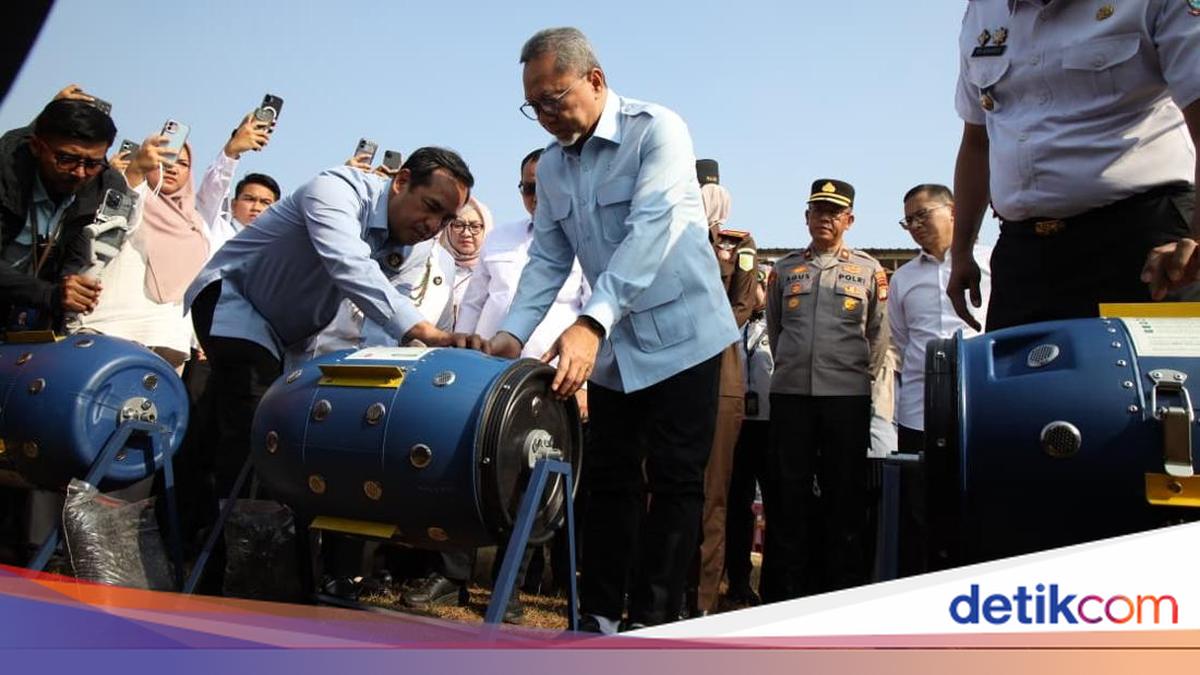
Handling of old waste piles at the landfill is also being addressed using pyrolysis technology. The government appreciates the full support of the Indonesian Army in developing this innovation through pilot projects in five different locations. This technology has the potential to reduce 20 percent of national waste generation by converting it into renewable fuel equivalent to diesel.
The presence of this array of modern technology is assured not to displace the existence of waste pickers. Zulhas guaranteed that this group of informal workers can still earn a living at the disposal site.
“Waste pickers need not worry. They can still collect existing waste because not all waste can be processed by the PSEL. Then, once the PSEL is operational, it will certainly require a large workforce. This can become a new source of livelihood for waste pickers,” Zulhas explained.
Chairman of the Indonesian Waste Pickers Association Pris Polly welcomed the central government’s assurance. The minister’s explanation was deemed successful in calming the concerns of association members on the ground.
“Initially we were worried because we feared the waste pickers’ livelihoods would disappear with the presence of the PSEL. But earlier the Coordinating Minister explained that waste pickers can still process existing waste and can even be involved in the PSEL sorting process. Now I can leave with a smile,” said Pris.
This upstream-to-downstream transformation is in line with the President’s directive to realise an ASRI Indonesia (Safe, Healthy, Clean, Beautiful). The environmental crisis in Bekasi is expected to soon turn into a successful example of integrated waste management on a national scale.
Source: jawawa.id (https://jawawa.id/newsitem/zulhas-accelerates-upstream-downstream-solutions-to-tackle-bekasi-waste-crisis-1787799187)
Originally published by detikcom (https://news.detik.com/berita/d-8636030/zulhas-kebut-solusi-hulu-hilir-atasi-krisis-sampah-bekasi), translated from Indonesian