
Zohran Mamdani to Attend Ground Zero Ceremony Despite Growing Controversy
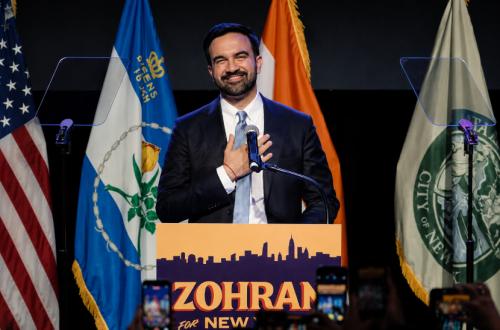
The controversy ahead of the 25th anniversary of the 11 September 2001 attacks in New York is heating up. New York City Mayor Zohran Mamdani has confirmed he will attend the main ceremony at Ground Zero on Friday (11/9/2026), despite calls from some victims’ families and a number of political figures for him to stay away.
The latest pressure came from former New York Mayor Rudy Giuliani, who led the city when two planes struck the World Trade Center on 11 September 2001. Giuliani publicly asked Mamdani to skip this year’s commemoration ceremony. Former New York Governor George Pataki had also previously voiced opposition to Mamdani’s attendance.
Mamdani, however, has not wavered. He affirmed that he will stand with victims’ families, survivors and first responders as New York marks a quarter century since the tragedy. Mamdani also stressed his love for New York and the United States, and asked that the focus remain on those who lost family members and on those who risked their lives to save citizens in 2001.
The debate over Mamdani’s attendance has in fact been running for several weeks. A petition initiated by a number of 9/11 victims’ families urged organisers to reconsider his involvement in the ceremony. By early September, the petition had gathered more than 98,000 signatures from members of the public.
Now, just days before the main ceremony, the controversy has found fresh fuel. The source is an object that is physically small but carries enormous symbolic weight: the pen Mamdani used to sign executive orders related to 9/11.
The pen that sparked the row
On Friday (4/9/2026), Mamdani gathered a number of senior New York officials at City Hall. Among them were New York Police Commissioner Jessica Tisch, officials from the New York Fire Department (FDNY), emergency management officials, and the mayor’s chief counsel, Ramzi Kassem.
Mamdani then signed two executive orders ahead of the 25th anniversary of 9/11. The first order designates 11 September each year as a Citywide Day of Remembrance and Service across New York City. It directs the city government to hold moments of silence, commemorative events, educational programmes and community service activities.
The second order updates New York’s government continuity planning for the first time since 2007. It also establishes a cross-agency team to ensure essential government services continue running when the city faces an attack, disaster or other emergency.
The controversy erupted after the signing ceremony concluded. According to reports by Fox News and the New York Post, Mamdani gave the pen he had used to NYPD Commissioner Jessica Tisch and asked Tisch to pass it on to Kassem. A photograph from the NYC Office of the Mayor shows Tisch subsequently handing the pen to the mayor’s chief counsel.
For the city government, Kassem is no stranger to the policy’s drafting. As chief counsel, he and his legal team were involved in preparing the two executive orders that had just been signed.
However, to Mamdani’s critics, Kassem’s professional history makes the gift of the pen symbolically problematic. Kassem was once a lawyer for Ahmed al-Darbi, a Saudi Arabian citizen detained at Guantanamo Bay who later pleaded guilty to a number of war crimes charges connected to an Al-Qaeda plot against commercial ships.
A number of Republican politicians condemned the decision as insensitive to 9/11 victims’ families. The criticism spread rapidly across social media and conservative American media. But the connection between Kassem, al-Darbi and the 9/11 attacks requires further explanation.
Who is Ramzi Kassem?
Kassem has never been charged with or found to have been involved in the 11 September attacks. He is a lawyer and legal academic who, in his professional capacity, has represented a number of Guantanamo detainees.
A City University of New York (CUNY) profile describes Kassem as a law professor and founder of the CLEAR Clinic. His areas of work include constitutional rights, national security, immigration, wartime detention and war crimes cases. He also served as a Senior Policy Advisor at the White House from 2022 to 2024.
Kassem has argued cases before the US Supreme Court, federal courts, immigration courts and the Military Commission at Guantanamo Bay.