
Zero Tolerance for Burning: RSPO Reinforces Strict No-Burning Standards
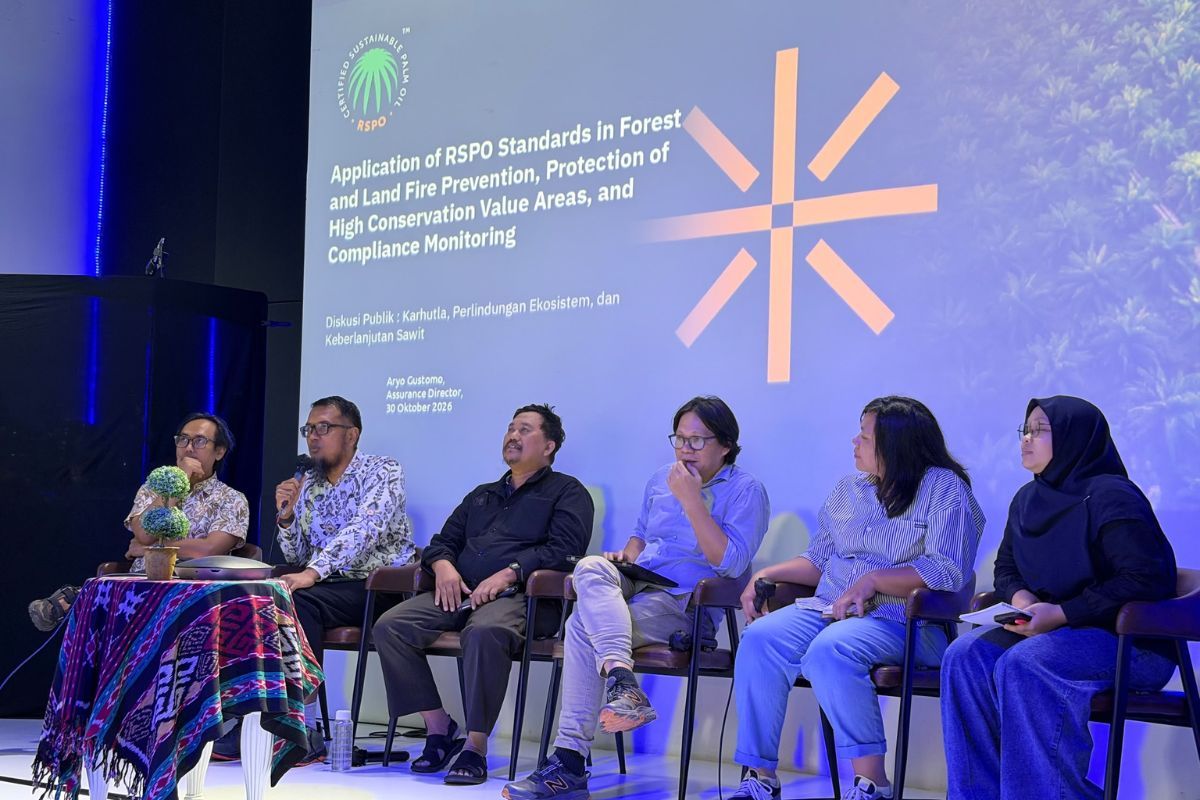
Ahead of RT2026, the RSPO joined a civil society dialogue to advocate transparency, ecosystem protection and strict enforcement of certification standards.
Jakarta, Indonesia (ANTARA/PRNewswire) — Amid recurring forest and land fires and concerns about regional haze across Southeast Asia, the Roundtable on Sustainable Palm Oil (RSPO) has reaffirmed its firm, non-negotiable zero-tolerance policy on the use of fire. Speaking today at a Road to RT RSPO side meeting hosted by Sawit Watch, Yayasan Ekosistem Lestari (YEL) and Satya Bumi, the RSPO reinforced its commitment to proactive fire prevention, strict standards and evidence-based accountability.
Addressing civil society organisations, academics and media alongside panellists from Sawit Watch, Greenpeace Indonesia, YEL, Satya Bumi and IPB University, Aryo Gustomo, the RSPO’s Director of Assurance, highlighted the crucial role of robust RSPO Standard requirements and certification systems and processes in tackling fire risks and safeguarding supply-chain integrity. “Forest and land fires pose a serious threat to ecosystems, biodiversity and local communities, and the RSPO takes every risk extremely seriously,” Gustomo said.
“Our role is to ensure that certified sustainable palm oil production operates under clear rules, strict no-burning requirements and robust assurance systems. When concerns or allegations arise, the RSPO responds through structured, transparent and credible mechanisms that rigorously assess the facts, respect due process and ensure firm accountability when breaches of the RSPO Standards are proven.”
He reiterated that the RSPO stands in solidarity with civil society members, partners and colleagues in demanding accountability and action over recent fires involving members. They share the goal of finding a lasting solution to end Indonesia’s recurring cycle of fires and haze.
During a discussion titled “Forest and Land Fires, Ecosystem Protection and Palm Oil Sustainability”, Gustomo urged the audience to recognise that data show oil palm is no longer the main driver of forest fires and transboundary haze. Nusantara Atlas has verified that nearly 90% of the 1.9 million hectares of land burned in Indonesia between January and September 2026 was outside oil palm concessions.
Gustomo added that this evidence underscores the importance of implementing robust systems and standards, and explained why certification should be viewed as a vital long-term solution. He outlined key features of the RSPO system designed to promote greater transparency and accountability among its members:
Strict 2024 Principles and Criteria (P&C) Standard: Prohibits the use of fire and enforces safeguards for peatlands and High Conservation Value (HCV) areas.
Real-time hotspot monitoring: Uses satellite surveillance through FireWatch.
Independent complaints system: Allows stakeholders to submit formal complaints to an independent Complaints Panel, with cases recorded in a public database.
Enforceable sanctions: Penalties for breaches of no-burning requirements range from corrective action to certificate suspension or termination of membership.
While certification represents a significant step forward, the RSPO stressed the importance of multi-stakeholder solidarity across landscapes, government, the public and private sectors, and communities. “We value our engagement with civil society partners, whose presence and field research help strengthen the sector as a whole. The RSPO remains committed to continuous improvement, transparent assurance and verified compliance across our membership,” Gustomo concluded.
Global palm oil industry participants will gather in Jakarta for the RSPO Annual Roundtable Conference (RT2026) on 3–4 November 2026.
The Roundtable on Sustainable Palm Oil (RSPO) is a global partnership working to make palm oil sustainable. Established in 2004, the RSPO is a multi-stakeholder non-profit organisation bringing together members from across the palm oil value chain, including oil palm producers, processors and traders, consumer goods manufacturers, retailers, banks and investors, environmental or nature conservation non-governmental organisations (NGOs), and social or development NGOs.
As a partnership for progress and positive impact, the RSPO facilitates global change towards sustainable palm oil production and consumption. It communicates environmental and social benefits to inspire change, promotes collaboration to achieve progress, and sets certification standards to provide assurance.
The RSPO is registered as an international association in Zurich, Switzerland, with its main offices in Malaysia and Indonesia and offices in China, Colombia, the Netherlands, the United Kingdom and the United States.