
Zero Percent Tariff on Tuna to Japan Must Be Supported by Upstream Strengthening, Says KKP
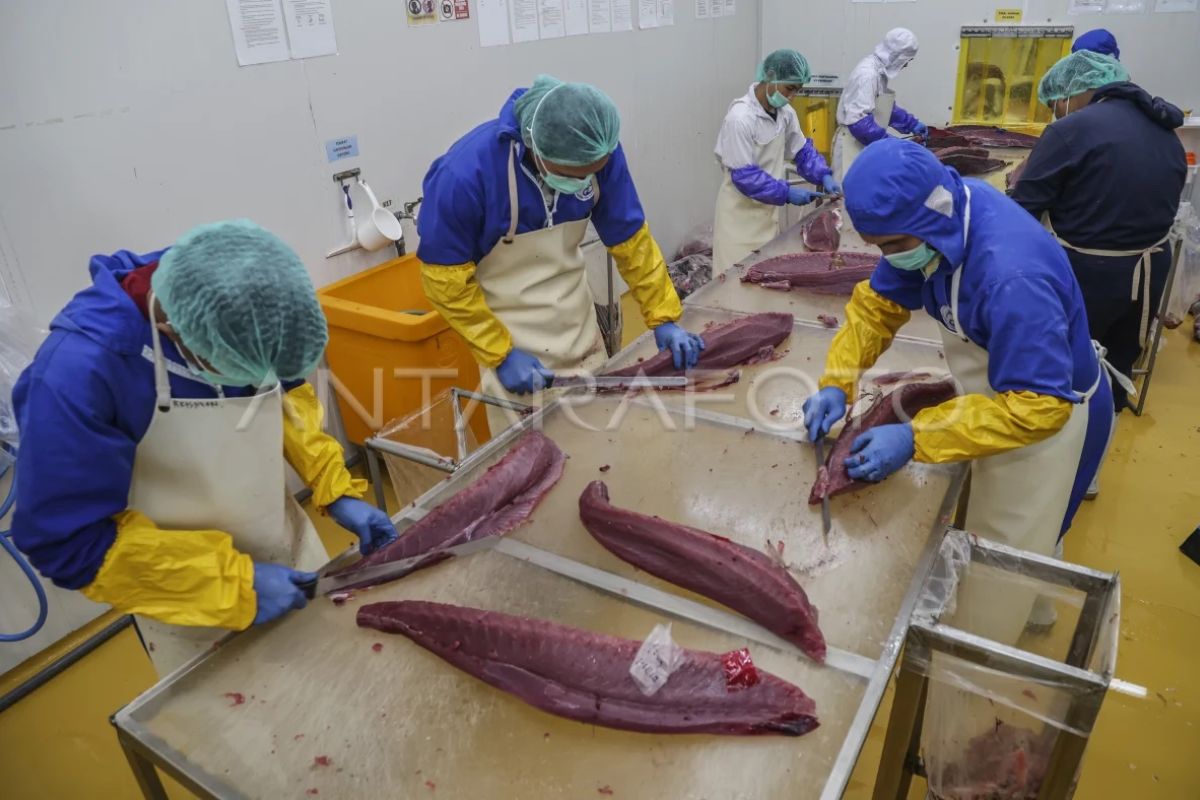
The Ministry of Marine Affairs and Fisheries (KKP) has assessed that the implementation of a zero percent preferential tariff for Indonesian processed tuna and skipjack products to Japan, under the Indonesia-Japan Economic Partnership Agreement (IJEPA) scheme, must be supported by strengthening the upstream sector. Director General of Capture Fisheries at KKP, Lotharia Latif, stated that the opening of market access through the preferential tariff, which takes effect on 1 August 2026, is a major opportunity for Indonesia to increase tuna and skipjack exports. However, Latif noted that this opportunity can only be seized if Indonesia is able to provide high-quality, legal, traceable raw tuna sourced from responsible fishing practices. “The zero percent preferential tariff is a great opportunity for Indonesia to boost tuna and skipjack exports. But this competitiveness must start from the upstream sector,” said Latif. He explained that tuna quality is determined from the moment of capture. Swift and proper handling on board, the use of a cold chain, and the landing process at fishing ports are critical factors in maintaining product quality to meet the food safety standards of export destination countries. To support this, KKP continues to provide guidance and training to tuna fishers, fishing vessel crews, and business operators. Training materials include responsible tuna fishing techniques, on-board handling, catch unloading techniques at ports, catch logbook recording, and fulfilling traceability requirements demanded by export markets. In addition to improving catch quality, Latif explained that KKP is also strengthening tuna resource management through the implementation of the Measured Fishing policy. This policy ensures that fishing activities are aligned with the fish resource potential in each Fisheries Management Area of the Republic of Indonesia (WPPNRI) while maintaining stock sustainability. According to Latif, sustainable management will guarantee the supply of raw materials for the processing industry while supporting the competitiveness of Indonesian fishery exports. At the international level, KKP continues to strengthen Indonesia’s position in various Regional Fisheries Management Organizations (RFMOs), such as the Western and Central Pacific Fisheries Commission (WCPFC), the Indian Ocean Tuna Commission (IOTC), and the Commission for the Conservation of Southern Bluefin Tuna (CCSBT). Latif conveyed that through these forums, KKP advocates for fair tuna resource utilisation opportunities based on scientific data and compliance levels with conservation and fisheries management measures. Based on KKP data, the export value of Indonesian fishery products to Japan in 2025 reached 613.65 million US dollars, an increase of 2.5 percent compared to the previous year. The main exported commodities include shrimp, tuna and skipjack, and pearls. Specifically for processed tuna and skipjack products that are beginning to receive the zero percent preferential tariff under the IJEPA scheme, the export value reached 76.41 million US dollars in 2025, an increase of 21 percent compared to 2024.