
Zero ODOL Policy Success Requires More Than Sanctions, Experts Say
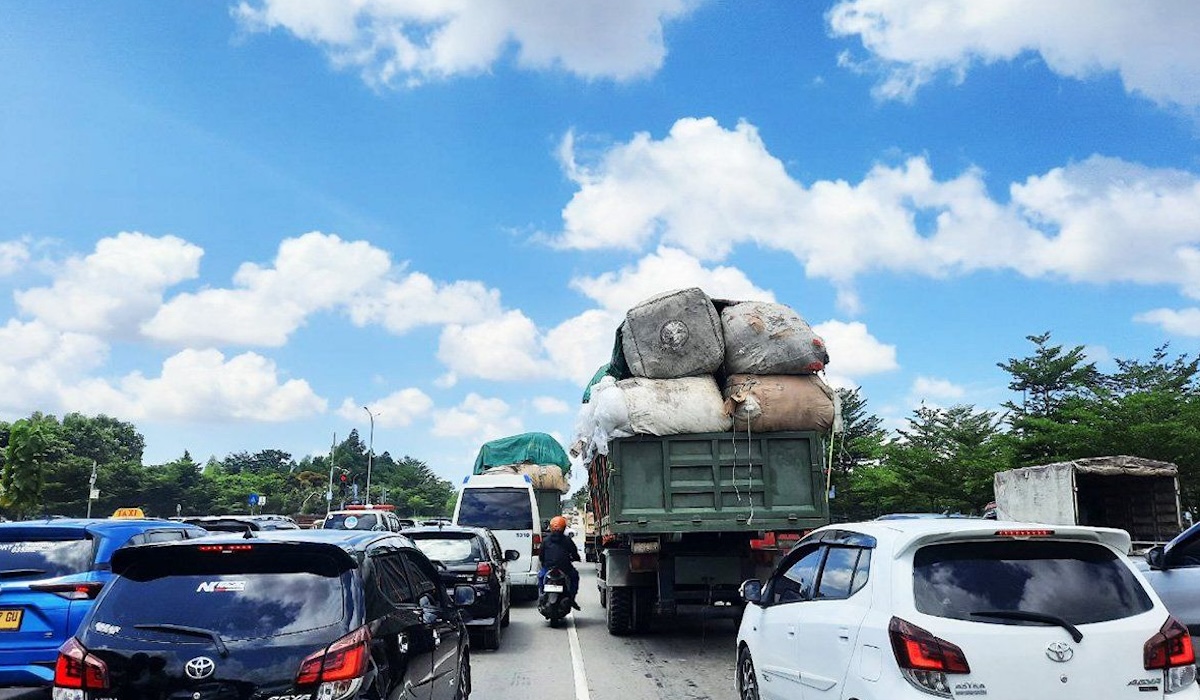
The Zero Over Dimension Over Loading (ODOL) policy, targeted for full enforcement in January 2027, has become a new benchmark in the development of Indonesia’s transport safety system. The success of this policy is judged to depend not only on sanctions, but on synergy between public safety, legal certainty and the sustainability of the logistics industry.
This commitment was reaffirmed during discussions on the 2027 indicative budget ceiling between the Directorate General of Land Transport and Commission V of the House of Representatives (DPR RI).
Chair of Commission V of the DPR, Lasarus, emphasised that land transport safety is a mandatory programme that cannot be bargained away. However, budgetary challenges remain looming: the current allocation has reached only Rp721.67 billion, or around 48% of the total mandatory requirement of Rp1.5 trillion.
The urgency of strengthening safety is underpinned by national accident data. Although ODOL accounts for 10.5% of accidents, the highest fatality figures remain dominated by motorcycles, at 77.4%. This shows that the Zero ODOL momentum must be extended to cover safety standards for two-wheeled vehicles, which are the public’s primary daily mode of transport.
In line with the National General Road Safety Plan (RUNK), the safe vehicle pillar is key. Indonesia is being urged to adopt a system like Malaysia’s, where every new vehicle is required to display a safety rating label. The Indonesia Road Safety Rating (IDRS) instrument is considered capable of providing transparency of safety information to consumers.
Public policy observer Agus Pambagio assessed that regulations on safety standards for two-wheeled vehicles in Indonesia still lag behind. He pressed for the IDRS to be integrated into official regulation.
“We need to know how safe a vehicle has been tested. If there is a rating from the start, public awareness will rise accordingly,” said Agus, highlighting the importance of testing for collision risks through to the potential for fires in electric vehicles.
Strengthening these standards also has a direct impact on the social protection burden. Jasa Raharja records that 70%–75% of accident compensation each year goes to motorcycle users. In 2025, compensation disbursed reached Rp1.36 trillion for fatalities and Rp1.85 trillion for injured victims.
President Director of Jasa Raharja, Muhammad Awaluddin, affirmed that reducing accident fatalities is not merely a matter of financial efficiency.
“This is about lives saved, and that is far better than even the best compensation,” he said.
Strengthening regulation from upstream, from vehicle production to road operations, is non-negotiable in reducing the national accident toll.
The Indonesian Transport Society (MTI) and the DPR have strongly criticised the systemic failure of Indonesia’s transport safety, which is considered negligent and merely reactive after major tragedies occur.
Researcher at Pustral UGM, Iwan Puja Riyadi, proposed the elimination of level crossings to prevent successive train accidents and improve public safety.
As many as 130 crossings remain unguarded, whilst 293 others have been equipped with guards.
Netty emphasised the importance of psychological support services for survivors and victims’ families.
The Indonesian Consumers Foundation (YLKI) affirmed that the train accident at Bekasi Timur Station serves as a stark alarm for the reform of the safety system and the separation of railway lines.