
Zelensky Offers to Halt Attacks on Russian Oil Refineries, but Sets Conditions
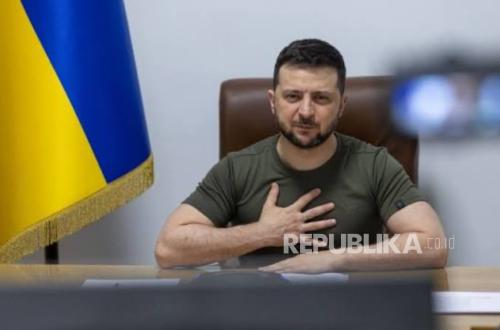
JAKARTA — Ukrainian President Volodymyr Zelensky said he was willing to stop drone attacks on Russian oil refineries and energy infrastructure. But he set a firm condition: President Vladimir Putin must first agree to stop attacks on Ukraine’s power plants, energy distribution networks, and oil and gas facilities.
Zelensky stated his position on Sunday (11 October 2026), as US President Donald Trump increased pressure on Kyiv to end military operations that have damaged much of Russia’s oil-processing capacity. Ukraine said it would not accept a unilateral halt to the attacks, arguing that this could give Moscow a strategic advantage without ensuring the safety of Ukrainians.
Citing Reuters, The Guardian and an official statement from the Ukrainian Presidential Office on Monday (12 October 2026), Zelensky said any move to reduce the intensity of the war must be reciprocal and backed by concrete guarantees. Kyiv wants a verifiable commitment that Russia will genuinely stop attacking Ukraine’s energy infrastructure.
“Ukraine is ready not to attack Russian energy infrastructure, and we expect the same readiness from Russia,” Zelensky said in an evening address published by the Ukrainian Presidential Office on Sunday (11 October 2026).
Zelensky said attacks on energy facilities could be halted if Putin had the political will to do so. The main obstacle, he argued, was not the countries’ technical ability to stop particular military operations, but Russia’s willingness to fulfil an accountable commitment.
His comments came after Trump publicly criticised Ukraine’s drone operations against Russian oil refineries. The US president said Kyiv’s attacks had worsened disruption to international fuel supplies, particularly as diesel prices in the United States surged amid the war with Iran.
Trump announces ceasefire; Zelensky surprised
A few hours after Zelensky said he would accept a reciprocal halt to attacks, Trump announced that Russia and Ukraine had reached an energy ceasefire. In a post on Truth Social on Sunday, Trump said the agreement took effect immediately and urged both sides not to violate it.
“Effective immediately, there is an energy ceasefire in the war between Russia and Ukraine. Both sides have agreed to this. Do not violate it!” Trump wrote.
The announcement surprised Zelensky, however, as the Ukrainian government had not received details of the agreement claimed by Washington. In an interview with Axios, Zelensky said he had learnt of the deal only after Trump made his public announcement.
Zelensky said Ukraine was ready to accept a ceasefire if Putin genuinely agreed to it. He also asked Washington to clarify when the agreement would take effect and how its implementation would be monitored.
Reuters reported that the Kremlin had not confirmed the agreement by the time Trump made his announcement. This raised doubts over whether the two countries had actually agreed to stop the attacks or whether Washington was still trying to broker a deal.
Those doubts grew after Russia was reported to have continued attacking Ukrainian energy facilities on Sunday. Zelensky said a combined heat and power plant in Kharkiv was struck after Trump announced the ceasefire.
In his official address, Zelensky also said Russia had carried out more than 200 attacks on Ukraine’s electricity generation and transmission facilities in the previous week. A further 17 attacks were said to have targeted oil and gas facilities, although not all of those figures could be independently verified.
Why are Russian oil refineries being targeted?
Oil refineries are at the centre of the dispute because Ukraine has made them a primary target of its long-range military operations. Kyiv regards Russia’s oil-processing industry as a crucial source of fuel and revenue that can sustain Moscow’s military campaign.
An investigation by The Washington Post, published on 11 October 2026, found that Ukraine had developed increasingly precise capabilities to strike Russian oil-processing facilities. The operations use long-range drones aimed at critical components in fuel production.
An analysis of satellite imagery and data from energy company S&P Global Energy found that at least two-thirds of the 36 major Russian refineries monitored had been attacked between 1 April and 31 August 2026. Some facilities were targeted repeatedly, while the success rate of Ukrainian operations increased as drone technology and tactics advanced.
The investigation also found that more than half of the 54 attacks examined appeared to have damaged key units involved in separating and refining crude oil. Damage to these components can halt production, as repairs require specialised equipment that has become increasingly difficult to obtain because of international sanctions.
According to S&P Global Energy data cited by The Washington Post, around half of Russia’s oil-processing capacity was out of operation by the end of August 2026. Russian exports of refined oil products were also reported to have fallen to about half their level in early August compared with the same period in 2025.
The disruption has squeezed domestic fuel supplies in Russia and increased the economic cost of the war. The Washington Post reported that Russian petrol and diesel prices had risen by about 20 per cent since the beginning of the year, while some companies had restricted fuel purchases.
Putin has acknowledged that Ukrainian attacks on oil refineries have affected Russia’s economy. In comments cited by the US newspaper, he estimated that the disruption caused by Ukraine’s operations was equivalent to around one per cent of Russia’s gross domestic product.
For Kyiv, these results show that attacks on energy infrastructure are an important means of weakening Moscow’s ability to sustain the war. Zelensky is therefore unwilling to relinquish that pressure without assurances that Russia will also stop attacking Ukraine’s vital infrastructure.
Source: jawawa.id (https://jawawa.id/newsitem/zelensky-offers-to-halt-attacks-on-russian-oil-refineries-but-sets-conditions-1791791560)
Originally published by Republika (https://news.republika.co.id/berita/tms3sx451/zelensky-tawarkan-penghentian-serangan-kilang-minyak-rusia-ada-syaratnya), translated from Indonesian