
Zambian Authorities Ban Protest Against Presidential Third-Term Bid
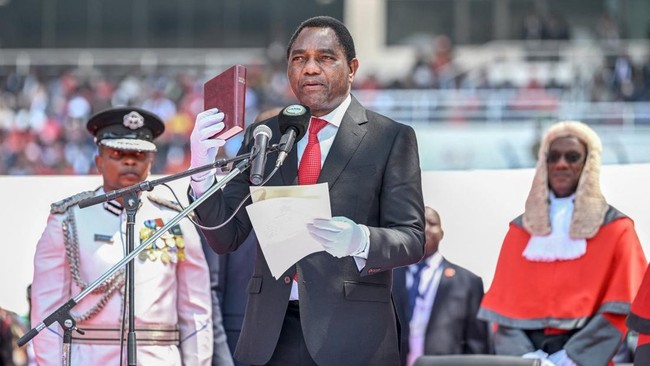
The Zambian government has banned demonstrations opposing efforts to remove presidential term limits. The ban comes amid concerns that constitutional changes could pave the way for President Hakainde Hichilema to remain in power for longer.
The decision has drawn attention to the state of democracy in the country, particularly after several opposition figures were detained. The protest, scheduled for 25 November, was organised by civil society groups and human rights advocates to oppose a proposal that could allow Hichilema to remain in office after 2031, when his second five-year term ends.
“We feel prevented from protesting,” said Linda Kasonde, former president of the Law Association of Zambia and one of the demonstration’s organisers, as quoted by Al Jazeera on Thursday (26 November 2026).
Police banned the demonstration, saying it risked triggering clashes. Pro-government youth groups had earlier announced plans for a counter-demonstration in support of removing the term limit.
Interior Minister Clement Andeleki defended the decision and denied that Hichilema intended to serve a third term. “There is no desire on the president’s part to serve three terms,” he said.
The campaign to abolish term limits is backed by three organisations affiliated with the ruling United Party for National Development (UPND). They have petitioned parliament to remove the constitutional limit. UPND media department head Mark Simuuwe argued that the current rules restrict voters’ rights.
“We feel the current constitution is undemocratic because it prevents voters from choosing the president they want whenever they want,” he said.
However, the proposal has been opposed by various civil society groups, the Catholic Church and the Law Association of Zambia. Hichilema, who was elected in 2021 on a promise of democratic reform, has previously criticised African leaders who seek to extend their rule through constitutional changes.
The presidency said Hichilema would respect the constitution and citizens’ right to express their views.
The controversy follows the August election, which Hichilema won with more than 61% of the vote but which drew scrutiny from observers, including the European Union mission. They reported the suspension of vote counting, delays in announcing the results, the deployment of troops, and the removal of opposition agents and independent observers.
Several opposition figures, including presidential candidate Brian Mundubile and his running mate Makebi Zulu, have also been detained for more than 100 days over allegations of plotting to overthrow the government and engaging in subversive activities.
Their detention has fuelled concern, as charges against some opposition figures were subsequently expanded to include treason. Defence lawyer Sakwiba Sikota estimated that the trial would not begin until 2027.
In Zambia, treason charges are not eligible for bail and can carry a sentence of life imprisonment. Tonse Alliance opposition coalition secretary-general Muhabi Lungu said the legal proceedings could weaken the opposition ahead of constitutional changes.
Removing the term limit requires the support of at least two-thirds of MPs, although additional provisions may apply to changes involving presidential terms.
Critics warn that abolishing the limit could undermine democratic safeguards, particularly in a country that has undergone several peaceful transfers of power since the introduction of multiparty democracy in 1991.
Kasonde said the campaign was connected to post-election political tensions and efforts to consolidate power.
Source: jawawa.id (https://jawawa.id/newsitem/zambian-authorities-ban-protest-against-presidential-third-term-bid-1795704642)
Originally published by CNBC Indonesia (https://www.cnbcindonesia.com/news/20261126171737-4-788846/panas-demo-tolak-presiden-3-periode-dilarang-aparat-zambia), translated from Indonesian