
Zakat, Inflation, and the Social Safety Net
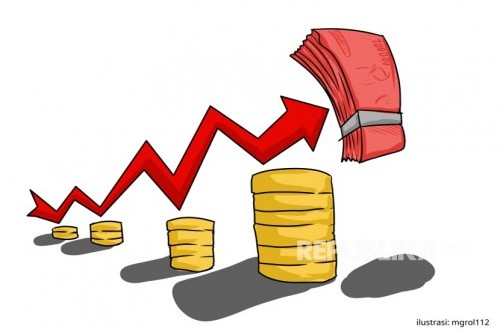
The prolonged war in the Middle East is more than just a geopolitical spectacle far from the daily lives of the Indonesian people. The escalation of conflict involving global energy axes, particularly since tensions around the Strait of Hormuz and major oil-producing regions, has created a supply shock in the global oil market.
As a result, energy commodity prices have surged. Although Indonesia is not the largest oil importer, the effects spread rapidly through domestic fuel price adjustment policies. Increases in fuel prices impact the basic necessities sector, directly pressuring public purchasing power, especially among mustahik (zakat recipients) and citizens living on the edge of poverty.
This is where Islamic social finance becomes an alternative solution for increasingly impoverished families. In this vacuum, zakat, infaq, alms, and waqf (ziswaf) emerge as the most responsive and humanist social institutions.
Amidst various pressing economic challenges, the spirit of sharing among the Indonesian people has not waned. The 2026 World Giving Report (WGR) published by the Charity Aid Foundation (CAF) in the first week of June 2026 places Indonesia as one of the countries with the strongest philanthropic culture in the world.
The report notes that, on average, Indonesians donate 1.55 per cent of their income, well above the global average of only 1.04 per cent. More than 90 per cent of the population is also recorded to have participated in at least one form of philanthropic activity, making Indonesia the country with the highest level of giving participation in the world.
However, behind this achievement lies a significant task. Public trust through increasingly transparent and accountable management of philanthropic institutions is a central issue, especially as the public begins to shift towards digital platforms. On one hand, the potential and realisation of national ziswaf and qurban reach Rp 343 trillion per year, representing an extraordinary economic force of the people.
Survey results released recently by the Social Trust Fund (STF) of UIN Syarif Hidayatullah Jakarta show that the total value of zakat, infaq, alms, waqf (ziswaf), and qurban distributed by the Indonesian Muslim community in one year is estimated to reach Rp 343 trillion. Of this total, the largest contribution comes from infaq and alms at Rp 221.7 trillion, followed by qurban at Rp 52.3 trillion, waqf at Rp 33.6 trillion, zakat mal at Rp 27 trillion, and zakat fitrah at Rp 8.4 trillion.
According to BAZNAS, the assumed zakat potential is Rp 327 trillion, with the national realisation last year standing at Rp 44.288 trillion.
The survey shows that the majority of the public still needs to be mobilised to distribute their funds online by building confidence that their assistance reaches those entitled to it. This is both a challenge and a great opportunity for zakat managers.
The rise in fuel prices due to the escalation of the Middle East conflict is a test of the relevance of Sharia social finance in Indonesia. Zakat is no longer merely a ritual instrument of worship waiting for the month of Ramadan, but a pillar of the Sharia economy that functions as a highly responsive social safety net.
This article aims to explore how zakat, with all its cultural dynamics and digital challenges, can become a concrete solution to face structural inflation triggered by the global energy crisis, while integrating the latest theories of Sharia social finance as a framework for the economic solution of the community and the nation.