
Zakat Distribution to Be More Balanced Between Aid and Empowerment
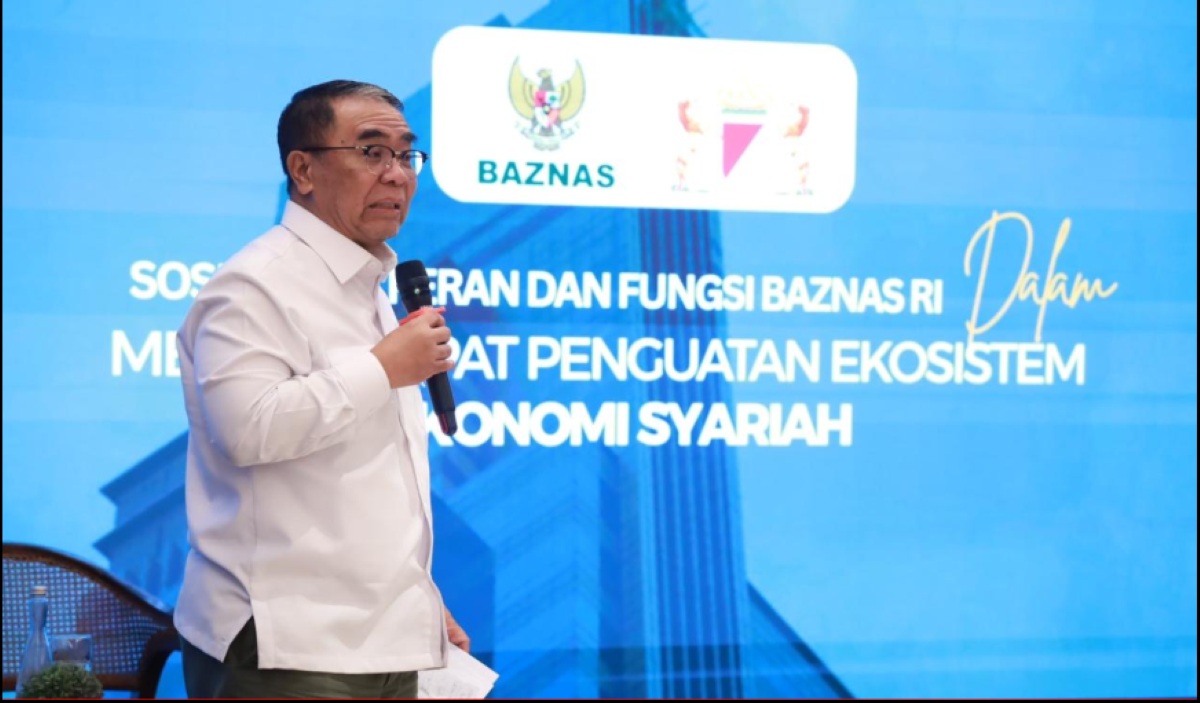
The National Board of Zakat (Baznas), in collaboration with the Kahmi Entrepreneurs Association (Hipka), is working to optimise empowerment programmes to improve the welfare of mustahik (zakat recipients) and accelerate the eradication of extreme poverty in Indonesia.
This collaboration was formalised through the signing of a Memorandum of Understanding (MoU) between Baznas RI and Hipka regarding the optimal management of zakat, infaq, alms, and other religious social funds (ZIS-DSKL), as well as synergy in the empowerment and development of productive economies for mustahik.
The Chairman of Baznas, Sodik Mudjahid, stated that the organisation is currently redirecting its distribution focus from being predominantly direct aid to a more balanced approach between aid and empowerment. He noted that this change in approach aims to ensure that zakat does not only meet short-term needs but is also capable of driving sustainable economic independence for recipients.
“Therefore, we require the support of the business world, including Kadin (the Indonesian Chamber of Commerce and Industry), so that empowerment programmes can run more optimally,” he said.
Sodik explained that in the fields of distribution and utilisation, Baznas possesses various flagship programmes, including the Baznas Scholarship, Decent Housing, Bazlar Disaster Response, Baznas Healthy Housing, Baznas Microfinance, Zmart, ZChicken, Santripreneur, Zakat Village, as well as programmes for the Eradication of Extreme Poverty and Stunting.
In addition to strengthening empowerment programmes, Sodik stated that Baznas continues to encourage the increase of national zakat collection. He noted that, to date, zakat collection is still dominated by the individual sector, while the potential for zakat from business entities, private institutions, and professions remains vast and ready for development.
Sodik added that with the national zakat potential estimated to reach IDR 327 trillion, optimising collection from various sectors will bring the realisation of zakat collection closer to the available potential.
Meanwhile, the Vice Chairman of Development for Associations/Federations/ALB of Kadin, Benny Soetrisno, expressed his support for the efforts to strengthen the Sharia economy, community empowerment, and the optimisation of zakat management by Baznas as an instrument for improving public welfare.
“Essentially, the Baznas movement is a movement based on Sharia values and the spirit of togetherness. This movement also reflects the spirit of ‘gotong royong’ (mutual cooperation) which is a characteristic of our nation, thus serving as a means to work together effectively for mutual progress,” said Benny.
Baznas also participated in the Zawa Funwalk 2025, showcasing mustahik empowerment products such as ZCoffee, ZChicken, and Family Logistics Packages.
The Ministry of Home Affairs noted that Baznas plays a strategic role in supporting government programmes, particularly in the sectors of extreme poverty eradication and community empowerment in the regions.
President Prabowo Subianto has requested that the use of the National Socio-Economic Single Data (DTSEN) be strengthened for government policy. The implementation of joint programmes between the Ministry of Social Affairs and Baznas will subsequently be guided by the DTSEN as a government reference for conducting social interventions.
Coordinating Minister for Human Development and Social Affairs, Abdul Muhaimin Iskandar, announced that extreme poverty fell to 0.78% in September 2025, although 774,000 families in decile 1 have not yet been reached by programmes. The Head of the Taskin Task Force, Budiman Sudjatmiko, explained that the definition of poverty cannot be simplified merely as a lack of cash.