
Zagros Mountains Believed to Be Meeting Zone for Modern Humans and Neanderthals
The relationship between modern humans (Homo sapiens) and ancient human relatives has left traces in the DNA of present-day humans. A number of studies show that the ancestors of modern humans once interbred with other hominin groups, including Neanderthals and Denisovans.
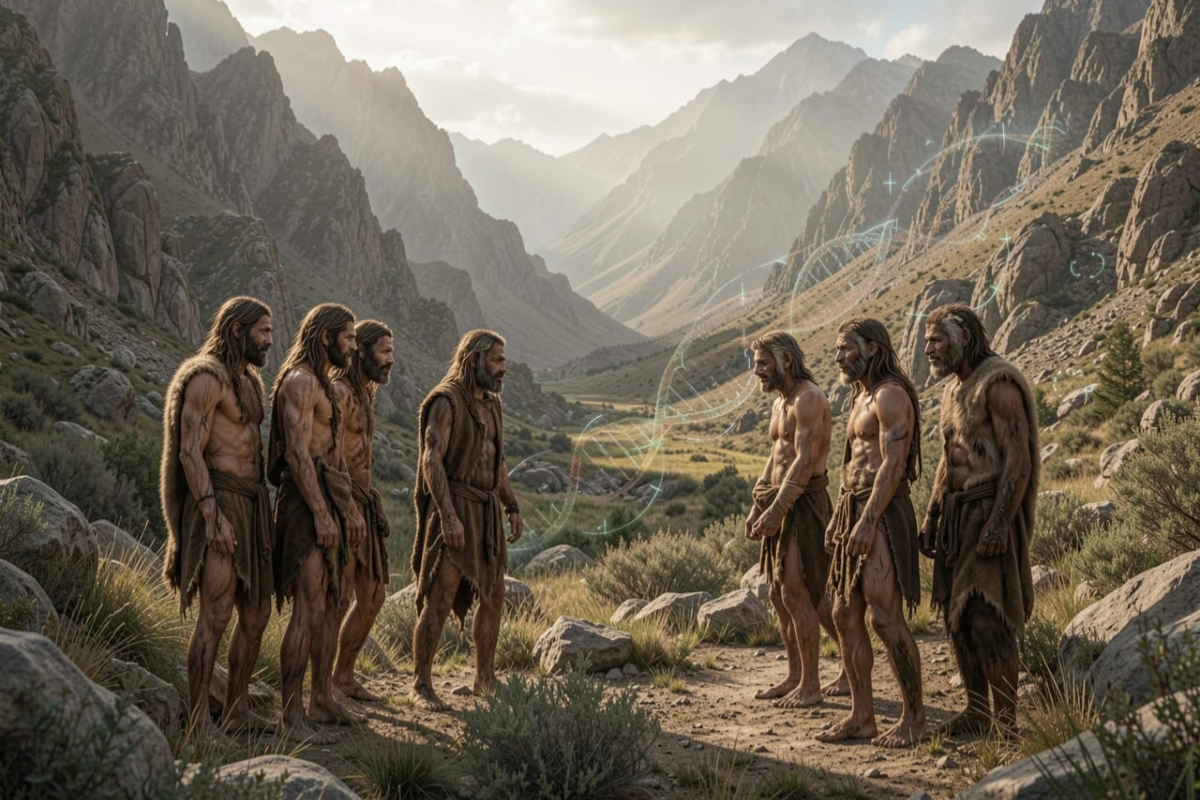
One study published in Scientific Reports in 2024 attempted to estimate the location where modern humans and Neanderthals met. Using ecological modelling and data on environmental conditions during the Pleistocene, the researchers identified the Zagros Mountains as one of the areas with potential to have been a meeting and interbreeding zone for the two groups.
The Zagros Mountains stretch widely across Western Asia, including areas that are now around Iran and Iraq. According to the study, this region lies at the meeting point of two biogeographical areas, making it possible for human groups with different dispersal histories to encounter one another.
The researchers reconstructed the geographical distribution of Neanderthals and modern humans over the period from around 120,000 to 80,000 years ago. The modelling results show an overlapping area in the Zagros Mountains.
The geographical conditions and environmental diversity of the region are considered capable of supporting the presence of both groups at the same time.
However, the findings should be understood as an estimated location, not evidence that an interbreeding event has been directly found at one specific point. The researchers describe the Zagros as a potential interbreeding zone, based on a combination of environmental models, archaeological sites and available genetic evidence.
Evidence that modern humans and Neanderthals did indeed exchange genetic material comes from DNA research. The Smithsonian’s Human Origins Program explains that modern humans of Eurasian descent carry around 1-4 per cent Neanderthal DNA, while traces of Denisovan DNA are also found in a number of modern human populations.
The genetic exchange did not only involve Neanderthals. Denisovans, an ancient hominin group known from finds at Denisova Cave in Siberia, are also known to have interacted with modern humans. Genetic evidence shows a substantial Denisovan contribution in some populations in Papua New Guinea and Oceania.
Interestingly, DNA evidence also shows that relationships between hominin groups were not always limited to those between modern humans and Neanderthals. Research on the Neanderthal genome has found a number of gene flow events between Neanderthals, Denisovans and early modern humans.
The findings regarding the Zagros Mountains provide a new picture of the possible routes by which modern humans met Neanderthals. The area is thought to have served as a human migration corridor during the Pleistocene because it connects different environments and provides habitats with diverse resources.
Thus, the term “interbreeding” in the context of this research does not mean that modern humans had relations with animal species. What is meant is cross-breeding between hominin groups that still have a close evolutionary relationship with modern humans. Traces of these events have persisted in the human genome to this day.