
Yusril Urges Under-Invoicing to Be Classified as Corruption
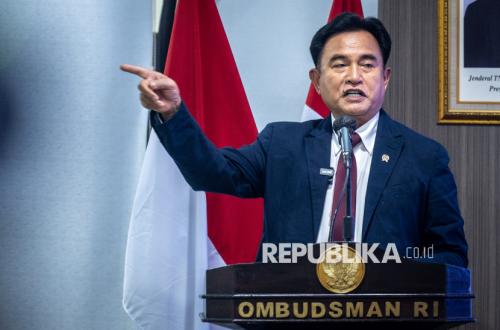
JAKARTA — Coordinating Minister for Law, Human Rights, Immigration and Corrections Yusril Ihza Mahendra has urged that under-invoicing practices that harm the national economy also be covered by anti-corruption provisions. The manipulation of export values or volumes is estimated to potentially drain hundreds of trillions of rupiah from the country’s wealth each year.
Yusril made the remarks after meeting President Prabowo Subianto at Merdeka Palace in Jakarta on Monday (26 October 2026). They discussed the manipulation of mining production reports and illegal fishing, which result in Indonesia’s natural wealth flowing overseas.
“We also touched on under-invoicing by businesses in the mining sector, for example, or people stealing fish at sea. The amounts are enormous, hundreds of trillions each year,” Yusril said, according to a statement from the Government Communications Agency (Bakom RI).
Under-invoicing is the practice of reporting the value or volume of goods below their actual level. In exports, such manipulation can mean that the economic value of commodities shipped overseas is not fully recorded. As a result, state revenue may fall, and some of the value of Indonesia’s natural wealth may not appear in official reports.
Yusril cited mining companies that report production far below the amount actually extracted.
“They mine, say, 20,000 tonnes, but report only 10,000 or 15,000, and the money has been flowing overseas,” he said.
According to Yusril, such practices have not attracted as much public attention as corruption cases involving abuse of office or bribery by state officials. Yet trade manipulation and the theft of natural resources could also cause substantial economic losses.
“Our people have never realised that this is actually very serious and that we need to resolve this issue too,” he said.
Yusril stressed that anti-corruption efforts should not focus solely on misconduct involving public officials. Illegal activity by businesses that depletes natural wealth and harms the national economy should also be a priority for law enforcers.
“But activities such as under-invoicing and stealing fish at sea should not be forgotten; they also drain our national wealth,” he said.
Yusril said anti-corruption legislation already recognises the elements of state financial losses and losses to the national economy. However, he said, the economic-loss aspect still needs to be developed more fully in law enforcement.
“The national economy aspect is what I think has not been developed enough,” he said.
He believes that illegal fishing and the manipulation of mining production reports, when proven to have harmed the national economy, should be considered for coverage under anti-corruption provisions.
“So if someone steals fish or commits under-invoicing in mining, they are clearly harming the national economy. That should also fall under corruption,” Yusril said.
The proposal frames the manipulation of natural-resource trade as an issue that goes beyond export-reporting compliance or state revenue. The Government also needs to assess whether such practices meet the elements of a corruption offence, in accordance with legislation and the evidence in each case.
Yusril’s remarks are a call to give greater attention in law enforcement to losses suffered by the national economy. Applying corruption provisions to under-invoicing must nevertheless be based on the elements of the applicable offence and evidence that can be substantiated in law.