
Yusril: The 'Pesta Babi' Film Remains Acceptable, Let the Public Watch and Discuss
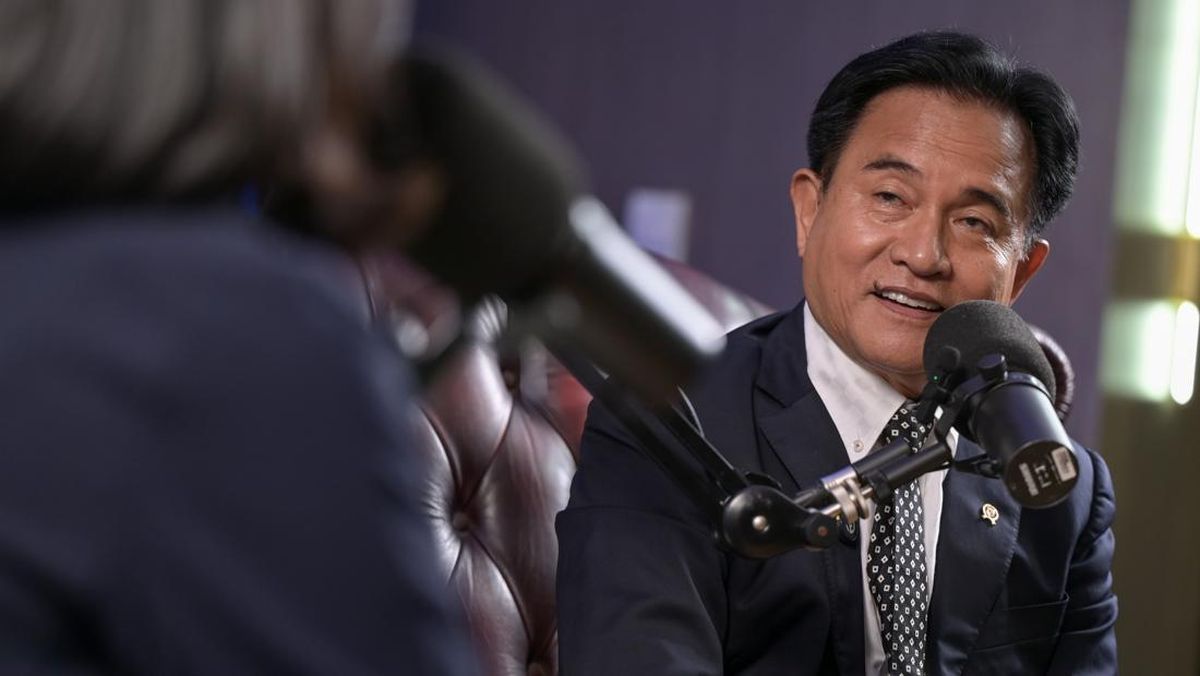
Yusril: The ‘Pesta Babi’ Film Remains Acceptable, Let the Public Watch and Discuss
The Coordinating Minister for Legal, Human Rights, Immigration, and Penitentiary Affairs, Yusril Ihza Mahendra, affirmed that the government does not prohibit public screenings and discussions of the documentary film ‘Pesta Babi: Colonialism in Our Time.’
According to him, the film’s content is still acceptable, and he asked the public not to be provoked solely by the title and encouraged them to watch it.
Yusril said that he asked the relevant parties—primarily the public—not to be provoked into doing anything unethical because the film’s title was likely created to attract public attention.
He believes that the public needs to be given space to watch and discuss the film’s content openly.
‘Such criticism is reasonable, although there is indeed provocative narrative. The title of the documentary film itself is controversial,’ said Yusril in a written statement on Thursday (May 14).
‘Just let the public watch, and then feel free to hold discussions and debates. In this way, the public will become critical, and pro and con opinions can emerge,’ added the man who was previously known as an expert in constitutional law.
‘Pesta Babi: Colonialism in Our Time’ is a documentary film released in 2026, produced by Ekspedisi Indonesia Baru. This documentary film tells about indigenous communities in Indonesia and their struggle for rights to their land.
One of the most highlighted aspects of this documentary film is the national strategic project (PSN) in South Papua, which some parties believe has an impact on the environment and the rights of indigenous communities.
Regarding this, Yusril said that the government can use the criticism in the film as a basis for evaluating the implementation of projects in the field.
‘The government can learn from the film to evaluate whether there are steps in the field that need to be improved,’ he said.
He explained that land clearing in South Papua had actually begun in 2022 during the administration of the 7th President of the Republic of Indonesia, Joko Widodo (Jokowi), in conjunction with the expansion of the region in Papua.
The program was then continued by the current government as part of the national food and energy resilience project.
However, Yusril emphasized that the government remains open to criticism of the implementation of national strategic projects.
‘The PSN was built with careful study for the welfare of the people, although the government does not close its eyes to any shortcomings and weaknesses in its implementation in the field,’ he said.
No prohibition order from the government
On the other hand, Yusril denied that there was an official prohibition from the government regarding the screening or public viewing of the documentary film. He said that several public viewing events on other campuses continued without obstacles.
According to him, if there were disruptions to public viewing events in some places, it was not a centralized instruction from the government or law enforcement agencies.
‘Seeing this pattern, the disruption of public viewing of the ’Pesta Babi’ film is not a direction from the government or law enforcement agencies that are usually centralized,’ said Yusril.
Previously, in recent times, there have been many disruptions to public viewing events of the ‘Pesta Babi’ film in several places in Indonesia. The actors in disrupting the public viewing and discussions included parties from the authorities, such as the TNI and Polri, as well as campus authorities.
For example, at the University of Mataram (NTB), the discussion and public viewing of the ‘Pesta Babi’ film were disrupted by campus authorities, and at the University of Khairun and Benteng Oranje, Ternate (North Maluku), the disruption was carried out by TNI AD personnel.
In addition, the film’s production house, WatchDoc, and the network of the Indonesian Legal Aid Foundation (YLBHI) also recorded alleged rejections of screening venues and unilateral cancellations of screenings by the venue owners.
Meanwhile, the TNI AD spoke out after being criticized regarding the disruption of public viewing of the ‘Pesta Babi’ documentary film in Ternate.
The Commander of the 01501/Ternate Military District Command, Colonel Inf Jani Setiadi, mentioned the issue of permits and SARA issues behind the disruption. Jani also claimed to have checked the activities involving the Independent Journalists Alliance (AJI) Ternate and a number of student organizations. The public viewing event was claimed to have no permits.
‘In addition to the issue of permits, the authorities also examined the material and theme of the activities, which were considered sensitive to the community. The use of the film title and banners with the words ’Pesta Babi’ was considered to have the potential to cause misunderstandings and provoke negative reactions among the diverse community, especially if it is associated with SARA issues or previous social conflicts,’ he said, quoting detikcom, Tuesday (May 12).
Furthermore, he claimed that the TNI still respects freedom of expression and space for discussion for the community, journalists, and students. However, he added that the safety and security of the community must be the top priority.
KNPI rejects ‘Pesta Babi’ creators to Makassar
The National Committee of Indonesian Youth (KNPI) rejected the arrival of the director of the documentary film ‘Pesta Babi: Colonialism in Our Time,’ Dandhy Laksono, and others to Makassar, South Sulawesi.
They consider the creators of the documentary film to be the masterminds of division in the nation.
‘We see that this film can cause unproductive divisions of opinion in society, especially among young people,’ said the Head of the Defense and Ideology Division of the Makassar DPD KNPI, Irwan Abbas, in his statement, Friday (May 15).
According to Irwan, the material in the film is at risk of creating sharp polarization.
‘Given the geopolitical conditions of our nation, which are in a crucial phase, we do not need entertainment that actually provokes negative sentiments between groups,’ he said.
Meanwhile, the Secretary of the Defense and Ideology Division, Akhmad Kurnia, claimed that there have also been many protests in various regions due to works that provoke unrest in society.
‘In many places, the screening of this film has reaped strong protests, both from campus academics and security forces. We do not want the same unrest to occur in Makassar,’ he said.