
Yusril Responds to MUI Proposal: Death Penalty for Corruptors Won't Automatically Eliminate Corruption
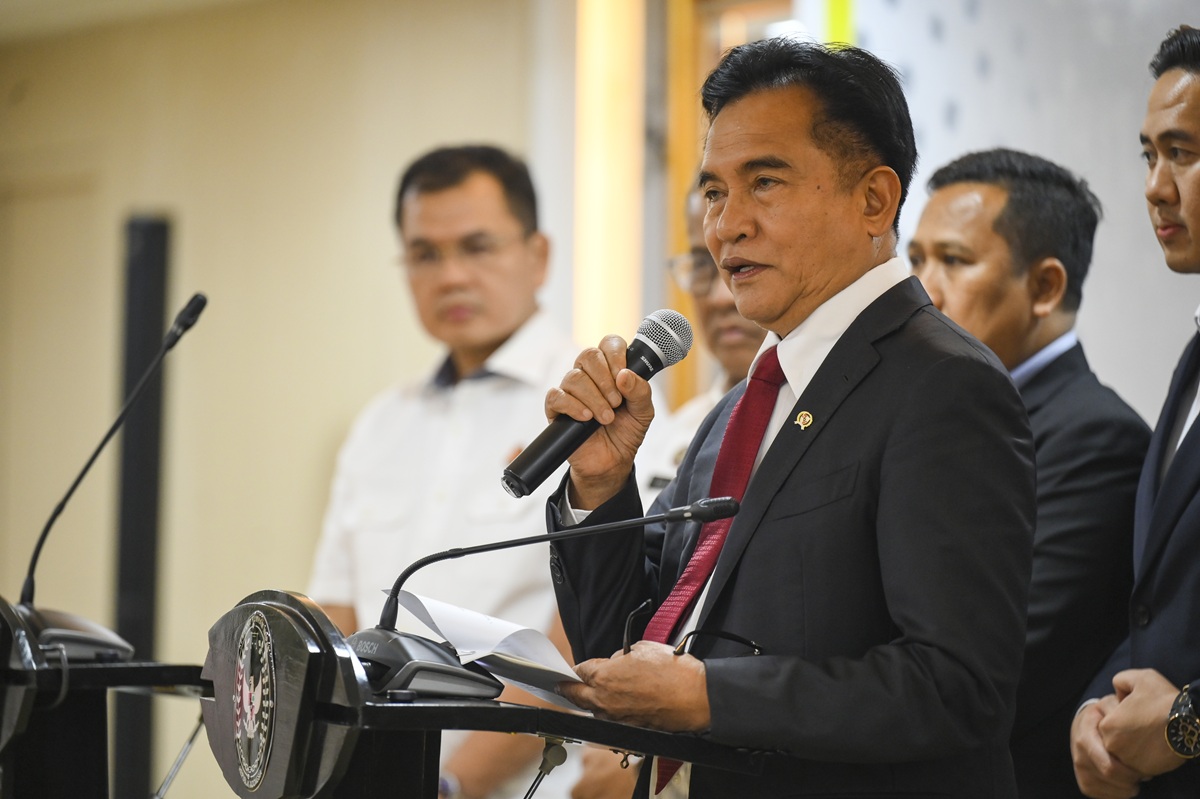
Coordinating Minister for Law, Human Rights, Immigration and Corrections Yusril Ihza Mahendra has stressed that the death penalty for corruptors cannot be imposed merely because of public demand or the gravity of the offence committed. In Indonesia’s criminal justice system, capital punishment is an ultimum remedium, or the most severe penalty, which may only be handed down after a judge has assessed all trial facts fairly and proportionally.
According to Yusril, even if the public prosecutor demands the death penalty and the law permits it, the final decision remains with the judge. In delivering a verdict, the judge is obliged to consider the evidence presented at trial, the degree of the defendant’s culpability, and the impact of the criminal act on victims, the nation and the state before determining whether the death penalty is warranted.
“Even if the prosecutor demands the death penalty and the law allows it, the judge must still consider whether that demand is appropriate or not. It is possible that after weighing all circumstances, the judge imposes a life sentence instead,” Yusril said in a written statement in Jakarta on Thursday (6/8).
According to Yusril, before handing down a verdict, the judge must first ensure that the charges have been legally and convincingly proven based on the facts revealed during the trial. After that, the judge determines the most just and proportionate type of punishment.
He emphasised that a judge’s ruling must not be based on anger or hatred towards the defendant, but rather on justice and conscience.
“A judge’s ruling must be based on the preamble ‘For the Sake of Justice Based on Belief in the One Almighty God’ and considerations of conscience. A judge must not decide a case on the basis of anger or hatred,” he said.
Yusril also cited Surah Al-Maidah verse 8 as a moral foundation for judges in upholding justice.
“‘Let not your hatred of a people lead you to be unjust to them. Be just, for justice is nearer to piety,’” he quoted.
Furthermore, Yusril revealed that when he served as Minister of Justice, he initiated amendments to Law Number 31 of 1999 on the Eradication of Criminal Acts of Corruption, which was subsequently enacted as Law Number 20 of 2001.
In those amendments, the government added several new provisions, including those concerning gratification, bribery of state officials, and extortion by officials. At the same time, the threat of the death penalty for corruptors under certain circumstances was retained.
He explained that the “certain circumstances” referred to in Article 2 of the Corruption Eradication Law include the country being in a state of danger, a national natural disaster, repeat corruption offences (recidivism), and economic and monetary crises. Similar provisions, he continued, have also been adopted in the new National Criminal Code.
Responding to the proposal by Deputy Chairman of the Indonesian Ulema Council (MUI) M Cholil Nafis that the death penalty be applied to corruptors, Yusril argued that the problem of corruption cannot be resolved merely by increasing the severity of criminal sanctions.
According to him, Indonesia already possesses adequate legal and institutional instruments to combat corruption, ranging from the threat of the death penalty in the Corruption Eradication Law, the existence of the Police, the Attorney General’s Office, the Corruption Eradication Commission (KPK), Corruption Courts in every province, to ad hoc corruption judges at the Supreme Court.
However, these various instruments have not been able to stop corrupt practices, which continue to occur and even involve law enforcement officials.
“But in reality, corruption continues. From ordinary people to anti-corruption officials such as police, prosecutors and judges, they themselves commit corruption. There was even a Minister of Religious Affairs who committed corruption,” Yusril said.
He is of the view that the fundamental problem lies in weak ethics and morality, which should be rooted in religious values.
“What is lacking is religious ethics based on the principle of Belief in the One Almighty God, or tawhid in Islam. Why are religious rituals increasing, yet moral character has not grown? Is there something wrong with religious education, preaching and tabligh all this time? Is it merely ritual that has not touched the depths of the conscience, so that it has not been able to distinguish between what is right and what is false,” he concluded.
Source: jawawa.id (https://jawawa.id/newsitem/yusril-responds-to-mui-proposal-death-penalty-for-corruptors-wont-automatically-eliminate-corruption-1785981043)
Originally published by Media Indonesia (https://mediaindonesia.com/politik-dan-hukum/918841/tanggapi-usulan-mui-yusril-hukuman-mati-koruptor-tak-otomatis-hilangkan-perilaku-korupsi), translated from Indonesian